ARTICLE
Symposium Musicum: The Politics of Place in Music Theater
Elia Moretti
Sound Stage Screen, Vol. 4, Issue 1 (Spring 2024), pp. 5–33, ISSN 2784-8949. This work is licensed under a Creative Commons Attribution-ShareAlike 4.0 International License. © 2025 Elia Moretti. DOI: https://doi.org/10.54103/sss22899.
This article presents an analysis of how an experimental music theater project could facilitate new opportunities for intercultural dialogue and offer alternative perspectives on the perception of a multicultural society. The project, entitled Symposium Musicum, concentrated on the interrelations between the Roma and non-Roma populations in the context of contemporary Slovakia, [1] as revealed through a process of listening. This process may be defined as a social sound practice, which may be understood as an attitude towards exploring sound in its social setting. [2] It is anticipated that this will result in the discovery of a material access to sound that goes beyond the concept of representation.
The text presents a comparable scope. This article illustrates how experimental music theater can facilitate a rethinking of agency in a context of majority/minority relations by means of the creation of temporary and geographical scales. The intention is to open up possibilities for intercultural dialogue in this way.
The text is structured into two principal sections. The initial section of the article examines the motivations and political implications of such experimental artistic practice, whereby listening becomes a form of agency. The second section presents an analysis of the case study, which has been organized into three parts. The initial phase of the research entailed undertaking fieldwork in the Carpathian northeastern region of Slovakia. This required traversing several villages and towns on foot, equipped only with microphones and tents. The objective was to observe the ways in which the act of listening creates social interactions. The second phase of the project entailed the composition process, during which the experience gained from fieldwork was translated into an acousmatic composition. The third section concerns the performance that took place at the local bus station through the course of a whole day. The acousmatic composition was situated within the spaces of a bankrupt grocery store, traversing the entirety of the waiting room. An integral aspect of the performance was the exploration of the performative possibilities of sound. The individuals present at the bus station became integral to the performance, functioning as performers in their own right. The objective was to foster an environment conducive to intercultural dialogue.
I am currently engaged in the process of writing this text as one of the authors of the project that is the object of analysis. The other authors involved in the project were Marika Smreková, a Slovak theater maker who directed the Community Festival of Contemporary Theater and Art UM UM for a decade, thereby establishing the foundation for the project’s implementation; John-Robin Bold, a German artist and composer specializing in electronic music, the internet, and installation art; and Anna Khvyl, a Ukrainian sound artist, composer, and researcher with a background in cultural studies and anthropology.
Accordingly, I have adopted an autoethnographic methodology that encompasses an ecological approach. This emphasizes the structure of the environment itself and regards perception as the reception of that already structured information. This is considered according to three factors: the relationship between perception and action, adaptation, and perceptual learning.
What is the role of sound in perceiving and enacting changes in contemporary society?
Before describing Symposium Musicum in its different phases, I need to express the motivations and the political imaginations the project was based on. Symposium Musicum recognizes individual listening patterns, biases, and abilities that influence our sonic encounters. Through critical listening, we framed listening as an encounter where diverse cultures intersect within power dynamics. This underscores the importance of acknowledging our own perspectives on ethnicity, language, communication, class, gender, and ability in shaping these encounters.
Through Symposium Musicum I analyze the aesthetic potential of listening towards performing, composing and recording. However far removed this is from conventional forms of music theater, new music theater, opera or musical and their modes of production, I consider this project to be music theater because of the emphasized performative quality of sound itself—here performative sounds carry an unexpected potential for rethinking the theatrical form. I define it music theater, indeed, exploring this concept by thinking through the project Symposium Musicum , especially with an emphasis on its capacity to suspend our habits of thought. This idea, drawing from phenomenology, means that the aesthetic experiences I’m going to analyze, whether from the perspective of the creator or of the spectator, set themselves apart from other everyday encounters thanks to their capacity to reveal something as strange, or queer. [3]
The phenomenology of aesthetic experience is a complex and multifaceted concept that has been explored by many philosophers and scholars. According to Maurice Merleau-Ponty, experience of the world is inherently subjective and can be understood through phenomenology, which is the study of conscious experience. [4] In the context of aesthetics, this means that our experience of art is not simply a matter of sensory perception but is also influenced by our emotional and cognitive responses to the work. As Merleau-Ponty argues, “the body is our general means of having a world,” [5] and our physical and emotional responses to art are a crucial part of our aesthetic experience.
Similarly, philosopher Mikel Dufrenne argues that our aesthetic experience is not solely determined by the objective qualities of the work but is also shaped by our own perceptions and interpretations. [6] Dufrenne argues that art is not a mere representation of reality but is rather a way of experiencing the world in a different way. This means that our aesthetic experience is not limited to the formal qualities of the work, but also involves our own subjective responses to it.
Overall, the phenomenology of aesthetic experience emphasizes the importance of understanding Symposium Musicum as a subjective experience that is shaped by our own perceptions and interpretations. By reflecting the conscious experience of this artistic process, we can gain a deeper understanding of the ways in which sound shapes our perception of the world around us. This concept has important implications for fields such as musicology or performance studies, as it encourages us to think beyond the formal qualities of the work and to consider the role that our own perceptions and interpretations play in shaping the aesthetic experience. Symposium Musicum entered the texture of Slovak reality through listening, with the clear intention of creating a feedback loop, not as a tool for action or interaction, but for the experience that, when it comes back, it can bring awareness of possibilities, in a way that disrupts the usual stereotypes.
It is through such ecological approach that the project Symposium Musicum has been created in 2019. Its underlying question was how an experimental music theater project could open up new spaces for dialogue and perspectives of a multicultural society. We assumed that, through an ecological approach to the perception of sound, it’s possible to achieve an acoustic knowledge, that is articulated on modalities of listening as knowing in action. Hence it will be necessary to consider the relationships to and between process and product, the space of production versus the space of reception, the time of making relative to the time of attention.
Symposium Musicum emphasizes subject-to-subject relationships, moving beyond a listener-centric view and valuing the agency, life, and subjectivity of sound. By being aware of our listening positionality, we engage with communities’ aurality and explore the political dimensions within. This exploration aims to enrich our understanding of the politics inherent in sonic practices, contributing to a more inclusive and equitable engagement with the communities we have met.
This mechanism has been clearly articulated by Jacques Rancière , whose work since the late 1990s has developed a highly influential account of the relation between aesthetics and politics.
In Symposium Musicum, there are two competing features at play—the logic of the everyday experience and the ability to deviate from our expectations and create a performative, transformative, experience. While these may seem contradictory, they should be seen as complementary aspects of the event. This also refers to Jacques Rancière’s concept of the distribution of the sensible (le partage du sensible), [7] which is defined as “the system of self-evident facts of sense perception that simultaneously discloses the existence of something in common and the delimitations that define the respective parts and positions within it.” [8] Rancière argues that art holds transformative power beyond the realm of traditional critical analysis, emphasizing its affective capabilities that go beyond the mere transfer of knowledge through didactic means and instead rely on the creation of a sense of rupture and ambiguity.
By rejecting the “traditional” understanding of engaged art as a mere tool for political activism or social critique, Rancière insists that it is through the emotional and sensory experiences generated by art that individuals can be truly empowered and inspired to challenge the status quo and imagine alternative futures. From this point of view, we can look at Symposium Musicum as a political act, the result of power relations and struggles that are constantly being renegotiated and contested.
By bringing attention to the ways in which our modes of perception and representation are shaped by power relations, Symposium Musicum encouraged to question and challenge the status quo of Roma relations in contemporary northeastern Slovakia, and to imagine other possibilities for political action and social change.
This approach to art, according to Rancière, is not only more effective in creating meaningful and lasting change but also allows for a more complex and nuanced understanding of the world and our place within it:
Suitable political art would ensure, at one and the same time, the production of a double effect: the readability of a political signification and a sensible or perceptual shock caused, conversely, by the uncanny, by that which resists signification. In fact, this ideal effect is always the object of a negotiation between opposites, between the readability of the message that threatens to destroy the sensible form of art and the radical uncanniness that threatens to destroy all political meaning. [9]
In this delicate balance between familiarity and strangeness, Symposium Musicum stands out as an example of how music theater can create an experience that is separate from other dominant narratives and communicative outcomes. It is this element that sets Symposium Musicum apart and makes its experience original. Listening provides an opportunity to exit the mundane and enter into other modalities of perception and aesthetic experiences.
If politics is understood as not being just the domain of the state and the expert, but rather a field of action in which anyone can participate and create change, it follows that the aesthetic experience of the everyday is not divorced from politics, but rather a crucial site for political action. This reconfiguration of the relationship between aesthetics and politics has important implications for how we think about art and its role in society. Along this line, by combining the notions of encounter and appearance, Kelleher argues that theater provides a unique site for political engagement (Kelleher 2009). The encounter between performers and spectators, along with the act of appearance, creates a space for the negotiation of meaning, the exploration of social and political issues, and the potential for transformative experiences. Kelleher imagines theater as a site of collective imagination and reflection, allowing audiences to engage with different perspectives, challenge their own assumptions, and potentially mobilize for social change. Rather than seeing art as separate from everyday life, Symposium Musicum explored ways in which art can be a tool for political intervention by creating new forms of perception and cognition.
Rancière influenced Symposium Musicum by prioritizing the affective capacities of art in order to avoid the pitfalls of a didactic critical position in favor of rupture and ambiguity. What are the political potentials of listening to sound, and how does it shape the intersections of contemporary territories, such as ethnicity, gender, and social belonging? How can sound help define our active engagement with ethical issues? Is there an inherent potential in sound that can contribute to intercultural struggles? What behaviors or strategies can be derived from the experiences of listening and being heard? Can the knowledge nurtured by a culture of sound practices support us in navigating personal and political crises?
In his book Sonic Agency(2018), Brandon LaBelle explores sound as a tool for resistance and social change. LaBelle argues that sound has the ability to disrupt the dominant power structures and create new forms of agency for marginalized communities. And this idea was a fundamental motivation when we designed Symposium Musicum. LaBelle, further, highlights the potential of sound to create new forms of community and solidarity in the face of social and political oppression. He argues that through sound and listening, individuals can come together to share experiences, express themselves, and challenge dominant narratives. Overall, LaBelle’s book offers a compelling argument for the transformative power of sound in shaping social and political change. [10]
To approach the northeastern Slovak social context through the practice of listening implied a deep involvement in the situations, events, histories and elements that tell about it. It’s a process that recalls modalities of listening that invited to expand “the perception of sounds to include the whole space/time continuum of sound—encountering the vastness and complexities as much as possible.” [11] It’s a practice of deep listening, as defined by Pauline Oliveros, that involves a level of depth and attention to sound capable of revealing the territorial transformations that produce the ideologies and ecosystems that continue to shape social relations, such as those of marginalities.
The analogy between listening and understanding the relations between subjects lets the sound itself become a device able to narrate truths which carry their own firm point of view. Symposium Musicum became a critical and resistant common environment in which to experiment with strategies of adaptation, train a nomadic sensibility and incorporate differences. With Hungry Listening(2020), Dylan Robinson advocates for a “resonant theory” that foregrounds the ways in which sound is embedded in social, cultural, and ecological contexts. [12] This approach requires a “hungry listening” attuned to the multiple layers of meaning and significance that sound carries in indigenous cultures. [13] A resonant theory is what we were in search of. We came and listened: what was the role of sound in those communities and their relations? Can sound resist marginalization and power structures?
Rejecting the temptation to answer, we listened. In the realm of individual listening experiences, each of us clearly comes with their own unique listening patterns, biases and abilities, both positive and negative. [14] Symposium Musicum embraces the concept of critical listening positionality , which prompts us to redefine the act of listening as a sonic encounter. Within this framework, diverse cultures converged, interacted, and grappled with one another, perhaps within power dynamics that were not always balanced. [15]
Symposium Musicum is made of encounters, the relationships between the source of sounds and the listeners creates relationships to human and other than human. This shift moves away from viewing the listener as the sole subject in the act of listening, and instead recognizes the agency, life and subjectivity inherent in sound itself: therefore listening in order to perceive the nuanced and ever-changing relationships in which we are embedded.
The concept of critical listening positionality embraced by Symposium Musicum underscores the importance of recognizing our own listening patterns, biases, and abilities. It prompts us to redefine listening as relation and commitment, wherein diverse cultures intersect and grapple with each other within often unequal power dynamics. This is how we explored the political dimensions inherent within communities’ sonic practices. [16]
In the context of the majority–minority relations in eastern Slovakia, it is evident that there is a necessity for continued efforts to facilitate engagement among individuals. Based on observations made over an extensive period of time, I can conclude that there is still work to be done to engage society in critical positions; the Roma minority is too often marginalized, isolated and, in extreme situations, segregated. Worse still, this is met with public indifference. An indifference that makes evil appear normal, banal, and makes fake news sound funny. I got involved into such a bold task as the one of socially engaged art through sound, an ephemeral entity, a presence that remains invisible. [17] Yet, I’m still wondering what the political possibilities of sound in the specific context of Symposium Musicum are. How does the act of listening connect us with communities, and to what extent can a community’s aurality contribute to its politics?
Symposium Musicum is not merely a sonic or performative event, but a political act that challenges established norms and constructs public space and time by dealing with political complexities. Through the lens of artistic connectivity, the project opens up space for the emergence of alternative social configurations that are always in progress and negotiable among different agents involved in them. By rejecting the traditional understanding of engaged art as a mere tool for political activism or social critique, Symposium Musicum encouraged us to question and challenge the status quo of Roma relations in contemporary Slovakia, and to imagine other possibilities for political action and social change.
Together with Symposium Theatrum and Symposium Pictum, Symposium Musicum took place in the Community Festival of Contemporary Theatre and Arts UM UM, in the northeastern Slovak small town of Stará Ľubovňa and the surrounding villages. Over a six-year period, the main goal of the festival has not been a presentation of artistic products, but the engagement of non-hierarchical contingencies in creative dialogue among local cultural apparatuses and between the local diverse community and international visiting artists. UM UM has been exploring the possibilities of connecting the language of participatory or community art with the history, traditions and non-staged folklore of the multicultural Slovak region called Horný Spiš. In 2015, after the first four editions of the festival, the founder and curator of the festival, Marika Smreková, felt a change in Slovak society and politics towards the radicalization of opinions and the escalation of dangerous relationships between various parts of society on an ethnic basis. Therefore, each edition of the festival from 2016 till 2020 reflected the topic of the relationship of Slovak society with the one minority, namely Czechs, then Ruthenians, Carpathian Germans together with Jews, Roma, Hungarians and Poles on the end.
Founded in 2012 and running annually until 2021, the UM UM Festival is a testament to the transformative power of grassroots cultural initiatives that aim to enrich local communities far from major urban art centers. Created by a collective of young artists and volunteers, its primary goal was to introduce contemporary art to their hometown while fostering meaningful engagement between artists and locals. Over the course of ten editions, the festival flourished through collaboration with various partners, including local residents, cultural institutions, national and international foundations, as well as direct support from the city. Its commitment was not only to artistic expression, but also to addressing pressing global issues within a local framework. Crucial to this success were the efforts of festival director Marika Smreková, who cultivated an environment ripe for dialogue between artists, experts, critics and the community at large—a process that enriched both regional culture and public understanding of contemporary art forms. By bridging global discourses with local experiences, the UM UM Festival exemplifies how independent arts festivals can transcend geographical boundaries to create lasting cultural impact[18]. It was a special project, one of a kind in that region, and a source of inspiration for new artistic projects to come. It represented a bottom-up community project for the larger communities it was referring to, in a continuous transformation.
As Raymond Williams describes it,
community can be the warmly persuasive word to describe an existing set of relationships, or the warmly persuasive word to describe an alternative set of relationships. What is most important, perhaps, is that unlike all other terms of social organization (state, nation, society, etc.) it seems never to be used unfavourably, and never to be given any positive opposing or distinguishing term. [19]
These ideas of community and activism framed the experiment Symposium Musicum into the activation of a process aiming to open spaces of interaction between the local communities, ethnic groups and the artists. Grounded in the ephemeral action of listening (technologically mediated by a microphone, or not), an augmented space was generated and relationships were multiplying. Symposium Musicum did not aim at producing relationships but enabling them. Symposium Musicum became a critical and resistant common environment in which to experiment with strategies of adaptation, train a nomadic sensibility and incorporate differences.
The project was organized in three parts.
…a bus driver points out to us that in his thirty-year career we are the
only non-Roma who want to go to Lomnička on our own initiative. We could
feel that our presence brought some confusion, especially among the
children. Since the end of the Second World War, Lomnička has been
inhabited exclusively by around three thousand Roma. We’re here to listen,
to make recordings. Soon, however, we find ourselves becoming the objects
of attention. The children, constantly trying to entertain us, lead us into
a dilapidated church, once built by the Carpathian Germans who lived here.
We get inside, and they create loud claps of smashing leaves in the
acoustic of the ruins. Although none of us, apart from Marika, who couldn’t
participate fully in fieldwork because she had to take care of little
Emilia (1 year old), speak Slovak, let alone Romani, fluently, we manage to
let some conversations emerge. Erik tells in German that he works in a
supermarket in Vienna several times a year. He hopes to move there soon
like his older sister did...
(diary written during fieldwork by Elia
Moretti, Anna Khvyl, and John-Robin Bold; Lomnička, August 27, 2019)
The first part consisted in fieldwork.
In the time lapse of a week, Anna Khvyl, John-Robin Bold, and myself walked to places or settlements symbolic of Slovak–Romani relationship on the Carpathian mountains of northern Spiš, a region that lays in northeastern Slovak Republic: leaving from Stará Ľubovňa, we continued to the town of Podolínec; the former Carpathian-German village of Lomnička, nowadays completely inhabited by Romani; walking through the formerly military forest of Levočské vrchy to Kolačkov, a village which presents a strictly, though not formally, regulated form of relationship between the village itself and the Romani settlement, and back to Stará Ľubovňa.
Geographically this is a small area in northern Spiš, a region that hosts a big portion of the Romani population in Slovakia. We walked toward unpredictable and spontaneous meetings. In each of the places we visited, we set up a temporary camp, and the search for a dedicated site was sometimes the first contact with the locals; in fact, we understood the camp to be a methodology for making explicit the encounter with the community, and a symbol that goes beyond the individual and the collective, beyond the human being as the subject of the political. We imagined the camp as a possibility to incorporate history and archive, space and nature, protest, resistance and critique. It offered new forms of temporality and was able to originate new claims against capital, sovereignty, the nation-state and regimes of citizenship.
The aesthetic and critical processes of fieldwork were aiming to generate analysis of removed cultural elements, highlighting the possibility for us and the local inhabitants of discovering and re-appropriating different levels of the environment (physical, political, and cultural).
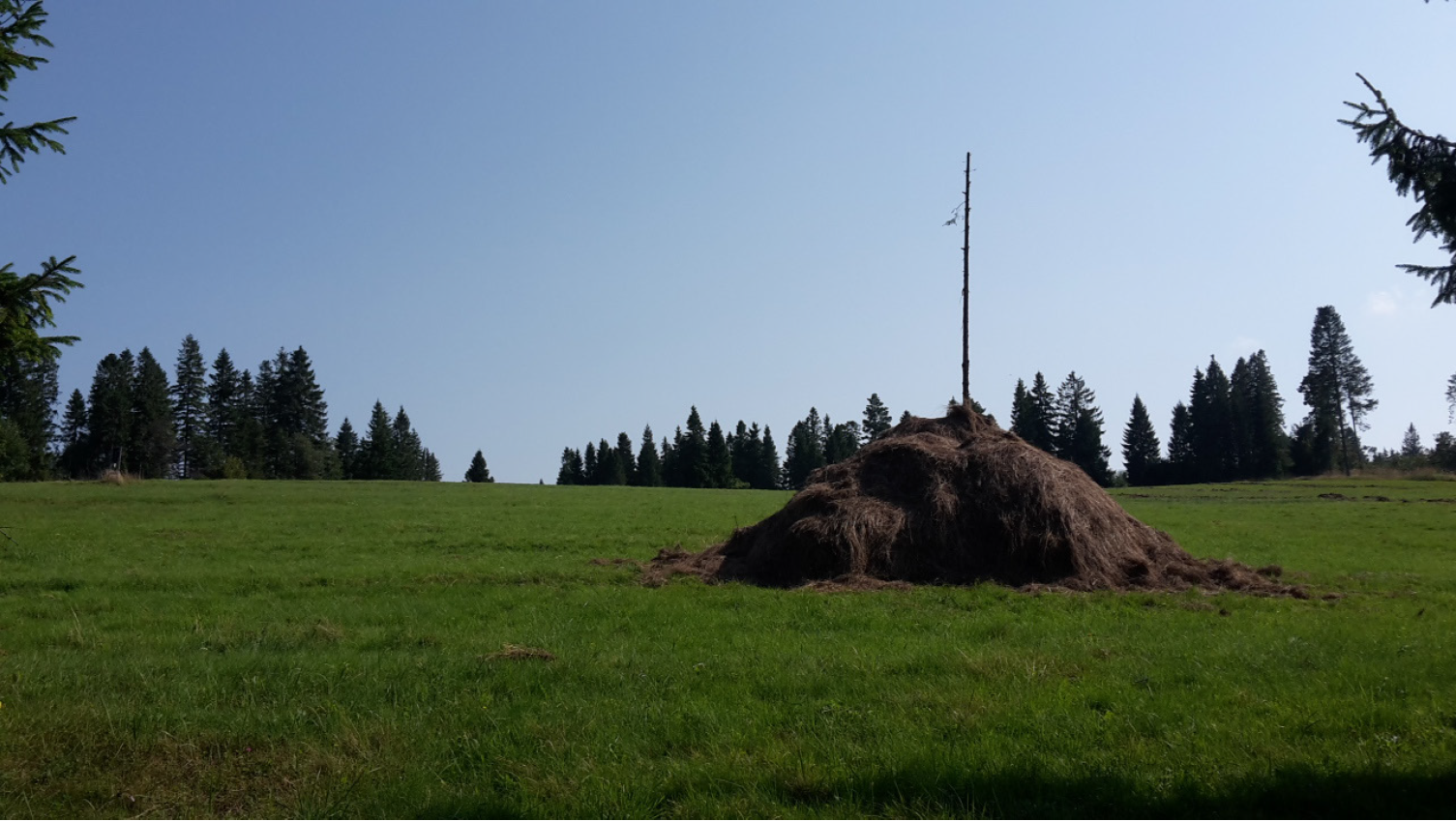
Fig. 1 – arpathian haystacks on agricultural land with a view of the Tatra Mountains. What appears to be a natural landscape is in fact a mosaic of different types of land. The Carpathian landscapes have different values. Land management is influenced by many factors. Pastoralism was the main traditional livelihood on the Carpathians. The traditional pasture landscape is threatened by succession, resulting in a loss of biodiversity. Many valuable sites were destroyed by collectivization and industrial agriculture, which caused irreparable damage to nature and led to the extinction of the Slovak ancestral heritage. These traditional agricultural landscapes are under pressure from human activities. Photo by Elia Moretti.
Of course, the act of field recording cannot be objective. The choice of the tools of recording, their positions, the presence of foreigners and their gaze influenced the outcomes of the recordings. Sound was rather a performative device, bringing its own position, originating a potentiality of dialogue in the same process of listening. Indeed, soundscape doesn’t etymologically correspond to the notion of acoustic environment, because it doesn’t refer to one point of view, a place to observe from. It rather articulates as a space where sound, intended as multiple, malleable but still invisible matter, builds an imaginary. Therefore, soundscapes are active environments, able to offer questions, phenomena and models. An environment made of critical, physical and disciplinary spaces in a continuous exchange characterized by the plurality of individual and collective sonic perspectives.
Intercultural actions are a slippery territory. It is very easy for artists to create superficial work that reproduces dominant inequalities.
Perhaps what is most needed to this kind of experiment is a long-term commitment. The festival UM UM was giving grounding to Symposium Musicum , having already been an active reality in the territory for several years. Even though it’s a relatively small and independent reality, in the last editions it succeeded in framing a perspective of activity in relation to the surrounding communities and minorities.
Although fieldwork took place in the span of just a few days, the experience brought an original approach. Several locals have told us during fieldwork that no gadžo (or gadje in English transliteration, i.e. non-Roma) had ever spent their time in those villages, nonetheless in that way.
There is a moral imperative to attempt such dialogues, imperfect as they are. Symposium Musicum invited us to perceive the act of listening as a temporary activity that establishes relationships in the fragility of what it could be, rather than what it permanently shows. Sound became a performative device, bringing its own position and creating a potentiality of dialogue in the same process of listening. In fact, listening through the microphones and the actions of the local inhabitants only signified what they achieved.
The act of listening has a particular power to transform the behavior of both the listener and the listened to, perhaps even more so in the absence of any technical mediation, especially today when video recording via smartphones has become commonplace (with no difference between center and periphery, or rural and urban environments). Nevertheless, the Roma we met were quite concerned about the presence of cameras, which we deliberately did not bring with us. But they accepted the presence of recorders with curiosity. This field research introduced us to a variety of situations and atmospheres, namely those of repression, spirituality and compassion. These environments included rural villages, ghettos, abandoned and natural spaces, as well as the places we moved through. Most importantly, I need to remark that we did not view these experiences solely through the lens of Roma victimization or loss. Rather, our work has focused on understanding the socio-economic and political conditions that underlie the sounds we have encountered. We wanted to shed light on the complexity of relations between Slovak Roma and non-Roma Slovaks as experienced in everyday life. And from what we heard and the conversations we had (albeit with a very limited knowledge of the Slovak language), the themes that emerged with greater urgency from our fieldwork were social segregation, economic dependency and compromised education.
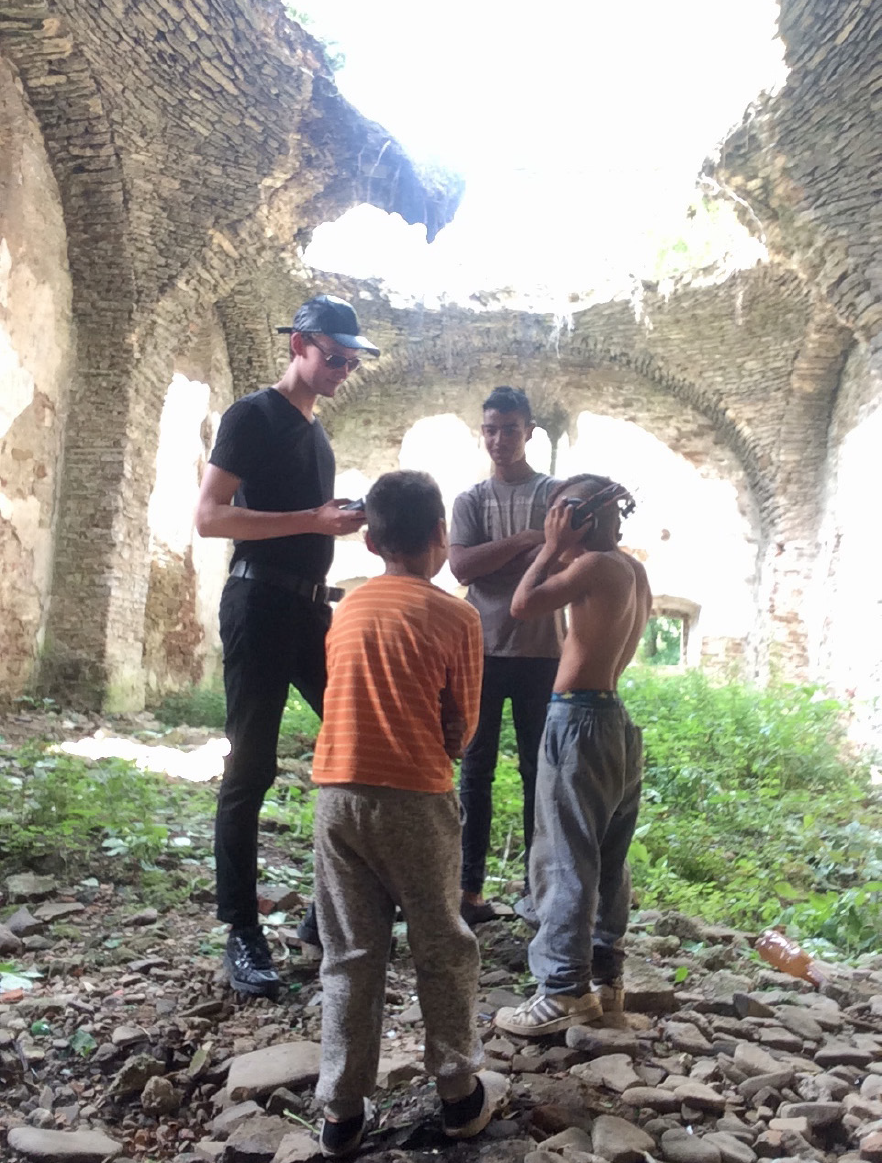
Fig. 2 – The village of Lomnička was founded during the German colonization of the Carpathians, which began in the thirteenth century. Today it is almost exclusively a Roma settlement with about 3,000 inhabitants. In the center of the village stands the ruin of an Evangelical church, abandoned, an unsafe place where locals go in search of shade. Some children showed us a game they were playing with the leaves from the bushes growing inside the church, and in return we played them some recordings of the game itself, a dialogue beyond words that created a creative feedback loop. The church in Lomnička is closely associated with the great Slovak poet Terézia Vansová (1857–1942) who lived part of her life in the village. Photo by Anna Khvyl.
We decide to leave before sunrise, not to strain the hospitality of the
people. On the footpath to Kolačkov through the Carpathians (Levočské
vrchy), we are surprised by a thunderstorm. You can hear the voices of
Kolačkov from hundreds of meters away. Kolačkov is separated by a stream
into a Roma and a Slovak part. When a group of Roma youth want to show us
the way to the supermarket, an elderly Slovak stops them: Since the shop on
the Slovak side was closed, they have to return to their side. As the night
progresses, we are treated with the greatest hospitality on the Slovak
side. Hardly any of them may have ever been on the Roma side. We too
refrain from crossing the bridge.
(diary written during fieldwork by Moretti, Khvyl, and Bold; Kolačkov, August 29, 2019)
Once we came back to Stará Ľubovňa, overwhelmed by the intensity of our exploration, our task was to compose the sounds we had recorded to create a piece of music theater that would invite the audience to participate. We knew that our piece of music theater would take place in a public space, namely the local bus station, which had some empty rooms since the bankruptcy of the grocery store. This composition was meant to be an exploratory medium, allowing the listeners to define their stay in the place and to recreate a proprioception within the context. In light of this consideration, it is necessary to move away from the anthropocentric vision and, instead, to start considering the idea that the acoustic environment is the result of the language of a landscape, in which each element, through sound communication, creates its own cognitive processes. These mechanisms give the possibility to interpret and define one’s own Umwelt , the subjective world and individual universe in which to act.
Coming back to the words “participation” or “collaboration,” I’m not referring to the involvement of a specific individual or group of people, because the whole process was less about the rewards and benefits of particular people and more about exploring the contingent relationships that have been changing all along. Because artistic forms have no intrinsic or fixed political affiliation, and their meaning shifts in relation to the uses that society at large makes of them, Symposium Musicum situates participation as a constantly moving target.
Claire Bishop suggests that participatory art, often used as a tool for social and political change, can create a false sense of democracy and participation. [20] This is because the artist still retains a degree of control over the outcome of the artwork, and the audience is limited in their agency, in their ability to fully engage and participate in the art-making process. Bishop argues that true participation requires a level of agency and autonomy for participants that is often lacking in participatory art. The composition aimed to create a sound object, performative and independent from the authors and from the original sources of the sonic material.
The theatrical thinking behind the acousmatic composition that we produced after the field research was aimed at the encounter, this composition was designed to be performative and participatory in the way that it would trigger relationships between people who would hold on to their vision and only meet because they were waiting for their bus at the bus station in Stará Ľubovňa. Symposium Musicum explored how aspects of music theater practice could embody principles of inclusion. This was done through particular approaches to compositional material, performance practice and audience engagement.
The creative process developed in a collaborative way, and it was based on the assumption that listening is understood as a generative and participatory practice that is never predetermined, but built in the making through the suspension of any idea of gender, context, theory and purpose; and that sound is a critical device that helps unveil the invisible in the world, opening up different spaces, different visions and different approaches to our experiences of it.
Can participatory practices in music theater provide an arena for the empowerment of people so that they can confront on common matters? Does it have emancipatory potential?
We wanted to create processes capable of fostering interactions between the people in the bus station, even if only temporarily, or simply based on the accidental meeting during the accidental experience of inhabiting the same place at the same time. The space of the bus station was not transformed but inhabited; we avoided any illusion, but still the way our sound composition related to the space of the bus station can be thought through the realm of scenography.
In contemporary approaches to scenography, another set of spaces comes to the fore. Sodja Lotker and Richard Gough argue that scenography can happen anywhere. [21] Scenography is to be found not only in the theater but equally in our homes, public spaces, airports, television shows, courts of justice or politics, in fashion and advertizing, on social media and in video games. Expanding forms of scenography implies a conceptual widening of the spaces that scenography creates. These spaces are no longer just backgrounds for performances, but rather are increasingly seen as important sites for self-presentation, encounters, and social interaction. As such, they can be described as performative spaces that actively shape and enact the performance itself. The interactions and reactions to these spaces are integral to their transformation into performance spaces, each imbued with its own unique affordances and agency. Through this process of engagement and transformation, the spaces of the bus station performed through sound, they were able to convey a wide range of meanings and qualities, reflecting both the performers and the audiences who inhabit them.
We aimed at designing a music theater participatory practice, which would expand its performativity along relationality, affectivity, and materiality, defined as core components of (expanded) scenography according to the inventory by Joslin Mckinney and Scott Palmer in Scenography Expanded . [22]
Music theater is understood as spaces of encounter. Can music theater shape interactions? And how is spectatorship involved, addressed, and positioned?
Symposium Musicum is a processual event, with a fundamental emphasis on the aspect of time. Spaces are deeply processual, generating behavior and defining how to perform. Juliane Rebentisch’s book Aesthetics of Installation Art offers a theoretically rigorous version of this argument, based largely on Theodor Adorno’s theories on music. Rebentisch affirms that, for Adorno, music is first and foremost a time-based art form. This is because the sense of music comes from the way successive sonic events relate to each other. [23] “In music,” Adorno writes, “nothing has the right to follow something else unless it has been determined by what precedes it or conversely, unless it reveals ex post facto that what has preceded it was, in reality, its own precondition.” [24]
Disregarding Adorno’s negative view on postwar avant-garde music, I aim to explore the concept of sound installation as a variant of music theater. Here, the acousmatic composition functions as a means of generating a performative atmosphere that alters the actions and perceptions of the participant or observer, transforming both temporal and spatial dimensions.
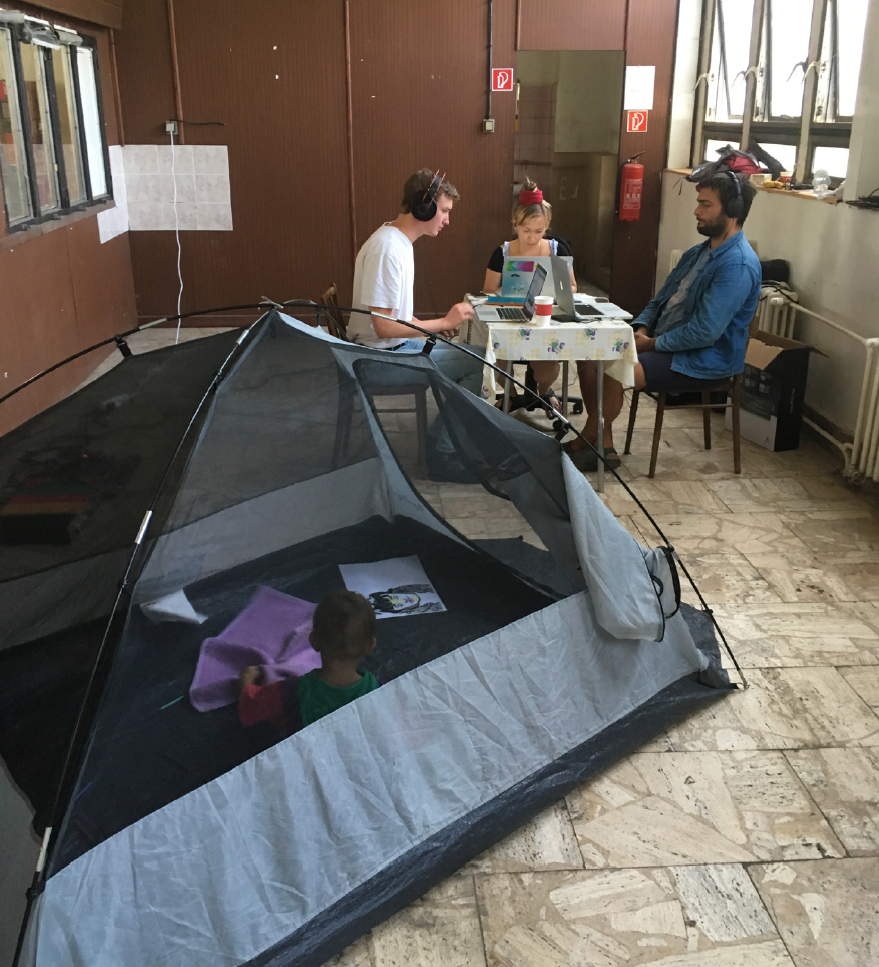
Fig. 3 – John-Robin Bold, Anna Khvyl and Elia Moretti during the composition process in the rooms of a former grocery store at the Stará Ľubovňa bus station. Since the grocery store went bankrupt, the three artists asked for permission to clean the rooms and temporarily occupy them for the UM UM festival. Photo by Marika Smreková.
The composition considered musical parameters and formal aspects of academic music composition. However, as the composition is acousmatic and the source of the sound field recordings, it developed primarily through digital signal processing, entailing the use of software, a digital audio workstation. The result is a delicate and uncertain construct that does not conform to predetermined expectations, but instead encourages re-evaluation, engagement and doubt. This interpretation views the composition as a dynamic process or openwork, providing an alternative to representational symbols and avoiding the appropriation of cultural aspects of ethnic Slovaks and Slovak Roma populations: an ecological way of confronting the world and the possibility of hearing other realities. What might it afford, or enable, in terms of the struggle that the Roma experience daily in the east of Slovakia?
We presented our recordings as a sound installation in a bankrupt grocery
store in a bus station of the nearest town, Stará Ľubovňa, for
UM UM festival
. It encompasses various artistic disciplines, called symposia, which deal
with the relation of different groups in the multiethnic region. Our
Symposium Musicum, musical supper (…here I want to translate the
German word Gastmahl / it means more generally coming together,
sharing hospitalities), dealt with the Roma and their relationship to
Slovak society.
…
Only few people approached the composition with the intent to listen.
However, many people started to cue, standing by the door, as if waiting
for buying their tickets. But they were “just” listening. I think many
people today have experienced something for the first time.
…
One [non-Romani] lady in the waiting room was very concerned. She was
actually upset, she repulsed Roma in any form, even in the invisible and
ephemeral of the sonic dimension. However, this provoked a
conversation/discussion with Marika. Several people had similar, adverse,
reactions: a safe, starting point for intercultural dialogue.
…
Suddenly, in the afternoon, a man with muddy shoes entered with a big
smile. He probably recognised the sheep bells sound. He told me we should
go visit him at the pasture he’s working. He didn’t comment on Roma and
Slovak relationship.
…
Several Roma people inhabited the bus station today, I cannot generalize
one reaction. However, several approached us with an attitude of
complacency. Judging from their comments and gestures, we thought they may
have felt empowered by the sounds. However, how to evaluate such an
achievement? How to receive a feedback from the random travellers? How to
evaluate if and when the performance was transformative?
(diary written during fieldwork by Moretti, Khvyl, and Bold;
Stará Ľubovňa, September 2, 2019)
The third part of the project Symposium Musicum consisted of setting up a sound installation at Stará Ľubovňa bus station, running the whole day September 2, 2019, the first day of school. In the waiting room, the spaces of the former grocery shop, no longer functioning, had been transformed into a performative space. Initially marking a certain kind of disturbance or intervention on senses and cognition, sounds and music were brought to a public and liminal space. If fieldwork focused on listening as an epistemological act of knowledge and dialogue, the performance shifts the community into the role of perceiver and listener in order to provoke relationships within the community itself.
The performance invited a process that, instead of elaborating the situations we encountered in the relations between non-Roma and Roma, involved this reality in a dynamic process with the given context. This perspective brought the composition to the level of an openwork, striving for an alternative to symbolic representation, avoiding the appropriation of cultural features of the Roma and Slovak population we have met during fieldwork, but rather creating a condition of and for knowing. An alternative way of encountering the world and the possibility of hearing other realities.
The perception of the performance is dependent on the way many elements interact with each other and their environment. In this line, George Home-Cook refines the idea of a focused listening directed at sonic phenomena so as to produce what he calls “aural attention.” He suggests that how we listen to performance is, in fact, “an inter-subjective act of embodied participation.” [25] Hans-Thies Lehmann, in his Postdramatic Theater, proposes an “independent auditory semiotics.” [26] Finally, Salomé Voegelin describes the listening act as involving the listener in the world, rather than offering an interpretation of it. Who listens lies in a position of uncertainty between the sound and the sensory self, participating as well to the creation of the aesthetic moment:
Every sensory interaction relates back to us not the object/phenomenon perceived, but that object/phenomenon filtered, shaped and produced by the sense employed in its perception. At the same time this sense outlines and fills the perceiving body, which in its perception shapes and produces his sensory self. Whereby the senses employed are always already ideologically and aesthetically determined, bringing their own influence to perception, the perceptual object and the perceptual subject. It is a matter then of accepting the a priori influence while working towards a listening in spite rather than because of it. The task is to suspend, as much as possible, ideas of genre, category, purpose and art historical context, to achieve a hearing that is the material heard, now, contingently and individually. [27]
Following what Voegelin says, we can understand the performance part of Symposium Musicum as being produced by the same sensory activities, through a process that makes the listeners at the bus station the performers. This one-day performance attempted to include such an enactive perspective on the act of listening. It was an experiment in participatory art, where the act of listening motivated behavior towards intercultural dialogue.
In the ephemeral act of producing and listening to sound, a different space was created where opportunities for togetherness, dialogue and confrontation were generated. The audience became fully engaged in the performance, which they received as an environment. Clearly, such a position has the potential to make participants extremely vulnerable, to disempower them almost completely. But what if such performances could somehow create access to new sources of collective empowerment, especially through the forging of a sense of community, then they could point to the potential for a radical response to the most difficult challenges Roma face among non-Roma, in other words, in the dynamics of coercion, control, cohesion and collective power; in short, who empowers whom for what.
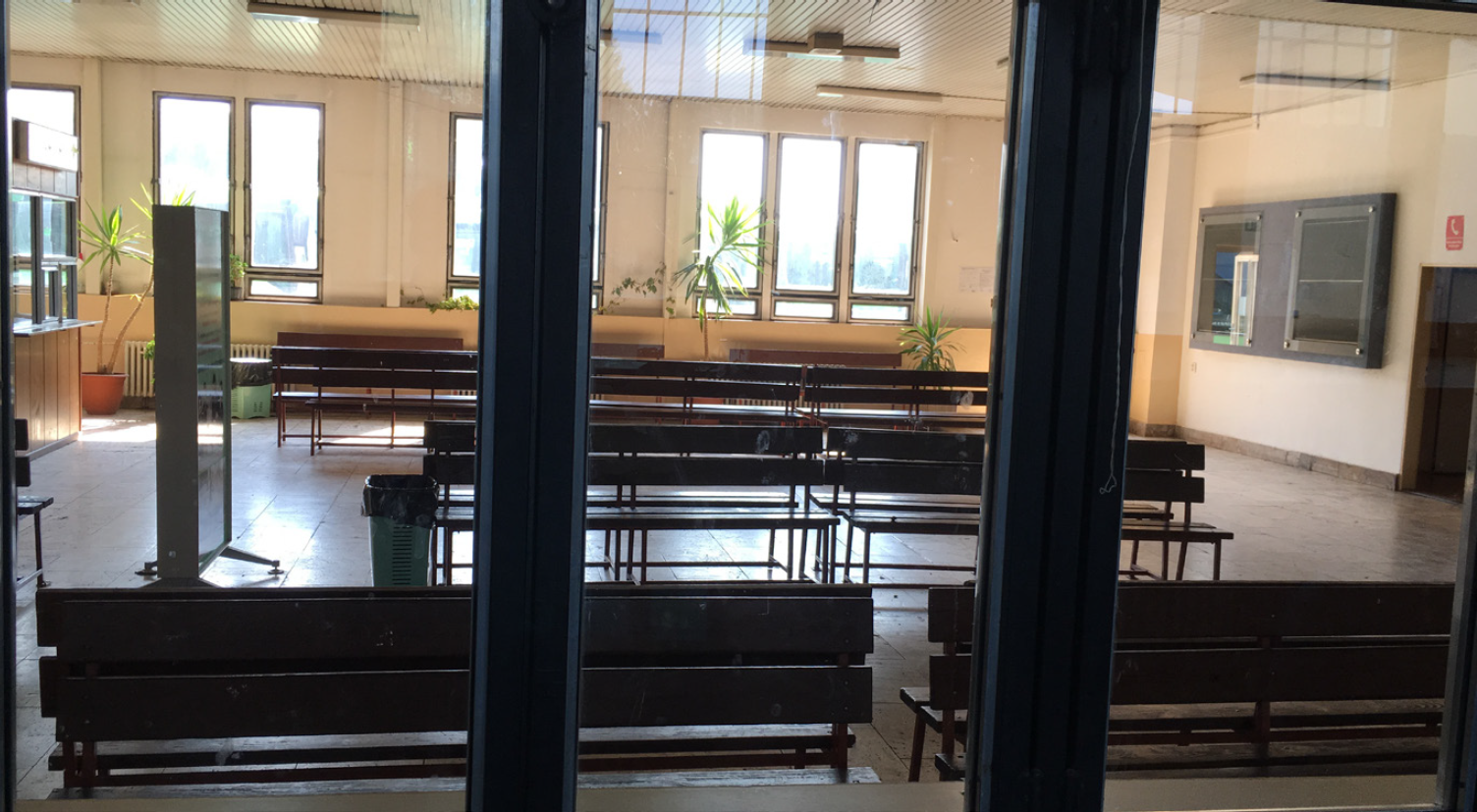
Fig. 4 – The waiting room of the bus station in Stará Ľubovňa. Photo by Elia Moretti.
One way of explaining these dynamics of interaction could be through the concept of periperformativity, as defined by Eve Kosofsky Sedgwick. Periperformativity, she indicates, although not itself performative, clusters around performatives. Periperformative utterances are in the neighborhood of the performative. The locality of the periperformative resides in spatial metaphors and spatial figurations. [28]
Sedgwick’s notion of the periperformative is an extension of Althusser’s concept of interpellation, which refers to the means by which individuals are incorporated into cultural and ideological formations. Interpellation is structured as an “I-you-they” scene in which a person hears their name being called and responds to it as if it were their identity. Sedgwick’s periperformative expands on this approach and acknowledges that individuals are not only incorporated into ideological structures through certain explicit performances but through a broader context known as the periperformative environment.
This periperformative context is spatialized and objectified through a series of material bodies, including architecture, space, visuals, institutions, and politics, and is temporalized through narratives in the forms of rhetoric and logic. The binding is therefore multi-layered, encompassing moral relationships implied in explicit performances, social and political relationships implied in periperformative contexts, spatial boundaries established through environmental periperformativity, temporal limits established narratively and performatively, and the situation as it extends and bleeds through moral, political, spatial, and temporal areas.
Indeed, Symposium Musicum was able to link to certain modes of listening in what Budhaditya Chattopadhyay defines nomadic condition . [29] The listener, rather than analyzing the objective meanings of the sounds, addresses them in relationship to imagination and memory of feelings that are triggered during the listening. The participation in the performance generates memories and imaginations of other realities that, by reacting immediately, propose reflections and confrontations. These are temporary sounds, since the listeners are moving, inhabiting the bus station for the short period until the bus will leave. The bus station is a liminal space, indeed, a neutral ground that hosts the regular, voluntary, informal gatherings of individuals.
People kept coming to the bus station, some staying for a long time, others for a few moments, but either way they were becoming performers, not just witnesses. Through their physical presence, perception and feedback, the audience became cocreators. In this way, Symposium Musicum became a space for participation, where cultural actions, positions, could be developed in order to generate intercultural dialogues. Sound involved people in an affective environment based on crossing, meeting, waiting, talking, living, looking for tickets and walking in the environment itself. Through sound we imagined different realities, built in dialogue with the other, yet familiar.
We experienced very different reactions: some people smiled, others were curious and asked questions, some rejected the experiment, others were attracted but looked confused, or some were triggered by sounds not specifically related to the relationship between Roma and non-Roma. We were present at the station while the sounds were playing, so we were able to respond to some of them in a way that facilitated or provoked such intercultural dialogue, but ideally our presence shouldn’t have been necessary, in fact we had no control over what was happening around us. We were observers ourselves, with a greater insight into what was going on.
Performativity is typically understood as a productive and generative concept, focusing on human actions that produce or generate certain outcomes. However, it is also important to consider the performativity of seemingly non-productive aspects of human action, such as silence, hesitation, observation, perception or waiting. Perception is an important aspect of performativity. When we observe and perceive the world around us, we are actively shaping our understanding of it. This can have a significant impact on how we interact with others and how we make decisions that affect the context around us. By being mindful of our own observations and perceptions, we can become more aware of the ways in which our actions and decisions are shaped by our environment and the people around us. These seemingly non-productive actions are just as important to our understanding of human behavior and its effects on society. Symposium Musicum invited a deeper exploration of what performativity means, and what role it plays in those social and cultural contexts.
Essentially, these experiences allow us to interact with the world in ways that are different from typical, habitual responses. Aesthetic experience provides opportunities that can act as a short-circuit to stereotypes. These possibilities are short-circuited or rerouted in aesthetic experiences. This creates a tension between our habitual responses and those specific to the artistic context, which can result in an affective response that is not fully expressed as a meaningful and complete action. In other words, we are on the verge of a response that we cannot fully articulate or act upon. This was the performative methodology of Symposium Musicum , which took place for an entire day at the bus station in Stará Ľubovňa, the town we’d set out from and returned to for our fieldwork.
Symposium Musicumaimed to go beyond documenting sonic encounters between specific modes of perception and bodies. It also sought to place these experiences within a broader intellectual context of critical listening and the examination of one’s own positionality. Objectively, it is difficult to measure the impact of this project. It definitely had an impact on myself and my relations to some of the people we first met during fieldwork. Transformations happen on a personal basis and at different rhythms. How do you gather such feedback? I can only hope that these kinds of relationships have been transformed for others, and that this is reflected in future practices of respect, care and attention. At the time of publication of this article, more than five years have passed, and unfortunately the political situation in Slovakia has taken the line of national populism, with a ministry of culture advocating that Slovak culture should be Slovak and nothing else. A typical populist, arrogant, short-sighted position that overlooks the fact that Slovak culture (like any other) has been shaped by other influences in its history.
With this in mind, musicology has a responsibility to address these issues by facilitating a dialogue between music, music theater, and contemporary social and political struggles. Symposium Musicum can act as a catalyst for critical discourse and reflection within the field of musicology. By drawing on interdisciplinary methods and incorporating diverse perspectives, Symposium Musicum may challenge established notions and encourage a more nuanced understanding of music and its social and cultural implications and positionalities. [30] Furthermore, by linking music and music theater with broader socio-political issues, Symposium Musicum can stimulate much-needed engagement and dialogue between the discipline of musicology and other fields of study, fostering a more collaborative and interdisciplinary approach to the study of music.
Perhaps most importantly, Symposium Musicum has shown how experimental music theater can challenge traditional notions of agency. This whole process has shown that agency can be found in unexpected places and that the power to effect change can come from unexpected sources. This has been a particularly important message in a world where people often feel powerless in the face of large-scale political and social issues.
Symposium Musicum therefore aims to open up a perspective on the possibilities of agency by reflecting on the political not as an arena of overt and exaggerated acts and images, but rather by recalling how political recognition is given through the care of attention, where listening can also recur. While priority is often given to the one who delivers argumentations, Symposium Musicum equally turns the attention toward the one who listens—the listening as an act that lends an important force. “For listening also draws us toward states of critical reflection, slowness, shared attunement, and capacities for understanding or care, all of which articulate other dimensions of power.” [31] To learn to listen to each other we require a complete undoing of how we are taught to listen. Narrowly misinterpreted as conditional on the ears and voice, listening is understood as instrumental to sharing language. Listening is, as all communication, trained. It is encultured and geographically specific, shaped by social, political and economic forces, violence and oppression. The fallacy of this is clear when we consider that even though we assume we listen carefully, being unheard, misheard or misunderstood is a common complaint.
Reality can only consist of listening to the voices of those who know what is going on (human and non-human) and thus broadening one’s awareness. Trapped in our logic, what seems right from a distance is often completely wrong. Our goal was not to produce, instead, we were set in motion and this determined simultaneity, transition and adaptability. Symposium Musicum took place to prioritize the Roma and non-Roma relationship, knowledges, voices and practices. This is an approach that requires time, until the moment when people and places tell us what they want from us, what we can be in service of, and become familiar with what is incomplete, unknown and ultimately incommensurable.
From this point of view, aural attention engages in processes that are related to politics and social relations. Thus, if we take sound as an ontological tool, aesthetic practices based on it may gain relevance in the contemporary activist and political scenario of public spaces, generating tensions, questioning dominant points of view and creating conditions for other positions to be perceived. These are transitory territories where we have communicated our own perspective through sound, creating a possible dialogue in the process of listening itself.
[1] To avoid confusion between nationality and ethnicity, I will refer to these relations as “ethnic Slovaks–Slovak Roma” or “the majority–minority,” “Roma and non-Roma,” “Slovak Roma among non-Roma.”
[2] Additionally, the sounds referenced throughout the text have been published in the form of an LP following a re-editing process. The album, entitled Symposium Musicum, was released by the Slovak label mappa (MAP030, 2023).
[3] This is something closer to what Guy Debord would define as detournement ; see Guy-Ernest Debord and Gil J. Wolman, “Mode d’emploi du detournement,” Inter 117 (2014): 23–26. Debord and the Situationist International created possibilities (situations) out of everyday life, with the aim of critiquing and challenging the alienating and socially controlling forces of the spectacle. For Debord, détournement was by definition an anti-spectacular action. I am aware that the social, cultural and also political environment of postwar France is very distant from today’s Slovakia. However, I find similar political motivations in the challenge to shift the paradigm of everyday reality with an artistic sensibility.
[4] See Mikel Dufrenne, The Phenomenology of Aesthetic Experience, trans. Edward S. Casey et al. (Evanston: Northwestern University Press, 1973), xlviiin2.
[5] Maurice Merleau-Ponty, Phenomenology of Perception , trans. Donald A. Landes (Abingdon: Routledge, 2012), 147.
[6] See Dufrenne, Phenomenology.
[7] One of the key implications of the partage du sensible is that it has the power to both enable and constrain political action. On the one hand, it can serve as a source of empowerment for those who are excluded from dominant modes of perception and representation, allowing them to challenge and disrupt the existing order. On the other hand, it can also serve as a means of control and domination, reinforcing existing hierarchies and preventing meaningful political change. Overall, Rancière’s concept of the partage du sensible is a productive tool for understanding the ways in which power operates in our society, and for thinking about how we might challenge and transform existing structures of domination and segregation.
[8] Jacques Rancière, The Politics of Aesthetics: The Distribution of the Sensible, rev. ed., trans. Gabriel Rockhill (London: Bloomsbury Academic, 2013), 7.
[9] Rancière,The Politics of Aesthetics, 59.
[10] See Brandon LaBelle, Sonic Agency : Sound and Emergent Forms of Resistance (London: Goldsmiths Press, 2018).
[11] Pauline Oliveros, Deep Listening: A Composer’s Sound Practice (New York: iUniverse, 2005), xxiii.
[12] Dylan Robinson,Hungry Listening: Resonant Theory for Indigenous Sound Studies (Minneapolis: University of Minnesota Press, 2020), 15–21.
[13] Robinson, Hungry Listening, 2–3.
[14] Recognizing and understanding these factors is crucial to develop our listening skills.
[15] This understanding emphasizes the significance of clashes and grappling that take place within these sonic encounters. It highlights the unconscious nature of the listening process, which involves engaging with musical subjectivity and alterity. Consequently, we are prompted to consider how our own perspectives of ethnicity, class, gender, and ability shape and frame the moment of contact between the listener and the sounds being listened to.
[16] Brandon LaBelle even proposes to situate sound and listening as the basis for an insurrectionary sensibility—“a potential found in the quiver of the eardrum, the strains of a voice, the vibrations and echoes that spirit new formations of social solidarity” (LaBelle, Sonic Agency, 5)—so that they may support an involvement into contemporary politics and society. These motivations stand at the core of socially engaged art, which is a practice that focuses on creating social change by directly engaging with specific communities and addressing social issues. It involves collaborating with community members, initiating dialogue, and seeking to create a social transformation through art that challenges social norms and power structures. When talking about socially engaged art in Central and Eastern Europe, it is necessary to look at the region’s socialist past. That has been influenced by a deep-rooted tradition of activism and social engagement, which has informed the work of many artists—an interest in participating in daily life, simulating everyday human activities (e.g., Milan Knížák), and turning the observer into an active participant (e.g., Jiří Valoch ). According to Stanisław Ruksza, in the 1990s, artists were involved in a conflict that concerned various aspects of life, such as political reality and the transformation of political language. The purpose of this social movement, created and supported by artists, was to establish a more critical society that could experience democracy by critically examining its own institutions; see Artur Żmijewski, Trembling Bodies: Conversations with Artists (Bytom: Kronika, 2010), 13.
[17] Sound is not limited to a particular object or category and cannot be compared to something tangible. It cannot be strictly categorized as social, political, or cultural, but instead should be considered as the interaction and relationship between various objects. Sound exists in an ephemeral space where these objects meet, and it relates to the listener, rather than to something permanent. This intangible quality of sound has the capacity to challenge and reshape our perceptions of identity, meaning, and subjectivity.
[18] The website of the festival is still online, as a kind of archive of the festival and of the other projects that have come out of it: https://umumfestival.com
[19] Raymond Williams, Keywords: A Vocabulary of Culture and Society, new ed. (New York: Oxford University Press, 2015), 40.
[20] Claire Bishop, Artificial Hells: Participatory Art and the Politics of Spectatorship (London: Verso Books, 2012).
[21] Sodja Lotker and Richard Gough, “On Scenography: Editorial,” Performance Research 18, no. 3 (2013): 3–6.
[22] Joslin McKinney and Scott Palmer, eds., Scenography Expanded: An Introduction to Contemporary Performance Design, Methuen Drama (London: Bloomsbury Methuen Drama, 2017), 8–13.
[23] Juliane Rebentisch, Aesthetics of Installation Art, trans. Daniel Hendrickson and Gerrit Jackson (Berlin: Sternberg Press, 2012), 211.
[24] Theodor W. Adorno, “Vers une musique informelle,” (1961) in Quasi una Fantasia: Essayson Modern Music, trans. Rodney Livingstone (London: Verso, 1998), 297.
[25] George Home-Cook, Theatre and Aural Attention: Stretching Ourselves (Houndmills: Palgrave Macmillan, 2015), 168.
[26] Hans-Thies Lehmann, Postdramatic Theater,trans. Karen Jürs-Munby (Abingdon:Routledge, 2006), 91.
[27] Salomé Voegelin, Listening to Noise and Silence: Towards a Philosophy of Sound Art (New York: Continuum, 2010), 3.
[28] Eve Kosofsky Sedgwick, Touching Feeling: Affect, Pedagogy, Performativity (Durham, NC: Duke University Press, 2003), 68.
[29] Budhaditya Chattopadhyay, “Auditory Situations: Notes from Nowhere,” Journal of Sonic Studies 4 (2013).
[30] This can be achieved by disseminating the results of the project as a tool to create conditions for an encounter between Roma and non-Roma or to arouse the curiosity of scholars far from the Carpathians; by organizing conferences, listening sessions and workshops to be seen as well as work opportunities for Roma; and by promoting cooperation between scholars and practitioners in the field, specifically to recreate such a relationship between Roma and non-Roma at the academic and institutional level.
[31] Brandon LaBelle, Acoustic Justice: Listening, Performativity, and the Work of Reorientation (New York: Bloomsbury Academic, 2021), 4.