
INTERVIEW
Crafting Sensation: The Alchemy of Sound in Gaspar Noé’s films.
An Interview with Ken Yasumoto.
*
Sara Aresu
Sound Stage Screen, Vol. 4, Issue 1 (spring 2024), pp. 97–119, ISSN 2784-8949. This work is licensed under a Creative Commons Attribution-ShareAlike 4.0 International License. © 2025 Sara Aresu. DOI: https://doi.org/10.54103/sss28375.
Introduction
Ken Yasumoto is a film sound professional who has worked in a variety of roles including sound editor, sound effects designer, sound editor supervisor and more. After graduating from the Louis Lumière film school, he began his career as a cinematographer, first working with directors such as Luc Besson and Leos Carax. His career includes collaborations with several French directors, the most important and long-lasting of which is his work with Gaspar Noé, where he is involved as a sound designer. The film that marks the beginning of a long and fruitful professional relationship is Enter the Void (2009). The sound designer recalls being contacted by the director (who asked him to do the sound recording), not so much because he knew or appreciated his work, but because he remembered his Japanese name and felt there was a stronger connection to the sound approach required for the film, which was to be shot in Tokyo. Yasumoto was unable to take part in the shooting for personal reasons, but a year later he was invited to work on the film’s post-production. [1]
Gaspar Noé is an Argentine-French filmmaker who began his career in cinema as an assistant director. During his studies, he developed a close relationship with French screenwriter and director Lucile Hadžihalilović. Both motivated by the desire to create “atypical” films, they co-founded Les Cinémas de la Zone in 1986, an independent company that allowed them greater creative freedom in financing their projects. Noe’s films have been associated with a movement often described as the New French Extremity, a term introduced by James Quandt to identify a provocative (in his view) trend in French cinema between the 1990s and 2000s. [2] This style emphasizes intense physical and emotional experiences, later reinterpreted as “cinema of the body” by Tim Palmer and “cinema of sensation” by Martine Beugnet (concepts that extend beyond French cinema). These definitions underline a common focus among certain filmmakers on visceral, polarizing narratives that challenge conventional audiovisual experiences.
Gaspar Noé’s professional career began with the short film Carne (1991). Although he initially intended to expand it into a feature film, financial difficulties led to the production of Seul contre tous (1998), a true sequel. This was followed by Irréversible (2002), which gained notoriety for its shocking content and caused strong reactions at Cannes, including several people fainting. This film marked a turning point in Noé’s career and preceded his collaboration with sound designer Ken Yasumoto on Enter the Void, for which Noé secured significant funding, making it his highest-budgeted film to date. The story follows Oscar, whose death triggers a journey through his disembodied consciousness. The narrative of Enter the Void explores themes of life, death, memory, trauma and altered states of mind, using subjective camera angles to immerse viewers in Oscar’s memories. Inspired by his personal vision of certain visionary and dreamlike cinema, shaped by impressions of films he watched throughout his life, including his childhood, Enter the Void represents Noé’s most ambitious and longest gestating project to date. It seems to be perhaps the most emblematic of his cinematic style and poetics. Continuing his collaboration with Yasumoto, Noé directed films that further expanded his immersive and sensory approach. In Love (2015), he explored love and heartbreak in 3D, incorporating explicit scenes of unsimulated sex to enhance the raw emotional experience. Climax (2018) depicts the chaos of a dance troupe with elements of psychological horror. Lux Æterna (2019) is an experimental metacinematic work that pushes the boundaries of traditional narrative cinema, merging the processes of filmmaking with the story itself to create a chaotic, disturbing and ultimately torturous sensory experience. Vortex (2021), which stands out for its documentary-style approach, focuses on aging and memory. Despite a seemingly more sober tone than Noé’s previous works, the film retains a sophisticated tone, aided by the use of split screen, a technique previously explored in Lux Æterna (2019).
Despite his background in the visual arts, Gaspar Noé has developed specific preferences for sound, which in his films often creates a disturbing effect or induces an altered state of consciousness in the viewer, in accordance with his visual aesthetic. Not being a sound expert himself, he has always relied on trusted professionals, including Yasumoto for sound design and Thomas Bangalter for music. His choice of these experts was not driven by a search for a defined style, but rather by their alignment with his creative vision. He selects and retains his collaborators on the basis of their sensibility. In general, one of Noé’s creative requirements is to work with a small crew, which fosters a collaborative and artisanal environment, but can also limit technical possibilities. Noé insists that sound work is done simultaneously with image editing, sometimes even during shooting, in order to optimize production time. This approach encourages a creative exchange between the visual and sound departments, enriching the production process. Noé’s aesthetic, which is inextricably linked to the concept of chaos, is also reflected in the soundtrack (understood as all the audible sounds in the film), which was designed and tailored by Yasumoto. In Enter the Void, the “void” appears as an “impermanent” flow of sound, a complex web in which the abstract sounds of pre-existing concrete music, voices, environmental noises and music intertwine to form an indivisible whole within Oscar’s subjective sphere. Although the subsequent films also take different approaches, they all aim to psychologically and emotionally immerse the viewer through images and sounds that convey more intimate and oneiric impressions than realistic and sharp representations.
Interview
Sara Aresu: Your long collaboration with Gaspar Noé began with Enter the Void . The term “sound design,” invented by Walter Murch, is ambiguous and often used with varying interpretations: what exactly did you handle in this film?
Ken Yasumoto: Initially, Walter Murch invented the term “sound design” to bypass union rules. But it fits well with Murch’s approach to Coppola’s films. He handles the entire soundscape from A to Z. He has a panoramic view of the film’s sound, including dialogues, sound editing, Foley, music, etc. He may even get involved before shooting to anticipate recording setups. The term “sound designer” is often used now to refer to the person who creates non-naturalistic sounds that could be likened to music but are not necessarily melodic. Basically, anything between naturalistic sound editing and music. Strange sounds… But this interpretation of the term sound designer is not mine. I would be closer to Walter Murch or Wylie Stateman. For Enter the Void, I took care of the entire soundtrack. I did the sound editing, dialogue editing, recorded the ADR, Foley, assembled the music, and pre-mixed everything with the help of Nicolas Bourgeois, Alexis Durand, and Hiromune Kurahashi.
SA: What were the main steps in the sound creation process? Can you outline the key stages from conception to final execution?
KY: I started by editing the production sounds. Very quickly, I convinced Gaspar that we needed to post-synchronize a large part of the film. For example, the first part of the film up to Oscar’s death is entirely post-synchronized. This allowed for greater freedom in voice processing. I didn’t want to depend on the quality of the on-set recording. The direct sound from the shoot wasn’t bad but not pure enough to be manipulated as I wanted. Then we recorded the Foley for this first part of the film. This was followed by two or three Foley sessions. I had to do the Foley in several stages because Gaspar initially didn’t want any Foley. I managed to convince him gradually. He didn’t want ADR either. By re-recording the dialogues and Foley, we had much more leeway to transform these sounds. Simultaneously, we did the sound editing. We also recorded sounds with Thomas Bangalter and his modular synth for an entire night. Thomas created sound material that we mainly used for the mandalas, those tibetan geometric figures that serve as transitions between different locations in the third part of the film (the astral vision part). I edited all these sounds (dialogues, effects, foley, etc.) and pre-mixed them simultaneously. One of the difficulties was that the image was constantly changing. New edits and new VFX all the time. Then we did the final mix with Lars Ginzel, but the image kept changing, which made the process quite complicated.
The key stages for me were the work on the voices, which I did very early in the process, and the first screenings of the film where I began to understand what Gaspar wanted. But I remember the process as extremely chaotic and exhausting for everyone. It’s hard for me to precisely recall the “workflow” because I don’t think there really was one. You could say I moved forward in a disorderly manner. I think the chaos and fatigue contributed to the creation of the sound and perhaps the film in general. The real key stage for me was a screening that went very badly. Gaspar felt I was not at all doing what he envisioned. I had assembled too many layers and other abstract sounds when it needed to be much simpler. Gaspar is very pragmatic. At first, I felt we had to do something very stylized or very “arty” given the extreme sophistication of the image. In fact, we had to create a soundtrack that was the image. The sound of this image. Exactly what Oscar hears. Not a single sound in the film is one that only the viewer hears (and that’s why there’s no film score). We hear what Oscar hears. Not what the camera hears but what Oscar hears, meaning what enters his ears but also and especially what is distorted by his brain (DMT intake, childhood memories, emotional memories with his sister, current emotions, fatigue, etc.). Even Delia Derbyshire’s Bach Air is, to me, a music he hears in his head. So, it needed to be something very organic, very natural without necessarily being naturalistic. Gaspar didn’t explain this to me. I had to interpret it from his frustration after this catastrophic screening for me. That’s why this screening was a key stage.
SA: Could you describe the process of integrating the sounds produced by your work, the sound effects provided by Bangalter, and the film’s music? I’ve read that Bangalter provided a “palette” of drones and music, but it’s unclear if someone else processed or edited this material. Additionally, when listening to the soundtrack, it’s hard to discern how these elements intertwine, especially considering the interaction of different voices and ambient sounds, such as street voices while Oscar is in his room or the overlay of Oscar’s voice with the vortex sound during his “journey,” followed by the phone sound bringing him back to reality after his hallucinations. Can you explain how this complexity was managed?[3]
KY: As I mentioned earlier, there wasn’t really an organized “process.” I edited the sounds based on my whims and the urgencies. The palette provided by Thomas was very useful for the mandalas. However, he didn’t provide any music. All the music in the film is pre-existing music (Delia Derbyshire, Christian Vogel, Throbbing Gristle, etc.) except for Thomas Bloch, who reinterpreted Bach on the glass harmonica for the film. I also created many sound effects like Thomas. When we worked with Thomas for this sound palette, the three of us (Gaspar, Thomas, and I) were in my studio. The sounds were created gradually through the night without a precise direction initially. Thomas started producing sounds, and we reacted to these sounds. I edited these effects based on the needs and desires of each scene afterward (mainly for the mandalas). What we had was really a sound palette.
The complexity is managed through a succession of layers and experimentation over time. There was no initial plan. Besides, there is never a plan like a musical score when doing film sound design. Our raw material is the “image” edit. I put “image” in quotes because the image edit always comes with an initial draft of sound editing and dialogue editing. It gives a direction. There are several ways to approach a film. For Enter the Void, I started with the dialogues. Work on the production sounds, ADR recordings, pre-mixing the voices. This allowed me to get into the film, give a color to the voices, and especially find the sound of Oscar’s inner voice. What may seem complex in retrospect is not so much actually. The complexity arises from significant work on each sequence. We do, undo to redo, then prune, then have new ideas, etc. Sometimes what seems very complex is actually very simple. The final sequence, starting with the accident, Linda as a child crying, and leading into the Love Hotel, I edited quite quickly. If I remember correctly, I found this treatment of the voices from the first attempts. And this sound of the voices with slight distortion and echo set the tone for the rest of the sound layers.

Fig. 1 – Psychedelic vision of Oscar’s mental trip in Enter the Void: colorful fractals with ambient sounds, voices, and a pre-existing piece of experimental electroacoustic music.
SA: In your previous discussions, you mentioned Gaspar Noé’s desire for sound editing to be done simultaneously with image editing. I’d like to know if the same process was followed during the making of Enter the Void .[4]
KY: With a few details aside, we indeed did both simultaneously.
SA: Did you have the opportunity to review the film’s script during the sound creation process? Given that Noé wrote very few dialogues, I’d like to know if you found any crucial elements or indications in the script to guide your choices in the film’s sound design and environment. For example, were Oscar’s heartbeat sounds at the moment of his death specified in the script, since this choice of internal sound was also present in his previous film, Irreversible?
KY: I had the script in my possession, but I don’t remember consulting it for sound creation. I would need to find and re-read it to verify, but I don’t think so. I understood early on those internal sounds interested him because Gaspar gave me, when I arrived on the film, old vinyl records of internal sounds used to train doctors to detect heart malformations with a stethoscope.
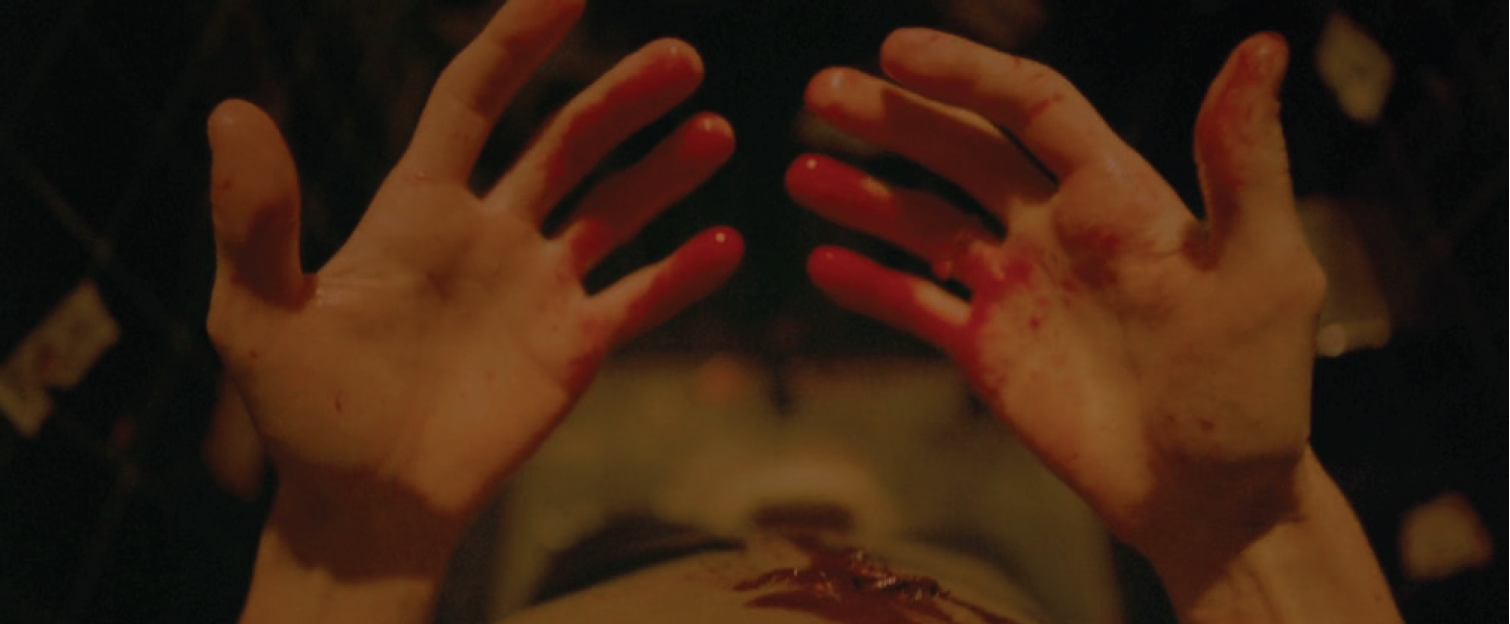
Fig. 2 – Subjective perspective of Oscar being shot in Enter the Void, with the sounds of his heartbeat and his inner voice.
SA: Did you receive specific instructions from Gaspar Noé regarding the treatment of voices, such as Oscar’s thoughts or his DMT trip, or the child’s cry during the accident? Did you find creative solutions for treating these voices yourself?
KY: For the thoughts, we first recorded Nathan in the studio. Since I didn’t yet know how we would treat the voice, I used several setups, different microphones to have different voice colors. Then I edited them, removing everything that doesn’t exist when we think. Breathing or mouth noises. In our thoughts, we have a very “theoretical” voice. No organic noise.
What needs to be emphasized is that the actor’s performance determines the success of the “thought” effect before any creative and/or technical solution.
Then Gaspar suggested overlaying the takes to give a disturbing superposition effect. So, we synchronized a second take of the same text word for word, creating a slight shift at times. It’s not an echo; it’s two different takes. It gives the impression that the thoughts are jostling in his head or that he is under the influence of drugs or very tired. You should know that Gaspar had already spent a lot of time on the voice-over of the butcher played by Philippe Nahon in I Stand Alone. He had already experimented with different processes.
I didn’t have specific instructions for Linda’s cries. As I said earlier, the treatment of the cries was relatively easy to find. I used an effect that I really liked called Echofarm. It simulates a tape echo. You can adjust the distortion, delay, and feedback. I don’t know why I love this effect. I had used it for another film, and it seemed very suitable for these voices. It gives an analog feel and thus probably a natural one. The effect is oddly very strong and obvious but doesn’t seem artificial. As if this sound could exist in nature.
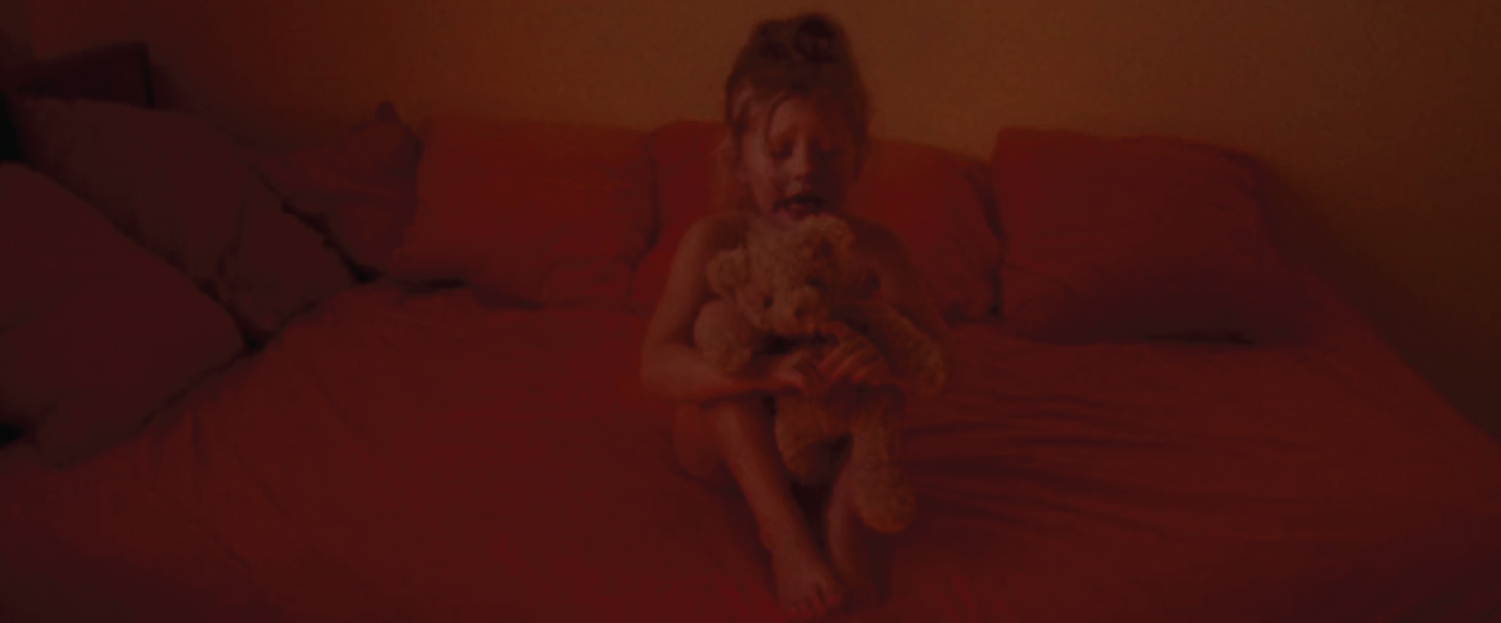
Fig. 3 – Linda’s crying in the first subjective memory of Oscar in Enter the Void.
SA: Were there situations where the visual editing influenced the creative decisions in terms of sound, and vice versa, in Enter the Void?
KY: Without visual editing, I can’t think about sound. For me, it’s inseparable. So, I would say 100% of the sound is influenced by the image. It’s harder to say the other way around. I would tend to think yes to a certain degree, but I don’t have any example that comes to mind.
SA: What is the main aesthetic or narrative objectives you aimed to achieve through sound in this film?
KY: For Enter the Void, as for other films, it’s hard to think in terms of goals to be achieved. I feel that working with sound material reveals things to us as we progress in making the film. In some films, I can possibly create a constraint at first to approach the film from a certain angle. I would say that I set myself an objective from the start to work on the voices. To find the tone of the film through the voices. By spending whole nights recording Nathan, Paz, or Cyril with Gaspar in my small studio, I was also able to soak in the spirit of the film. I felt like I was with the film’s characters. We worked at night, and the atmosphere of these recordings had some similarities with the film itself.
So, I’m not really answering the question. I think we found the film’s aesthetic over time and through work. I can’t say I aimed to achieve any particular goal.
SA: In a recent interview, I learned that Gaspar Noé didn’t intend to incorporate a sense of movement in the sound of his films. [5] However, considering that many viewers might expect an immersive audiovisual experience, especially with the commercialization of the DVD with 5.1 sound and the possibility of spatializing sound in motion, I was struck by the fact that in Enter the Void , the sound is mainly static in spatial terms. Do you know the reasons for this choice?
KY: First, I must say that the term “immersive,” which is very much used nowadays, doesn’t resonate with me at all. It’s used in every possible way and doesn’t mean much anymore. Let’s first talk about the broadcasting format. The film is mixed in 5.1 for its “theatrical” release (for the cinema). This is just a technical format. This means there are 6 possible tracks corresponding, to simplify, each to a speaker (Left, Center, Right, Left surround, Right surround, and Low-Frequency Effects). If we want, we can put sound only in the center and nothing on the other tracks. It’s like deciding to make a film in black and white even though color is technically possible. It’s an artistic choice.
When we make the DVD or Blu-ray, we don’t touch the spatialization of the cinema mix. The idea is to stay faithful to the “theatrical” version’s mix. We usually modify the dynamics, so the viewer doesn’t constantly play with the remote-control volume.
In general, Gaspar doesn’t like when the sound overflows from the image and when the sound moves within the image. I don’t have an explanation for this choice, which he has always asserted. It’s a matter of taste. He is not against some occasional overflows in the surrounds. In Climax, there is a lot of music in the surrounds. Some elements (mainly music) move, but it’s imperceptible. I tried to synchronize these movements with the sensations one might have while watching the film, which makes the movements more natural.
I think the immersive aspect of Enter the Void is not technical in the sense that we would put sound everywhere to immerse the viewer in an enveloping atmosphere. The immersion must be emotional. It plays out in the texture of sounds and voices, the depth of sound fields within the image. Sound immersion also calls a lot on the memories of sound sensations we all have. For example, in a nightclub scene (there are several in Enter the Void ), the accuracy of reproducing the sensations we had ourselves in a nightclub is more important than the strict reproduction of nightclub sound. It’s the difference between a faithful capture of nightclub sound and an interpretation of what the character might feel. What we seek is the character’s point of view, not to immerse the viewers in a nightclub. The difference is sometimes subtle.
In Enter the Void, the image is so subjective that it’s unnecessary to use sound artifices to create a kind of immersion that would likely be too objective. If there is immersion, it would be an immersion in the character’s head and not in the filmed locations. The viewers don’t hear the microphone that would be attached to the camera, but they hear the sounds distorted by Oscar’s emotions. Does Oscar think in 3D? I don’t know…
SA: You yourself have admitted that you are not a big fan of surround sound, such as Atmos technology, unless justified. And you also said that, used to “mono” (which is actually stereo) when working with Gaspar Noé, you ended up getting used to it. Is that the case? [6]
KY: It’s a little lie. I like using the surrounds, but Gaspar made me realize that we always need to question the relevance of a setup. Should we use the 6 channels just because there are 6? Should we use the entire audible spectrum (20–20,000 Hz) just because we can? Should we be faithful to reality? Our first reflex when a technical innovation is offered to us (like Atmos, for example) is to try to imitate the real world. A plane passes in the sky, so we make the plane sound move through the ceiling speakers in the cinema. Once we’ve explored the possibilities of the proposed setup, we need to move to the questioning stage. And we need to try to play with it, perhaps even subvert it. Atmos is often used for “immersion” and precision in placing sounds in space and spectrum. Can’t we use this setup to create chaos and blur instead?
SA: Now let’s talk about collaboration in general in other films. Following the previous question, have you noticed significant influences on your style and choices as a sound designer due to your collaboration with Gaspar Noé? How has working with Noé shaped your approach to sound design and influenced your creative decisions in other projects?
KY: I partially answer this question in the previous response. In fact, my way of working has changed because or thanks to Gaspar because I’m hired because of my collaboration with him. The directors who trust me are seeking a bit of Gaspar in me. What Gaspar taught me is a form of simplicity and, oddly enough, a certain pragmatism. I rediscovered the artisanal aspect of filmmaking, the pleasure of working as a team (a small team).
SA: As you mentioned, the team led by Noé has been the same for years, and you described it as a kind of artistic collective. Did you find this way of working starting with Enter the Void , and has it gradually consolidated?
KY: Enter the Void is a bit of an exception in Gaspar’s films. It’s his biggest budget. Moreover, it’s my first film with him. The work was collective, but I really felt part of this collective starting with Love. I hope this way of working consolidates over time with the films, but it shouldn’t become synonymous with routine.
SA: As you explained, working with Gaspar Noé is a layered process in which image and sound editing take place simultaneously and evolve toward the final result. This also suggests a great deal of freedom in your role. During this process, have you made a choice or proposal that influenced visual editing decisions, or was there always a kind of priority given to the visual aspect?
KY: To the extent that my work in 99% of cases begins with receiving the image edit, one could say that priority is given to the image. Without the image edit, there wouldn’t be any sound work. I don’t know of any film conceived around sound. There are certainly experiments, but I don’t have an example in “classic” fiction cinema. However, in Gaspar’s films, there is significant interaction between sound and image.
That said, I can’t provide a specific example of sound work that influenced the image. Once the process starts, the interaction is constant. We influence each other mutually. My freedom is considerable, but this freedom is framed by Gaspar’s universe. I know his tastes and make proposals within that framework. In Enter the Void, there were times when Gaspar categorically rejected my proposals. This film was, in a way, my apprenticeship into his universe through a series of stinging failures.
SA: Did Bangalter participate in the selection of the pre-existing music? Or were all the pieces selected by Noé? [7]
KY: Thomas did not participate to the choice of the music. They are all music pieces found by Gaspar. Thomas did this one-day sound effects session with his modular synth; he organized the recording with Thomas Bloch and gave us a selection of Glass Harmonica sounds.
SA: The oneiric and psychedelic sound returns inLoveduring the ayahuasca scene, but the film as a whole remains anchored in a lucid narration of Murphy’s grief, fully aware of his loss. His inner voice reflects the difficulty of expressing sorrow, while sound elements such as little Gaspar’s voice, Electra’s cries, and the telephone—a symbol of incommunicability—draw the viewer into discomfort. In this context, a dreamlike dimension could perhaps evoke the illusion of a possible remedy, but in Love , reality is inescapable and not just a bad dream. In your sound design work, can it be said that you have achieved a balance between the objective dimension of reality and the inner one?
KY: Yes, I think we found a good balance. Achieving this kind of balance isn’t very difficult given the nature of the images and the editing. In a way, Gaspar’s direction speaks for itself. I edited and mixed Love out of sequence; the first scene I worked on was the one with the meeting at the Buttes Chaumont park, followed, if I remember correctly, by a breakfast scene with Omi and Murphy. At no point did we discuss the objective versus the inner dimension of the scenes with Gaspar. There was a sense of obviousness. This is often the case in Gaspar’s direction. In a way, it’s enough to follow the images, and things naturally fall into place. Gaspar Noé’s cinematic language is clear enough to understand the direction to take with the sound.
SA: Noé said that his initial intention was to shoot a silent film, and that now he can no longer imagine the film without that soundtrack. [8] He stated that he chose the tracks during the editing phase. Were the track selections presented to you as final from the beginning, or did you both go through an experimentation process during editing to evaluate their effectiveness? Were any of the initial musical proposals later discarded? Can you explain how this process unfolded? Additionally, apart from the slow motion adopted for the dance scene, which allowed you to overcome the rhythmic affinity issue with Pink Floyd’s “Is There Anybody Out There?” and to suspend chronological needs, it usually seems that the music is used as commentary but is always subordinate to the images timing, fading out before the track ends. Can you explain how this relationship between music and editing was managed?
KY: No, the musical selections are neither presented as final nor as provisional. Once they’re in the edit, they’re considered more or less final, though we know very well that things can change over the course of editing. Quite often, we don’t get the authorization to use certain pieces we initially wanted. This happens frequently in film production. We choose music, but rights holders sometimes refuse permission for various reasons, or the pieces are simply too expensive for the film’s budget.
The music work begins with the selection during the picture edit. Gaspar chooses tracks he tries out in the edit. He often asks me to mix the music to make it “source,” meaning diegetic. I mix it with an effect to make it sound like it’s coming from a nightclub, for example, or from a neighboring apartment, and then I send it back to the picture edit. The picture then returns to me, and I rework the mix. Sometimes we re-time the music, and the mix can change or amplify the effect intended by that music. There aren’t really strict rules on managing the relationship between music and editing; each scene is treated differently. I suggest a way to mix the music to Gaspar, he listens, asks for adjustments, or approves it. Sometimes he even gives me instructions before I mix.
Ultimately, the process is quite simple. Occasionally, the timing and mixing of the music are immediately evident, but more often, we experiment with various timings and mixes until we’re satisfied with the result.
SA: In his musical choices, Noé seems to draw from his own “catalog,” creating a sort of compilation based on his personal tastes. In Love, the inclusion of some pre-existing film scores somewhat resembles the use of his personal collection of movie posters. It doesn’t appear to be a case of true citations. For instance, the use of “School at Night” from Profondo rosso during a sex scene evokes, with its timbre, a sweet and innocent sound on one hand, while on the other, the sinister melodic development creates an atmosphere of “sensual horror.” This duality seems to represent the nightmare of a broken condom and the arrival of a child in a clandestine relationship. Were these contrasts intentionally sought to generate a subtle emotional and semantic tension, or was the choice more instinctive, without precise conceptual planning?
KY: Each piece of music is chosen with great care. They are always connected either to the narrative, the characters, or what they are experiencing. Sometimes, they’re chosen simply because they are beautiful or because they naturally fit the scene. I don’t think we can distinguish between intentional and instinctive choices. Music selection is the result of research, trial, discussion, even debate—it’s never as straightforward as pre-planning or pure instinct. This applies to music and any other sound or visual element; it’s not simply planned or instinctual. Filmmaking, in my view, is far more complex than that.
It’s important to remember that filmmaking is primarily a collective effort. The decisions made aren’t one-directional. It’s not just a matter of the director setting a plan that everyone else then executes. A film in progress is like a living organism, constantly nourished by everyone’s ideas. Of course, there are exceptions, like Climax. In that kind of film, the music choices have to be made in advance for obvious reasons.
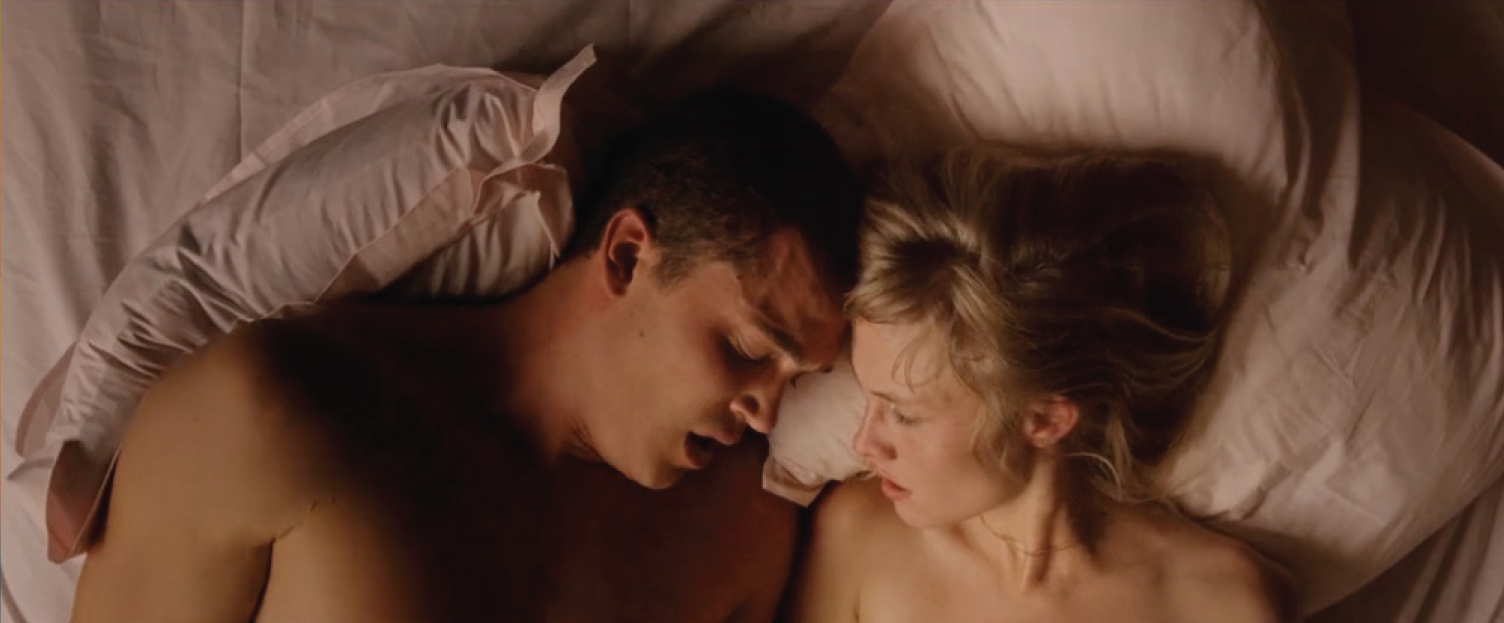
Fig. 4 – Murphy in Love, after cheating on Electra with Omi, discovers the broken condom as “School at Night” from Profondo Rosso plays.
SA: Let’s talk aboutClimax. A common thread seems to run through Noé’s films, and this is often a sonic prerogative—Climax begins with the music of Satie, a composer already featured in the soundtrack of Love—accompanying a scene of desperation. The film opens with the first movement of the Trois Gymnopédies, presented here with an electronic sound, softened by the fluidity of the portamento of the synthesizers from Gary Numan. The combination of images, anguished screams, barking dogs, and music creates a powerful contrast, where beauty seems to prevail over pain. Was this continuity between Love and Climax intentional? [9] Furthermore, were the extradiegetic pieces, such as this opening track and “Mad” by Coh for the finale scene, chosen by Noé during the editing phase or were they already predetermined?
KY: No, the continuity wasn’t intentional. If it were, Gaspar never made it explicit. Only the songs the characters dance to were chosen beforehand, for obvious reasons related to the actors’ movements and dancing on set. The rights had to be negotiated in advance.

Fig. 5 – The opening credits of Climax, accompanied by Satie’s music, with the sound of a barking dog and the woman’s desperate crying.
SA: The material you worked with in Climax is predominantly musical, along with the characters’ voices. There is significant attention to the spatial component, given the linearity of the story, which unfolds over a few hours, and the continuous change of the listening perspective that follows the camera. This approach is more “objective” compared to Enter the Void but maintains a psychological immersiveness. As the film progresses, the music and sounds seem to increasingly occupy the space of the scene, conveying a sense of obsession, loss of control, and chaos. The musical choices and the treatment of the tracks evolve along with the emotional alteration of the characters: for instance, the persistent kick in the distance and Tito’s screams lingering in the background during the piece Voices , the sound of wind and storm belonging to an external space, perceived as an inaccessible escape and a symbol of isolation. Was this immersive method planned from the outset to engage the viewer, or did it take shape during the editing phase? And considering the choreographed scenes, which require music to be played on set, how were the sound recordings and post-production work managed?
KY: Personally, I don’t work with the spectator in mind. I don’t ask myself whether they’ll feel immersed or not. What matters to me is that what I edit and mix is satisfying to me, to Gaspar, and to the rest of the team.
The immersion you feel is neither planned nor accidental—it’s the very nature of the film. It goes beyond sound design. The film is a claustrophobic piece intended to be oppressive and anxiety-inducing. Gaspar creates an emotional immersion, and the sound immersion flows naturally from that. It’s relatively easy to implement as a result.
Trying to immerse the audience in an environment when the film doesn’t call for it would be pointless. We see this in quite a few films, and it creates an absurd disconnect. Just because we technically can immerse the audience with the tools we have, doesn’t mean we should.
The characters’ evolution and the group’s growing madness lead naturally to a kind of intensity in sound and image. What can be challenging is understanding what the director is aiming for.
I recorded the dialogue on set while playing the music at a fairly high volume. I kept some of these recordings, but we post-synced many of the lines afterward (those after the credits and the sangria scene). Usually, for nightclub dialogue scenes, we don’t play music during the dialogue. On Climax, though, we wanted to maintain a certain intensity and tension on set, so we played the music to keep the actors in the true conditions of the story.
SA: In a scene of delirium in the corridors, “Tainted Love” can be heard in the distance (maybe from the boombox, after the blackout). There is a noticeable sound band that modulates downward, creating an effect of loss of altitude and balance. This phenomenon seems to be a distinctive feature of the sound poetics of Noé’s cinema and somewhat reminiscent of a Shepard-Risset Glissando; these sounds are, in a sense, destabilizing. They were also present in Ritual , but what is interesting is that they already appear in the tracks chosen by the director. The musical fragments extracted from the pieces seem to have been selected specifically to include these sound effects integrated into the music. Is this how it works? What can you say about this?
KY: I’m not sure if we can talk about a “sonic poetics” in Noé’s cinema, but it’s true that the effects are chosen or crafted to blend with the music. We approach the soundtrack as a cohesive whole. There are multiple layers, but ultimately, we need to hear a single unified sound. It’s as if a microphone on the camera captured the madness and energy of the characters and situations without distinguishing between the different layers. That’s why the music is always mixed as “source.” All the sounds heard are also heard by the characters. There’s no film score or overarching sound design acting as commentary on the scene.
There’s a documentary-like aspect to the sound, though it’s a fake documentary.
SA: InLux Æterna, where you briefly appear as yourself, the first line that opens the scene is “Can we stop that hell?” in which Béatrice seems to be referring to a disturbing noise on set, which is then turned off. When the lighting system goes haywire, the RGB strobe effect is synchronized with a sound band and an acoustic flicker. In Enter the Void, you talked about a sound that is the image; here, however, in an even more essential way, we have the sound of light. The effect inspired by The Flicker by Conrad reappears, which has been used in other films by Noé, but while in the past it was accompanied by music, in this case, were you the one who created the disturbing sound effect? Also, in Climax , at the moment when little Tito is electrocuted and the blackout occurs, the RGB flickering seems to anticipate this audiovisual synchronization.
KY: Yes, I created the sound effect. I designed several sharp electronic sounds and gave them to Gaspar, who synced them with the flicker’s rhythm. Then I took that edit back and added additional sound design and mixing effects.
I’m not sure if the flickering effect in Climax was a precursor to Lux Æterna, but Gaspar certainly likes this type of visual effect. This kind of effect can induce an altered state of consciousness, a hypnotic effect. Gaspar has always been interested in this kind of visual and auditory experiment.
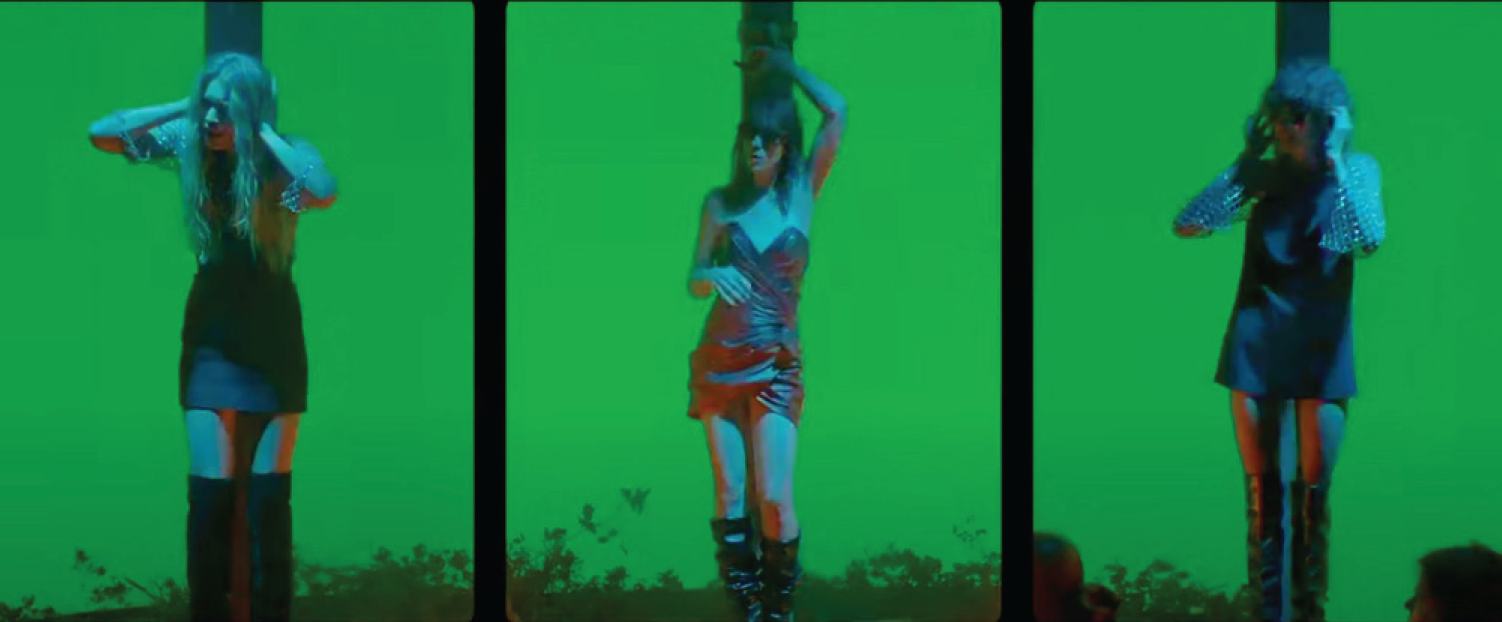
Fig. 6 – Moment of chaos in Lux Æterna where RGB strobes flicker synchronized to diegetic sound, disturbing the characters on set.
SA: Being a form of metacinema and recounting a moment of backstage on a film set, we see the same professionals involved in the shooting as “victims” of this torture. However, as Noé and Béatrice Dalle clarify in the commentary for the film, the chaotic scene was “fortunately” shot without sound. [10] In the end, it is always the viewer who suffers from it. Did working on those images disturb you or provoke unpleasant effects?
KY: It’s always easier to tolerate something when you control it yourself. I can’t say it caused any unpleasant effects for me.
In this case, though, the idea was to provoke a reaction of discomfort in the audience, which contradicts what I said earlier about not focusing on the viewers’ experience.
SA: In your previous interview, you explored many technical aspects of your work on Vortex . There is a catalog of sound elements that seems to have been selected to best describe the life of this elderly couple in a Paris apartment. The radio program from the alarm clock and how it resonates in the room, the typewriter, the moka pot, the sound of the gas from the stove, the toilet flushing, the blood pressure monitor, the slow dragging footsteps—these are all sounds that emerge during prolonged moments devoid of dialogue and are particularly effective in recreating the atmosphere of an almost documentary representation of the life of two elderly people, belonging to a past generation focused more on the essentials and centered on the difficulties related to health. Were these sound choices targeted from the outset, or did they arise as a consequence of the visual and scenic decisions?
KY: Since these objects appear on screen, I had to work on their sound. Each one contributes to the narrative, visually and sonically.
If the question is whether they were planned for sound before filming, I don’t think so—not by me, and I doubt Gaspar thought specifically about their sounds. The only exception is the radio alarm clock, where the sound is part of the staging. The set and props are, of course, chosen in advance, selected by Gaspar. These props naturally come with associated sounds, and our goal is to find a perfect match between the visual and the added sound, as well as to create a dramatic or narrative effect.
We spent a lot of time finding the right sound for the radio program. I think we changed programs at one point due to rights issues, and then it took a while to find the right distortion effect. Additionally, mixing the radio sound was a bit complex. I had to make the sound realistic according to the characters’ movements around the apartment, while ensuring certain phrases or words from the radio remained clear.
For the other sounds, I sometimes highlighted the objects on set to enhance the atmosphere or emphasize specific situations.
I can’t quite remember why, but the moka pot sound isn’t from the shoot. I recorded it at home because I needed a particular type of sound that wasn’t there in the original recording.
SA: InVortex , you also managed the “on the air” music and sounds, adapting them to the spatial context of the scenes. The piece by Ennio Morricone, “Se sei qualcuno è colpa mia,” is played in the environment where Stéphane is located, but it is also very effective as an emotional commentary, perhaps due to the use of split screen. On one side, we see Françoise Lebrun in a different environment, where the music is external to her physical experience. This interesting combination, often present in the film, causes the music (or sound in general) to once again cross the barrier between diegesis and extradiegesis, amplifying the emotional involvement and complexity of the scene. Do you agree with this ambiguity, and if so, do you have any reflections on this effect?
KY: This ambiguity is almost constant in Gaspar’s films. He’s not a big fan of traditional film scores. A significant part of the mixing process on his films is devoted to blending the music. He likes to place the music within the setting itself—what we call “source music.” Gaspar is as attentive to the music as he is to its mix and its spatial integration. Finding the right balance between the realism of sound and its dramatic effect is often lengthy and complex. Even music that’s meant to be mixed like a film score might be mixed as if it’s coming from the neighbor’s place, for example.
This likely comes from Gaspar’s appreciation for documentary style. Both music and non-musical sounds are integrated into the environment and are rarely non-diegetic.
SA: When Dario Argento is in the hospital bed, we hear the “beep” of the medical equipment monitoring vital functions and heart rate while he wears an oxygen mask. There is a sort of reference to the internal bodily sounds used earlier, as in Enter the Void, or in films that preceded your collaboration, such as Irréversible and even We Fuck Alone (although this time, the character “dies” alone). In Vortex , this hospital sound appears more documentary-like than cinematic, coming across as more real, technological, and anempathetic. When the character dies, we don’t hear the usual flat and continuous sound, but rather a brief signal of two notes in a descending minor third interval. The effect is very strong, almost like a “game over.” How did you obtain this sound? Was it simply from a medical device, or was there a more careful selection involved?
KY: This sound is from an actual machine recorded at the hospital where we filmed. With the help of the film’s medical advisor, I recorded the heart monitor. I simply used the authentic sound that fit this kind of situation. In this case, I’d say we were lucky because this beeping was perfect for creating the effect we wanted. We could have created a different sound or recorded another machine, but the quality of this sound comes from its realism combined with a kind of emotional precision.
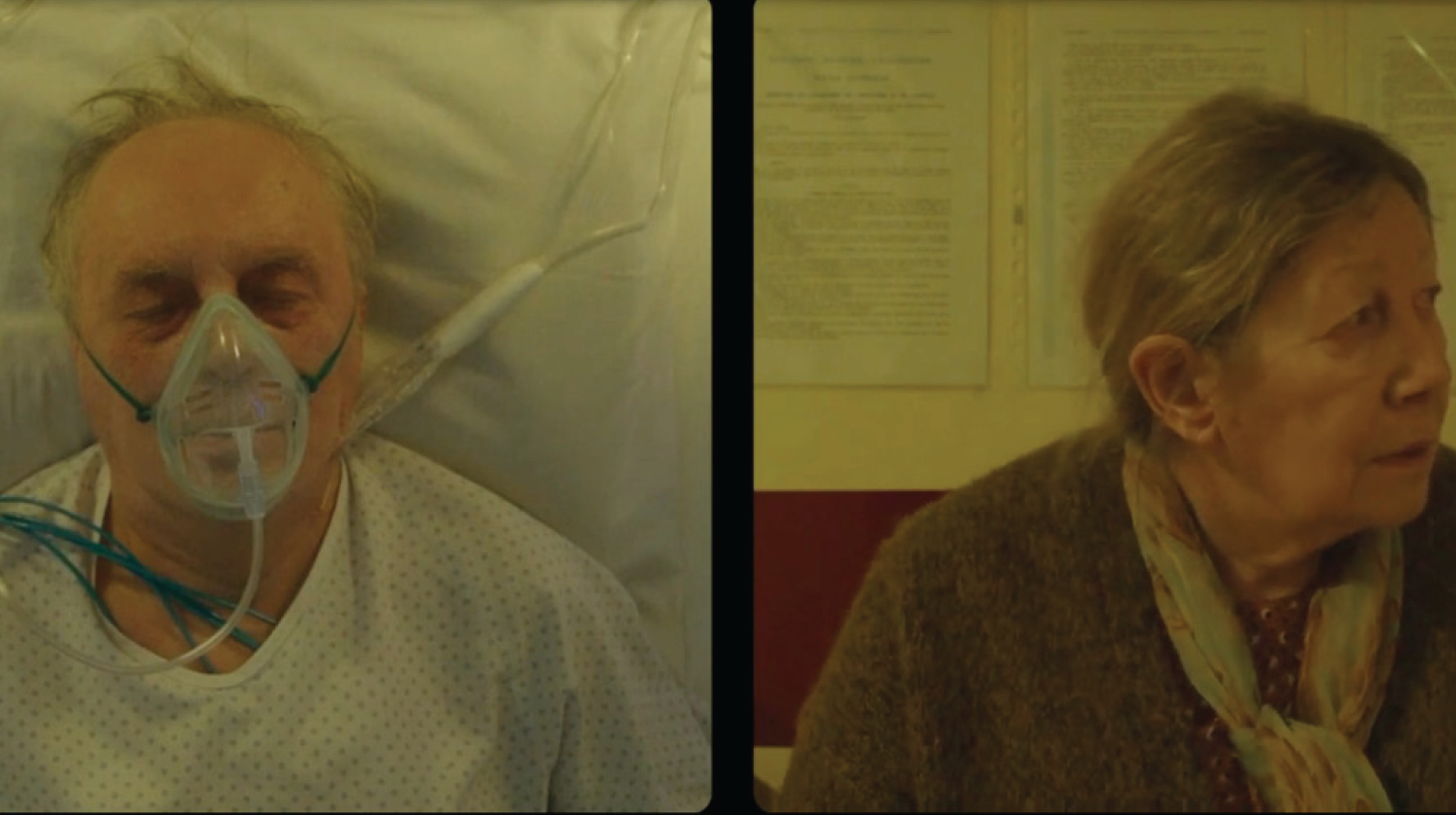
Fig. 7 – The character played by Dario Argento in Vortex dies in a hospital bed hooked up to vital signs monitor.
SA: During the shooting of Vortex, you were also working on Lucile Hadžihalilović’ s filmEarwig. Beyond the biographical and artistic connection with Noé, each director pursues their own style and poetics. However, certain aspects allow us to draw associations. For instance, let’s talk about the resonances of glass, a material that plays a central role in the diegesis, evoking impressions of fragmented memories typical of trauma and manifesting as light, sound, and matter in all its sensory qualities. This synesthesia, with its strongly immersive character, is linked to the use of rare instrumental sonorities, such as the Cristal Baschet, played by Nicolas Becker (not to mention the use of Ondes Martenot for the original score). In Noé’sEnter the Void , something similar happens, for example, in the lamp store where Linda touches the colored crystals against the glassy notes of Bach’s Air as performed by Thomas Bloch. It seems almost possible to identify a trend in this approach, and in Hadžihalilović’s film, the entire narrative structure is subjected to these symbolic and mysterious dynamics. What was your contribution to this synesthetic approach? Additionally, do you think we can identify an aesthetic or a trend in the use of rare instruments as well?
KY: I believe synesthesia is what we aim for in all circumstances—it’s not limited to specific effects. I always try to blend the senses so that a sound isn’t simply heard as a sound, but rather as a memory, a feeling, an image, or even a scent. Likewise, images can evoke sounds without those sounds actually being present. This complex interplay between sound and image is something we work on. We also use sensory dissociation to create contrasts.
A synesthetic approach is the foundation of what we do. I think Gaspar and Lucile share a common musical and cinematic culture. Their appreciation for rare instruments comes from their interest in contemporary music. Lucile certainly tends to use rare instruments, though I wouldn’t say the same for Gaspar.
SA: Even the ring of the telephone, referring to a device from the mid-twentieth century, clearly has a resonant tail. But it is mainly the background noise of the receiver during Albert’s mysterious conversations that seems to open up another distressing dimension, leaving a subjective interpretive glimpse for the audience. The director has stated that she includes many sound descriptions in her scripts, using few dialogues, while relying on sounds and music to create the allegorical world of her films, focusing on these elements in their subjective aspect, far from objective realism. [11] In Earwig , there are “materializing” sounds, such as the creaking floor, chattering teeth, the ticking of a pendulum clock, the sound of paper, and hyper-diegetic effects like the background noise of the telephone conversation. Were these details present in the script?
KY: The script for Earwig did indeed contain more sound cues than a typical screenplay. Sounds like the clock, the clinking of teeth, the finger on the crystal glass, and the train were mentioned, but not in detail. For example, it might say “a clock sound resonates” or “the sound of glass teeth,” without specifying the type, intensity, or “color” of the sound.
On the other hand, sounds like the phone ringing and most other effects weren’t specified in the script—they were developed during post-production.
In conclusion, I’d say it’s quite challenging to explain the choice of sounds or mixing decisions made on Gaspar Noé’s films—or any director’s, for that matter. We don’t analyze our choices; they arise from listening, experience, and personal taste. There’s no theorizing involved—the concept is simply the film in front of us. It’s an alchemical process. We create, undo, and redo endlessly until we reach a point where “it works.” That feeling of “it works” is elusive—that’s the alchemy.
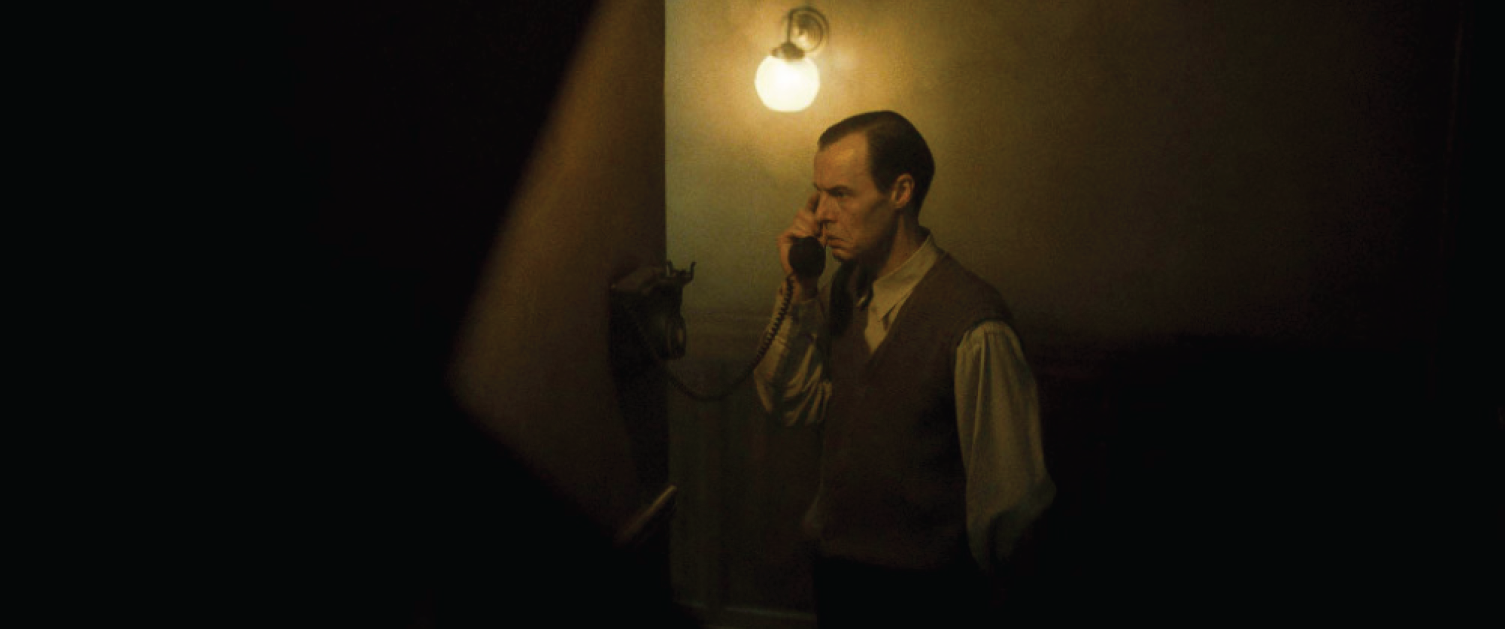
Fig. 8 – The character in Earwig picks up the phone and takes part in one of the mysterious conversations of the film.
* The interview took place in two stages. In the first, I focused on Enter the Void to explore the creative processes and understand how the complexity of the film’s sound was integrated into Gaspar Noé’s poetic vision. The questions were sent via e-mail and I received his answers on 22 May 2024. The second part of the interview extends to subsequent collaborations, starting with Love specifically and moving on to other films. The last two questions also explore Yasumoto’s work with Lucile Hadžihalilović, as some significant elements of the aesthetic of both directors, although stylistically different in their final outcomes, are compatible and similar. The second part was concluded on November 15, 2024.
[1] Guillaume Valeix, “Ken Yasumoto nous parle de Vortex de Gaspar Noé,” interview with Ken Yasumoto on AFSI, October 1, 2022.
[2] James Quandt, “Flesh & Blood: Sex and Violence in Recent French Cinema,” Artforum International Magazine 42, no. 6 (2004): 126–32.
[3] The questions were formulated with consideration of the interaction between these three elements: upon listening, it is difficult to distinguish and identify the overlaps. This can only be identified through a more detailed analysis, which was conducted afterward.
[4] See Valeix, “Ken Yasumoto.”
[5] See Valeix, “Ken Yasumoto.”
[6] See Valeix, “Ken Yasumoto.”
[7] This question was formulated later, based on previous answers, and is the final question of the first part of the interview. The second part focused on new aspects of Noé’s filmography, with more targeted and detailed questions aimed at exploring specific themes. These questions were shaped by Yasumoto’s explanations of his creative process and work methods shared earlier in the interview.
[8] “Gaspar Noé talks about Love,” DVD extras in Love , Koch Media, 2022, Italian edition.
[9] Gaspar Noé’s films are often interconnected, with openings that visually or sonically echo the endings of previous works, creating a subtle continuity through aesthetic or narrative details.
[10] “Brand New Audio Commentary by Writer/Director Gaspar Noé and Actress Béatrice Dalle,” DVD extras in Lux Æterna, Arrow Films, 2022, DVD.
[11] Alison Taylor and John Edmond, “Film Rituals: Interview with Lucile Hadžihalilović,” Senses of Cinema 102 (August 2022).