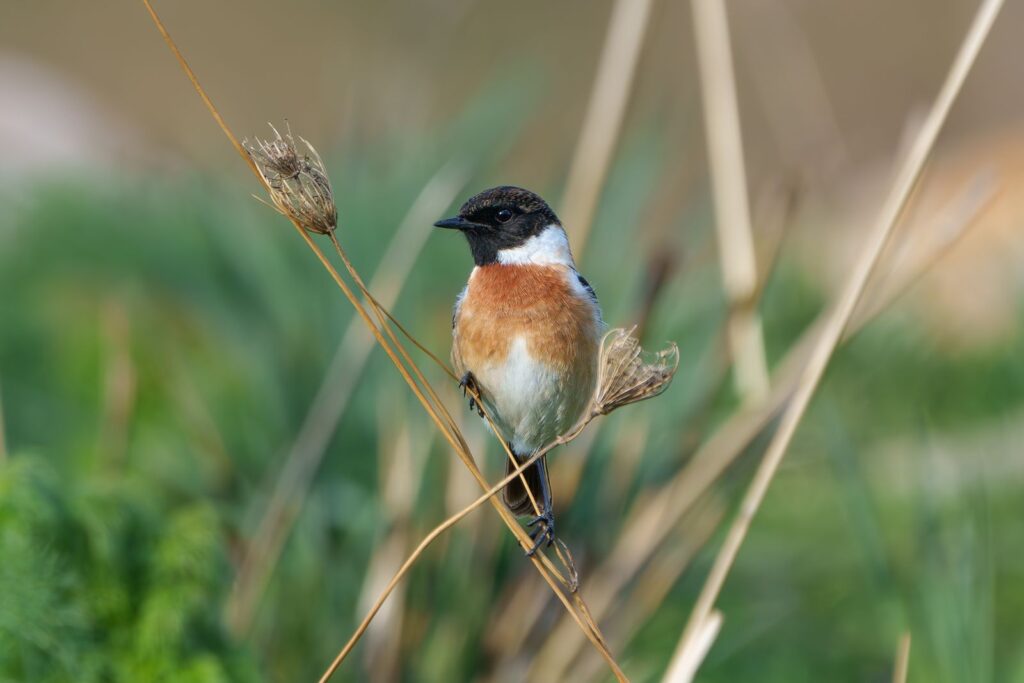
The humble Stonechat Saxicola rubicola and the species neglected by ornithological research in Italy
DOI:
https://doi.org/10.30456/avo.2024101Keywords:
Italian ornithology, bird database, zero species, web researchAbstract
The query of one of the major online scientific research databases returned quite worrying data, because a large group of species breeding in Italy, 47 out of 270 (17%) has never been studied and this number grows further (56 species, 20.7% of the total) if we consider that 9 species with published papers have 0 h-index (i.e. do not yet have any citations). These species neglected by Italian ornithological research have been called ‘zero species’. Bird species without indexed studies are 87.2% native and mostly migratory (66.0%). They live mainly in wetlands (36.2%) and forest habitats (27.7%) and generally have an increasing population trend (44.7%). Furthermore, the majority of these species are classified as least concern by the Italian Red List (44.7%), with a lower percentage of threatened species (34.0%). Zero species are more unprotected than protected ones (61.7% vs 38.3%). Finally, 42.6% of them belong to passerines and have a very restricted geographical range (83.0%). Some examples of zero species are reported and discussed, such as the Stonechat Saxicola rubicola, the Common redpoll Acanthis flammea or the Red Kite Milvus milvus, highlighting some of their interesting traits that could stimulate research aimed at conservation.
Downloads
References
Arlettaz R., Schaub M., Fournier J., Reichlin T.S., Sierro A., Watson J.E. & Braunisch V., 2010. From publications to public actions: when conservation biologists bridge the gap between research and implementation. BioScience 60(10): 835–842.
Baccetti N., Fracasso G. & Commissione Ornitologica Italiana (COI), 2021. CISO-COI Check-list of Italian birds – 2020. Avocetta 45: 21–82.
Birrer S., Spiess M., Herzog F., [...] & Lugrin B., 2007. The Swiss agri-environment scheme promotes farmland birds: But only moderately. Journal of Ornithology 148: 295–303.
Bonnet X., Shine R. & Lourdais O., 2002. Taxonomic chauvinism. Trends in Ecology and Evolution 17: 1–3.
Csörgő T., Gyurácz J., Lovászi P., Karcza Z., Szép T. & Harnos A., 2022. The status of the European Stonechat (Saxicola rubicola) in Hungary: a review. Ornis Hungarica 30(1): 1–20.
Denac K. & Kmecl P., 2021. Land consolidation negatively affects farmland bird diversity and conservation value. Journal for Nature Conservation 59: 125934 https://doi.org/10.1016/j.jnc.2020.125934.
Doren B.M.V., Liedvogel M. & Helm B., 2017. Programmed and flexible: long-term Zugunruhe data highlight the many axes of variation in avian migratory behaviour. Journal of Avian Biology 48(1): 155–172.
Fulco E., Angelini J., Ceccolini G., De Lisio L., [...] & Visceglia M. 2017. Il Nibbio reale Milvus milvus svernante in Italia, sintesi di cinque anni di monitoraggio. Alula 24(1-2): 53–61.
Fulco E. & Liuzzi C., 2022. Italian Ornithological Commission (COI) - Report 30. Avocetta 46(2): 123–133.
Fulco E., 2022. Nibbio reale: 292-293. In: Lardelli R., Bogliani G., Brichetti P., Caprio E., [...] & Brambilla M., 2022. Atlante degli Uccelli nidificanti in Italia. Edizioni Belvedere, Latina, Italia.
Gailly R., Cousseau L., Paquet, J.-Y., Titeux N. & Dufrêne M., 2020. Flexible habitat use in a migratory songbird expanding across a human-modified landscape: is it adaptive? Oecologia 194(1-2): 75–86.
Gill F., Donsker D. & Rasmussen P., 2024. IOC World Bird List (v14.1). https://doi.org/10.14344/IOC.ML.14.1.
Greggor A.L., Berger-Tal O., Blumstein D.T., Angeloni L., [...] & Goldenberg S.Z., 2016. Research priorities from animal behaviour for maximising conservation progress. Trends in Ecology and Evolution 31: 954-964 https://doi.org/10.1016/j.tree.2016.09.001.
Greig-Smith P.W., 1983. Use of Perches as Vantage Points During Foraging by Male and Female Stonechats Saxicola torquata. Behaviour 86(3-4): 215–236.
Gustin M., Nardelli R., Brichetti P., Battistoni A., Rondinini C. & Teofili C., 2019. Lista Rossa IUCN degli uccelli nidificanti in Italia 2019. Comitato Italiano IUCN e Ministero dell’Ambiente e della Tutela del Territorio e del Mare, Roma, Italia.
Gwinner E., Rödl T. & Schwabl H., 1994. Pair territoriality of wintering stonechats: behaviour, function and hormones. Behavior Ecology and Sociobiology 34: 321–327.
Haddaway N.R. & Bayliss H.R., 2015. Shades of grey: two forms of grey literature important for reviews in conservation. Biological Conservation 191: 827–829.
Helm B., Gwinner E. & Trost L., 2005 Flexible seasonal timing and migratory behaviour: results from stonechat breeding programs. Annals New York Academy of Science 1046: 216–227.
Helm B., Fiedler W. & Callion J., 2006. Movements of European Stonechats Saxicola torquata according to ringing recoveries. Ardea 94(1): 33–44.
Lardelli R., Bogliani G., Brichetti P., Caprio E., [...] & Brambilla M., 2022. Atlante degli Uccelli nidificanti in Italia. Edizioni Belvedere, Latina, Italia.
Lenoir J., Gégout J.C., Guisan A., Vittoz P., [...] & Svenning J.C., 2010. Going against the flow: potential mechanisms for unexpected downslope range shifts in a warming climate. Ecography 33: 295–303.
McKenzie A.J. & Robertson P.A., 2015. Which Species Are We Researching and Why? A Case Study of the Ecology of British Breeding Birds. PLoS ONE 10(7): e0131004 https://doi.org/10.1371/journal.pone.0131004.
Opaev A., Red’kin Y., Kalinin E. & Golovina M., 2018. Species limits in Northern Eurasian taxa of the common stonechats, Saxicola torquatus complex (Aves: Passeriformes, Muscicapidae). Vertebrate Zoology 68(3): 199–211.
Parmesan C., 2006. Ecological and evolutionary responses to recent climate change. Annual Review Ecology, Evolution and Systematics 37: 637–669.
Reif J. & Flousek J., 2012. The role of species’ ecological traits in climatically driven altitudinal range shifts of central European birds. Oikos 121(7): 1053–1060.
Rete Rurale Nazionale & Lipu, 2023. Uccelli comuni delle zone agricole in Italia. Aggiornamento degli andamenti di popolazione e del Farmland Bird Index per la Rete Rurale Nazionale dal 2000 al 2022. www.reterurale.it/flex/cm/pages/ServeBLOB.php/L/IT/IDPagina/25243.
Revaz E., Schaub M. & Arlettaz R., 2008. Foraging ecology and reproductive biology of the Stonechat Saxicola torquata: Comparison between a revitalized, intensively cultivated and a historical, traditionally cultivated agroecosystem. Journal of Ornithology 149(3): 301–312.
Ruggieri L., 2022. Organetto: 560-561. In: Lardelli R., Bogliani G., Brichetti P., Caprio E., [...] & Brambilla M., 2022. Atlante degli Uccelli nidificanti in Italia. Edizioni Belvedere, Latina, Italia.
Sarà M., 2023. What species are being researched and why? A bibliometric analysis of breeding birds in Italy. Avocetta 47: 2023F004, https://doi.org/10.30456/AVO.2023105.
Shah A., Treby E., May V. & Walsh P., 2007. Bridging the divide between academia and practitioners: training coastal zone managers. Ocean & Coastal Management 50(11-12): 859–871.
Tellería J., 2020. Altitudinal shifts in forest birds in a Mediterranean mountain range: Causes and conservation prospects. Bird Conservation International 30(4): 495–505.
Ticehukst C.B., 1941. On Saxicola torquata maura and variegata. Ibis 83(1): 182–184.
Wikelski M., Spinney L., Schelsky W., Scheuerlein A. & Gwinner E., 2003. Slow pace of life in tropical sedentary birds: a common-garden experiment on four stonechat populations from different latitudes. Proceedings of Royal Society, London B 270: 2383–2388.
Wink M., Sauer-Gürth H. & Gwinner E., 2002. Evolutionary relationships of stonechats and related species inferred from mitochondrial-DNA sequences and genomic fingerprinting by ISSR-PCR. British Birds 95: 349–355.
Zink R.M., Pavlova A., Drovetski S., Wink M. & Rohwer S., 2009. Taxonomic status and volutionary history of the Saxicola torquata complex. Molecular Phylogenetics and Evolution 52(3): 769–773.
Downloads
Published
Issue
Section
License

This work is licensed under a Creative Commons Attribution-ShareAlike 4.0 International License.
How to Cite
Published 2024-03-14