
Peri-urban wetlands as biodiversity hotspots: the approach study of the waterbird community seasonal variation of Arnovecchio oasis in Florence province (Tuscany)
DOI:
https://doi.org/10.30456/avo.2023101Keywords:
Peri-urban wetland, Principal Component Analysis, Seasonality, WaterbirdsAbstract
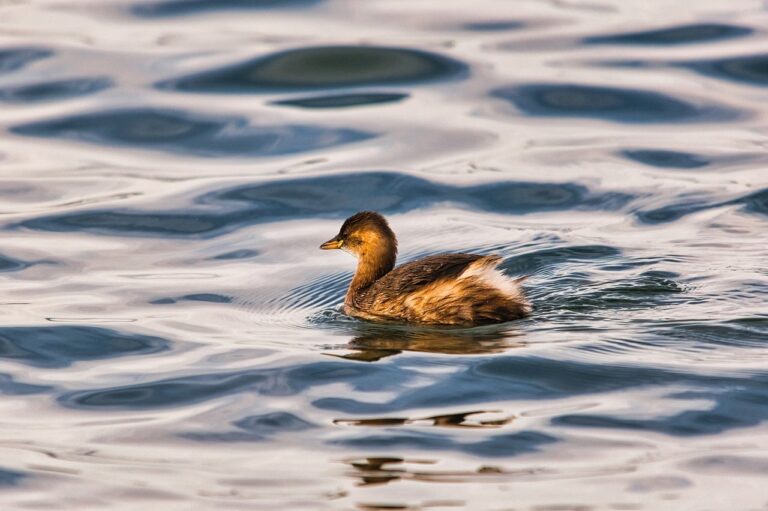
The aim of this work was to monitor the waterbird community throughout the year in an anthropized peri-urban wetland of Florence province. The sampling was conducted from January 2018 to December 2020 throughout all seasons of the year by direct observations, using binoculars and acoustic surveys. To evaluate bird biodiversity, we calculated the relative frequency, abundance and species richness, the Shannon-Wiener Index and evenness. We monitored 19 species, among which six were dominant species: Anas platyrhynchos, Larus michahellis, Fulica atra, Podiceps cristatus, Aythya ferina, Chroicocephalus ridibundus. Abundance, species richness and Shannon-Wiener diversity were highest in winter, while evenness was highest in spring; a Principal Component Analysis confirmed that Arnovecchio is an important wetland both for breeding (Podiceps cristatus, Tachybaptus ruficollis, Anas platyrhynchos) and wintering species (Aythya ferina, Chroicocephalus ridibundus). Most of the species were identified in autumn and in winter when this area may represent for some birds a protected refuge during the hunting season. Among the most observed species, Aythya ferina and Chroicocephalus ridibundus were absent in spring but were more common in winter. Among the nesting species, the most common are Podiceps cristatus and Tachybaptus ruficollis. The results of this study suggest a constant presence of birds during the whole year in this peri-urban area, thereby highlighting its relevance for biodiversity as well as for providing the opportunity to human visitors to enjoy its natural values in all seasons.
Downloads
References
Acar C., Acar H. & Eroglu E., 2007. Evaluation of ornamental plant resources to urban biodiversity and cultural hanging: a case study of residential landscapes in Trabzon city (Turkey). Build Environment 42: 218–229. https://doi. org/10.1016/j.buildenv.2005.08.030.
Alikhani S., Nummi P. & Ojala A, 2021. Urban Wetlands: A Review on Ecological and Cultural Values. Water 13: 3301. https://doi.org/10.3390/w13223301.
Aree naturali di interesse locale ANPIL. Available from: https://www.regione.toscana.it/aree-naturali-di-interesse-locale-anpil.
Angelici C. & Brunelli M., 2019. Andamenti stagionali degli uccelli acquatici nelle Riserva Naturale Regionale Nazzano, Tevere-Farfa (Lazio) e indicazioni gestionali. Alula 26 (1-2): 1-8.
Anglici C., Brunelli M. & Battisti C, 2019. Seasonal trends of waterbirds in the Regional Natural Reserve of Nazzano, Tevere-Farfa (Lazio) and management indications.
Angelici C., Brunelli M. & Battisti C, 2012. Breeding birds in agroforest habitat types (Nazzano, Tevere-Farfa Nature Reserve, central Italy): Evidencing patterns following a dominance/diversity approach. Avocetta 36:97–102.
Baldwin A., 2011. 'Plant communities of urban wetlands: patterns and controlling processes', in J. Niemelä (Ed.) Urban Ecology: Patterns, Processes, and Applications: 77-84. New York: Oxford University Press. 10.1093/ac prof:oso/9780199563562.003.0010.
Bartolini A., 2007. La Riserva Naturale del padule di Fucecchio. Dieci anni di gestione (1996 – 2006). Quaderni del padule di Fucecchio n. 4. Centro di Ricerca, Documentazione e Promozione del padule di Fucecchio.
Battisti C., Dodaro G. & Vannuccini M., 2020. A fine-grained bird Atlas as tool for spatial monitoring: a case study from a remnant wetland during the breeding period (Torre Flavia, central Italy). Rivista Italiana di Ornitologia - Research in Ornithology 90 (1): 41-50.10.4081/rio.2020.447
Blair R.B., 2004. The effects of urban sprawl on birds at multiple levels of biological organization. Ecology and Society 9(5): 2.10.5751/ES00688-090502
Causarano F., Battisti C. & Sorace A., 2009. Effect of winter water stress on the breeding bird assemblage of a remnant wetland in central Italy. Revue d’Ecologie 64(1): 61-72.
Ceccobelli S. & Battisti C., 2010. On the water depth in diving sampling sites of Tachybaptus ruficollis. Rendinconti Lincei 21: 359–364. 10.1007/s12210-0100087-z.
Chiari C., Dinetti M., Licciardello C., Licitra G. & Pautasso M, 2010. Urbanization and the more-individuals hypothesis. Journal of Animal Ecology 79: 366-371. DOI /j.1365-2656.2009.01631.x
Clipp H.L., Peters M.L. & Anderson J.T., 2017. Winter Waterbird Community Composition and use at created Wetlands in West Virginia, USA. Hindawi Scientifica.
Domokos E. & Domokos J., 2016. Bird communities of different woody vegetation types from the Niraj Valley, Romania. Turkish Journal of Zoology 40: 734–742. 10.3906/zoo-1510-64.
Elafri A., Halassi I. & Houhamdi M., 2016. Diversity patterns and seasonal variation of the waterbird community in Mediterranean wetlands of Northeastern Algeria. Zoology and Ecology 26(2): 85-92. http://dx.doi.org/10.1 080/21658005.2016.1163865.
Farina A., 1987. Autumn-winter structure of bird communities in selected habitats of Tuscany (Italy). Italian Journal of Zoology 54: 243–249.
Fedrigo A., Fornasari L., Bonaventura О., Vigorita V. & Massa R., 1989. The winter bird species and their abundance in Lombardy, Northern Italy. Annales Zoologici Fennici 26:291-295.
Fulco E. & Tellini Florenzo G., 2008. Composizione e struttura della comunità ornitica nidificante in una faggeta della Basilicata. Avocetta 32:55–60.
Gahbauer, M.A. & Rashleigh K., 2021. Relative abundance and range extensions of bird species in central Labrador. Canadian Field-Naturalist 135(3): 262–277. https://doi.org/10.22621/cfn.v135i3.2419.
Halls A.J., 1997. Wetlands, Biodiversity and the Ramsar Convention: The Role of the Convention on Wetlands in the Conservation and Wise Use of Biodiversity. Ramsar Convention Bureau, Gland, Switzerland.
h t t p : / / w w w . z o n e u m i d e t o s c a n e . i t / i t /arnovecchio-area-naturale-protetta.
Hubalek Z., 2000. Measures of species diversity in ecology: An evaluation. Folia Zoologica 49: 241–260.
Kondratyeva A., Knapp S., Durka W., Kühn I., [...] & Pavoine S., 2020. Urbanization Effects on Biodiversity Revealed by a Two-Scale Analysis of Species Functional Uniqueness vs. Redundancy. Frontiers in Ecology and Evolution 8:73. doi:10.3389/fevo.2020.00073.
JMP®. 2012. Version 10.0.2. Cary, NC: SAS Institute Inc. pp. 1989–2019.
Lee S.D. & Kang H.K., 2019. Seasonal fluctuations and changing characteristics of a temperate zone wetland bird community. Journal of Ecology and Environment 43:13. https://doi.org/10.1186/s41610-019-0108-5.
Lewis L.J., Burke B., Fitzgerald N., Tierney T.D. & Kelly S., 2019. Irish Wetland Bird Survey: Waterbird Status and Distribution 2009/10–2015/16. Irish Wildlife Manuals, No. 106. National Parks and Wildlife Service, Department of Culture, Heritage and the Gaeltacht, Ireland, 238 pp.
Li E., Parker S., Pauly G.B., Randall J.M., Brown B.V. & Cohen B.S., 2019. An urban biodiversity assessment framework that combines an urban habitat classification scheme and citizen science data. Frontiers in Ecology and Evolution 7:277. 10.3389/fevo.2019.00277.
Lloyd M. & Ghelardi R.J., 1964. A table for calculating the “equitability” component of species diversity. Journal of Animal Ecology 33: 217–225. DOI: 10.2307/2628.
Maciusik B., Lenda M. & Skórka P., 2010. Corridors, local food resources, and climatic conditions affect the utilization of the urban environment by the Black headed gull in winter. Ecological Research 25: 263–272. 10.1007/s11284-009-0649-7.
Malavasi R., Battisti C. & Carpaneto G.M., 2009. Seasonal changes in bird assemblages of a remnant wetland in a Mediterranean landscape: implications for management. Ornis Hungarica 17-18: 12-20.
Oelke H., 1980. The bird structure of the central European spruce forest biome as regarded for breeding bird censuses. Proceedings of the VI International Conference Bird Census Work, Gottingen, Germany, 201–209.
Panuccio M., Foschi F., Audinet J.P., Calò C. & Bologna M.A., 2017. Urban wetlands: wastelands or hotspots for conservation? Two case studies from Rome, Italy. Avocetta 41: 13-18.
Pease M.L., Rose R.K. & Butler M.J., 2005. Effects of human disturbances on the behaviour of wintering ducks. Wildlife Society Bulletin 33: 103-112.
Pielou E.C., 1966. The measurement of diversity in different types of biological collections. Journal of Theoretical Biology 13: 131–144. 10.1016/00225193(66)90013-0.
Rawal P., Kittur S., Krishna Chatakonda M. & Gopi Sundar K.S., 2021. Winter bird abundance, species richness and functional guild composition at Delhi’s ponds: does time of day and wetland extent matter? Journal of Urban Ecology, 1–10. 10.1093/jue/juab00.
Rudd H., Vala J. & Schaefer V., 2002. Importance of Backyard Habitat in a Comprehensive Biodiversity Conservation Strategy: A Connectivity Analysis of Urban Green Spaces. Restoration Ecology 10: 368–375. https://doi.org/10.1046/j.1526-100X.2002.02041.x
Sargentini C., Tocci R., Martini A. & Bozzi R., 2018. Morphological characterization of Amiata donkey through Multivariate analyses. Revista Brasileira de Zootecnia 47:1–10. https://doi.org/10.1590/rbz4720170310.
Scamporrino M., 2006. Thesis dissertation - Corso di laurea in Urbanistica e Pianificazione Territoriale e Ambientale Paesaggi a diverse velocità: organizzazione del territorio parco nell'area di Arnovecchio (Tesi di laurea triennale in Urbanistica e Pianificazione Territoriale e Ambientale a.a. 2005-2006 – Università di Firenze) (In italian).
Seifollahi-Aghmiuni S., Nockrach M. & Kalantari Z., 2019. The Potential of Wetlands in Achieving the Sustainable Development Goals of the 2030 Agenda. Water 11: 609. https://doi.org/10.3390/w11030609.
Shannon C.E. & Weaver W., 1949. The mathematical theory of communication. Urbana: University of Illinois Press.
Stefanakis A., 2019. The Role of Constructed Wetlands as Green Infrastructure for Sustainable Urban Water Management. Sustainability 11(24): 6981. https://doi.org/10.3390/su11246981.
Stephens D., 1996. Hearing rehabilitation in a psychosocial framework. Scandinavian Audiology, 25(43): 57.
Turček F.J., 1956. Zur Frage der Dominanze in Vogelpopulationen. Waldhygiene 8: 249– 257.
Wiener N., 1948. Cybernetics, or control and communication in the animal and the machine. First ed. The MIT Press, Cambridge, Massachusetts, 228 pp.
Yam R.S.W., Huang K.P., Hsieh H.L., Lin H.J. & Huang S.C., 2015. An ecosystem-service approach to evaluate the role of non-native species in urbanized wetlands. International Journal of Environmental Research and Public Health 12: 3926-3943. 10.3390/ijerph120403926.
Downloads
Published
Issue
Section
License

This work is licensed under a Creative Commons Attribution-ShareAlike 4.0 International License.
How to Cite
Published 2023-06-03




