What species are being researched and why? A bibliometric analysis of breeding birds in Italy
DOI:
https://doi.org/10.30456/avo.2023105Keywords:
Italian Breeding Bird Atlas, h-index, Italian ornithology, taxonomic chauvinismAbstract
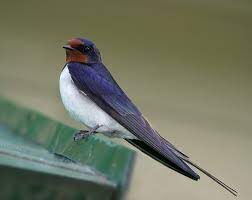
The publication of updated works on the distribution, breeding and conservation status of Italian birds has stimulated an analysis of the factors that have so far guided the research. This was done through a bibliometric analysis of one of the largest scientific databases on the web. Two publication metrics were used, the total number of papers and the h-index. They express the quantity and the quality of research efforts through their impact on the scientific community. 791 articles concerning the 270 species reported in the Italian Atlas of Breeding Birds were selected and analysed by univariate statistics and negative binomial GLMs. Eight multilevel factors (origin of species, breeding phenology, main occupied habitat, population trends, degree of threat, national interest relative to population management, functional grouping and geographic range size) were used as potential predictors of species publication metrics. These 791 papers attracted 20,982 citations and had an overall h-index of 48. The publication years ranged from 1975 to 2023 with a significant increase in slope through time. The Barn Swallow leads the top ten of both publication metrics followed by the Lesser Kestrel and the Golden Eagle in the case of number of papers, while the Red-backed Shrike, and again the Lesser Kestrel follow the Barn Swallow in the first places of the h-index top ten. Main habitat, functional grouping and geographic range size are modelled as significant factors predicting a change in publication metrics, instead, the other five factors do not predict a significant change in both response variables. The lack of focus on research on species in numerical decline, threatened, or of national interest for population management reveals a main gap in Italian ornithological research. Another one is the skewed distribution of studies, with a not negligible 17% of breeding species that have never been the subject of a paper. These weaknesses are likely due to the low presence of ornithologists in local/national environmental and wildlife management bodies and to the uneven distribution of research groups among the Italian regions. Increasing the number of professional ornithologists and including them in local authorities and regional administrations is the best strategy to grow the levels of research and protection of Italian birds.Downloads
References
Amori G. & Gippoliti S., 2001. Identifying priority ecoregions for rodent conservation at the genus level. Oryx 35: 158-165. DOI: https://doi.org/10.1046/j.1365-3008.2001.00164.x
Arlettaz R., Schaub M., Fournier J., Reichlin T.S., [...] & Braunisch V., 2010. From publications to public actions: when conservation biologists bridge the gap between research and implementation. BioScience 60(10): 835-842. DOI: https://doi.org/10.1525/bio.2010.60.10.10
Baccetti N., Fracasso N. & C.O.I., 2021. CISO-COI Check-list of Italian birds - 2020. Avocetta 45: 21-85.
Battisti C. & Fanelli G., 2022. Foraging diet of the two commonest non-native parakeets (Aves, Psittaciformes) in Italy: assessing their impact on ornamental and commercial plants. Rendiconti Lincei, Scienze Fisiche e Naturali 33(2): 431-439. DOI: https://doi.org/10.1007/s12210-022-01067-8
BirdLife International, 2021. European Red List of Birds. Publications Office of the European Union, Luxembourg.
BirdLife International, 2022. State of the World’s Birds 2022: Insights and solutions for the biodiversity crisis. BirdLife International, Cambridge, UK.
Blaxter M.L., 2004. The promise of a DNA taxonomy. Philosophical Transactions Royal Society B Biological Sciences 359: 669–679. DOI: https://doi.org/10.1098/rstb.2003.1447
Bonnet X., Shine R. & Lourdais O., 2002. Taxonomic chauvinism. Trends Ecology Evolution 17: 1–3. DOI: https://doi.org/10.1016/S0169-5347(01)02381-3
Brito D. & Oprea M., 2009. Mismatch of research effort and threat in avian conservation biology. Tropical Conservation Science 2(3): 353-362. DOI: https://doi.org/10.1177/194008290900200305
Brodie J.F., 2009. Is research effort allocated efficiently for conservation? Felidae as a global case study. Biodiversity Conservation 18: 2927–2939. DOI: https://doi.org/10.1007/s10531-009-9617-3
Brooke Z.M., Bielby J., Nambiar K. & Carbone C., 2014. Correlates of Research Effort in Carnivores: Body Size, Range Size and Diet Matter. PLoS ONE 9(4): e93195. DOI: https://doi.org/10.1371/journal.pone.0093195
Catalano A.S., Redford K., Margoulis R. & Knight A.T., 2018. Black swans, cognition, and the power of learning from failure. Conservation Biology 32: 584–596. DOI: https://doi.org/10.1111/cobi.13045
Catalano A.S., Lyons-White J., Mills M.M. & Knight A.T., 2019. Learning from published project failures in conservation. Biological Conservation 238: 108223. DOI: https://doi.org/10.1016/j.biocon.2019.108223
Carignan V. & Villard M.A., 2002. Selecting indicator species to monitor ecological integrity: a review. Environmental Monitoring and Assessment 78(1): 45–61. DOI: https://doi.org/10.1023/A:1016136723584
Caro A.T.M. & Doherty G.O., 1999. On the Use of Surrogate Species in Conservation Biology. Conservation Biology 13: 805-814. DOI: https://doi.org/10.1046/j.1523-1739.1999.98338.x
Costas R. & Bordons M., 2007. The H-index: Advantages, limitations and its relation with other bibliometric indicators at the micro level. Journal of Informetrics. 1:193-203. DOI: https://doi.org/10.1016/j.joi.2007.02.001
da Silva A.F., Malhado A.C.M., Correia R.A., Ladle R.J., Vital M.V.C. & Mott T., 2020. Taxonomic bias in amphibian research: Are researchers responding to conservation need? Journal for Nature Conservation 56: 125829. DOI: https://doi.org/10.1016/j.jnc.2020.125829
Donthu N., Kumar S., Mukherjee D., Pandey N. & Lim W.M. 2021. How to conduct a bibliometric analysis: an overview and guidelines. Journal Business Research 133:285-296. DOI: https://doi.org/10.1016/j.jbusres.2021.04.070
Ducatez S. & Lefebvre L., 2014. Patterns of Research Effort in Birds. PLoS ONE 9(2): e89955. DOI: https://doi.org/10.1371/journal.pone.0089955
Greggor A.L., Berger-Tal O., Blumstein D.T., Angeloni L., [...] & Goldenberg S.Z., 2016. Research priorities from animal behaviour for maximising conservation progress. Trends Ecology Evolution 31: 953964. DOI: https://doi.org/10.1016/j.tree.2016.09.001
Gustin M., Nardelli R., Brichetti P., Battistoni A., Rondinini C. & Teofili C., 2019. Lista Rossa IUCN degli uccelli nidificanti in Italia 2019. Comitato Italiano IUCN e Ministero dell’Ambiente e della Tutela del Territorio e del Mare, Roma, Italia.
Haddaway N.R. & Bayliss H.R., 2015. Shades of grey: two forms of grey literature important for reviews in conservation. Biological Conservation 191: 827-829. DOI: https://doi.org/10.1016/j.biocon.2015.08.018
Haila Y. 1985. Birds as a tool in reserve planning. Ornis Fennica 62: 96-100.
Hammer Ø., Harper D.A.T. & Ryan P.D., 2001. PAST: Paleontological Statistics Software Package for Education and Data Analysis. Palaeontologia Electronica 4: 1-9.
Hebert P.D.N, Penton E.H., Burns J.M., Janzen D.H. & Hallwachs W., 2004. Ten species in one: DNA barcoding reveals cryptic species in the neotropical skipper butterfly Astraptes fulgerator. Proceedings National Academy Sciences USA 101: 14812–14817. DOI: https://doi.org/10.1073/pnas.0406166101
Hendriks I.E. & Duarte C.M., 2008. Allocation of effort and imbalances in biodiversity research, Journal of Experimental Marine Biology Ecology 360 (1): 15-20. DOI: https://doi.org/10.1016/j.jembe.2008.03.004
Hirsch J.E., 2005. An index to quantify an individual’s scientific research output. PNAS; 102: 16569–16572. DOI: https://doi.org/10.1073/pnas.0507655102
Keller V., Herrando S., Voříšek P., Franch M., [...] & Foppen R.P.B., 2020. European Breeding Bird Atlas 2: Distribution, Abundance and Change. European Bird Census Council & Lynx Edicions, Barcelona, Spain.
Kronenberg J., Andersson E. & Tryjanowski P., 2017. Connecting the social and the ecological in the focal species concept: case study of White Stork. Nature Conservation 22: 79–105. DOI: https://doi.org/10.3897/natureconservation.22.12055
Lambeck R. J. 1997. Focal Species: A Multi-Species Umbrella for Nature Conservation. Conservation Biology 11(4):849-856. DOI: https://doi.org/10.1046/j.1523-1739.1997.96319.x
Lardelli R., Bogliani G., Brichetti P., Caprio E., [...] & Brambilla M., 2022. Atlante degli Uccelli nidificanti in Italia. Edizioni Belvedere, Latina, Italia.
Lawler J., White D., Sifneos J. & Master L., 2003. Rare species and the use of indicator groups for conservation planning. Conservation Biology 17: 875-882. DOI: https://doi.org/10.1046/j.1523-1739.2003.01638.x
Malesios C. & Psarakis S., 2014. Comparison of the h-index for different fields of research using bootstrap methodology. Quality & Quantity 48: 521-545. DOI: https://doi.org/10.1007/s11135-012-9785-1
Mammola S., Riccardi N., Prié V., Correia R., [...] & Sousa R., 2020. Towards a taxonomically unbiased European Union biodiversity strategy for 2030. Proceedings Royal Society B Biological Sciences 287: 20202166. DOI: https://doi.org/10.1098/rspb.2020.2166
Master L.L., 1991. Assessing threats and setting priorities for conservation. Conservation Biology 5: 559-563. DOI: https://doi.org/10.1111/j.1523-1739.1991.tb00370.x
McKenzie A.J. & Robertson P.A., 2015. Which Species Are We Researching and Why? A Case Study of the Ecology of British Breeding Birds. PLoS ONE 10(7): e0131004. DOI: https://doi.org/10.1371/journal.pone.0131004
Morganti M., 2022. Italy at a turning point in its ecological research world (or not?). Avocetta 46: 73-76.
Mouillot D., Bellwood D.R., Baraloto C., Chave J., [...] Thuiller W, 2013. Rare Species Support Vulnerable Functions in High-Diversity Ecosystems. PLoS Biology 11(5): e1001569. DOI: https://doi.org/10.1371/journal.pbio.1001569
Noss R.F., 1990. Indicators for Monitoring Biodiversity: A Hierarchical Approach. Conservation Biology 12: 822-835.
Pimm S.L., Raven P., Peterson A., Sekercioglu Ç. H. & Ehrlich P.H., 2006. Human impacts on the rates of recent, present, and future bird extinctions. Proceedings National Academy of Sciences USA 103: 10941-10946. DOI: https://doi.org/10.1073/pnas.0604181103
Rete Rurale Nazionale & Lipu 2020. Common breeding farmland birds in Italy. Update of population trends and Farmland Bird Indicator for National Rural Network 2000-2020. www.reterurale.it/farmlandbirdindex.
Rifkin J., 2011. The Third Industrial Revolution; How Lateral Power is Transforming Energy, the Economy, and the World. Palgrave Macmillan Press, London, UK.
Rosenthal M.F., Gertler M., Hamilton A.D., Prasad S. & Andrade M.C.B., 2017. Taxonomic bias in animal behaviour publications. Animal Behaviour 127: 83-89. DOI: https://doi.org/10.1016/j.anbehav.2017.02.017
Shah A., Treby E., May V. & Walsh P., 2007. Bridging the divide between academia and practitioners: training coastal zone managers. Ocean & Coastal Management 50(11-12): 859-871. DOI: https://doi.org/10.1016/j.ocecoaman.2007.05.002
Spina F., Baillie S.R., Bairlein F., Fiedler W. & Thorup K., 2022. Eurasian African Bird Migration Atlas. EURING/CMS.
Stahlschmidt Z., 2011. Taxonomic chauvinism revisited: insight from parental care research. PLoS ONE 6: e24192. DOI: https://doi.org/10.1371/journal.pone.0024192
Sutherland W.J., Fleishman E., Mascia M.B., Pretty J. & Rudd M.A., 2011. Methods for collaboratively identifying research priorities and emerging issues in science and policy. Methods Ecology Evolution 2: 238-247. DOI: https://doi.org/10.1111/j.2041-210X.2010.00083.x
Troudet J., Grandcolas P., Blin A., Vignes-Lebbe R. & Legendre F., 2017. Taxonomic bias in biodiversity data and societal preferences. Scientific Report 7: 9132. DOI: https://doi.org/10.1038/s41598-017-09084-6
Tydecks L., Jeschke J.M., Wolf M., Singer G. & Tockner K., 2018. Spatial and topical imbalances in biodiversity research. PLoS ONE 13(7): e0199327. DOI: https://doi.org/10.1371/journal.pone.0199327
Zuur A.F., Ieno E.N., Walker N., Saveliev A.A. & Smith G. M. 2009. Mixed Effects Models and Extensions in Ecology with R. Springer, New York, NY. DOI: https://doi.org/10.1007/978-0-387-87458-6
Downloads
Published
Issue
Section
License

This work is licensed under a Creative Commons Attribution-ShareAlike 4.0 International License.
How to Cite
Published 2023-09-07