Temporal and site-specific variations in two bird assemblages: insights from anthropized landscapes in the Isthmus of Tehuantepec, Mexico
DOI:
https://doi.org/10.30456/avo.28885Keywords:
wind turbines, agriculture, irrigation canal, Isthmus of Tehuantepec, aquatic birdsAbstract
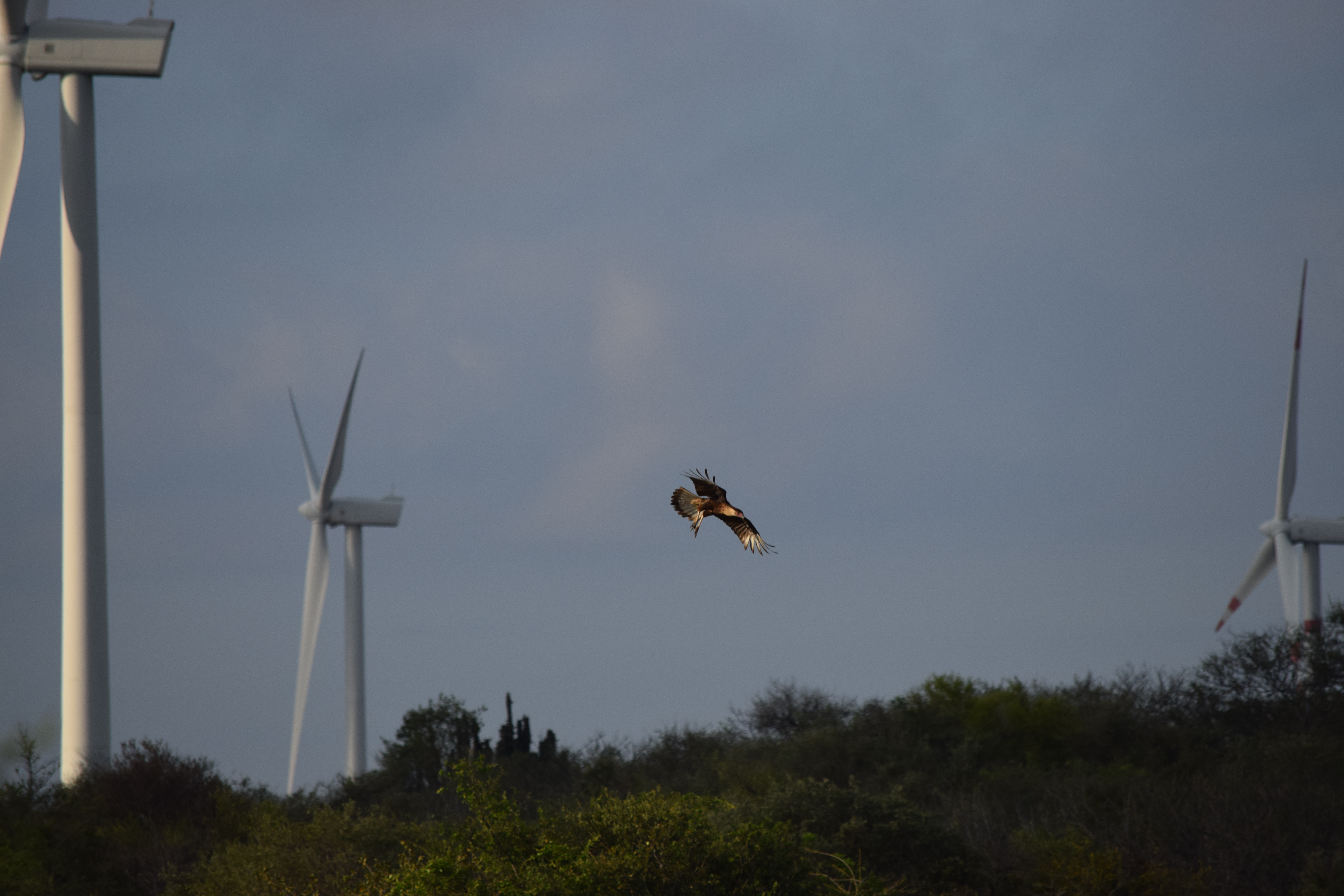
The increasing prevalence of anthropized landscapes, often characterized by extensive agricultural practices and artificial infrastructure developments (e.g. wind farms), can lead to complex ecological scenarios where the functional roles of species within their communities are altered. This study aims to compare bird populations at two anthropized sites (Stipa and Sureste, Mexico) over a four-year period. Given their proximity (< 5 km) and the shared characteristic of being located within wind farm areas on agricultural ground, similarities in bird species composition were expected. During the study, 88,765 birds of 178 species were recorded. The results revealed comparable species richness at both sites, with 137 species observed at Stipa and 135 at Sureste. Differences in assemblage composition were significant between sites and seasons (fall vs. summer, fall vs. spring), but not between years. The dissimilarity between the two sites seems to be mainly influenced by the presence of waterbirds associated with an irrigation canal at Stipa and raptors associated with open areas at Sureste, likely a favourable habitat to maximize hunting success. The stable species assemblage structure observed over the study years suggests constant resource availability resulting from habitat homogenization driven by expanded sorghum cultivation displacing other crops. Conversely, variations in bird composition between seasons were influenced by migratory patterns, particularly among raptors, which became more abundant over the study years. This study supports the idea that artificial water supplies can favour the presence of bird species with an affinity for aquatic habitats in anthropized habitats, such as at Stipa. This highlights the importance of designing, regulating and well-managing artificial resources in anthropized landscapes, as these can contribute to habitat restoration, increase taxonomic diversity, and help achieve long-term conservation goals.
Downloads
References
Almeida B. A., Sebastián‐González E., dos Anjos L. & Green A. J. 2020. Comparing the diversity and composition of waterbird functional traits between natural, restored, and artificial wetlands. Freshwater Biology, 65(12): 2196-2210. DOI: https://doi.org/10.1111/fwb.13618
Andrade, R., Franklin, J., Larson, K. L., Swan, C. M., Lerman, S. B., Bateman, H. L., & York, A. (2021). Predicting the assembly of novel communities in urban ecosystems. Landscape Ecology, 36, 1-15. DOI: https://doi.org/10.1007/s10980-020-01142-1
AOU (American Ornithologists´ Union). 1998. Check-list of North American Birds. The Species of Birds of North America from the Arctic through Panama, Including the West Indies and Hawaian Islands. 7a ed. Committee on Classification and Nomenclature, Washington, D.C.
Battisti C., Fortunati L., Ferri V., Dallari D. & Lucatello, G. 2016. Lack of evidence for short-term structural changes in bird assemblages breeding in Mediterranean mosaics moderately perforated by a wind farm. Global Ecology and Conservation 6: 299-307. DOI: https://doi.org/10.1016/j.gecco.2016.03.012
Berlanga H., Rodríguez-Contreras V., Oliveras De Ita A., Escobar M., […] & Vargas V. 2008. Red de Conocimientos Sobre las Aves de México. http://avesmx.net/
Brabata G., Battisti C., Carmona R. & Sánchez-Caballero C. A. 2019. Bird population declines in the Chametla wetland (Southern Gulf of California): Evidence of stress at the assemblage level. Israel Journal of Ecology and Evolution, 65(3-4): 119-129. DOI: https://doi.org/10.1163/22244662-20191051
Bregman T. P., Sekercioglu C. H. & Tobias J. A. 2014. Global patterns and predictors of bird species responses to forest fragmentation: implications for ecosystem function and conservation. Biological Conservation 169: 372-383. DOI: https://doi.org/10.1016/j.biocon.2013.11.024
Bretagnolle V., Siriwardena G., Miguet P., Henckel L. & Kleijn D. 2019. Local and landscape scale effects of heterogeneity in shaping bird communities and population dynamics: crop-grassland interactions. In Agroecosystem Diversity. Academic Press, pp. 231-243. DOI: https://doi.org/10.1016/B978-0-12-811050-8.00014-5
Cabrera‐Cruz S. A. & Villegas‐Patraca R. 2016. Response of migrating raptors to an increasing number of wind farms. Journal of Applied Ecology 53(6): 1667-1675. DOI: https://doi.org/10.1111/1365-2664.12673
Cabrera-Cruz S. A., Cervantes-Pasqualli J. A., Inzunza E. R., Hernández-Morales T. & Villegas-Patraca R. 2017. Raptor and large soaring bird migration across the Isthmus of Tehuantepec, Mexico: distribution, seasonality, and phenology. Bird Conservation International 27(1): 111-126. DOI: https://doi.org/10.1017/S0959270916000423
Callaghan C. T., Bino G., Major R. E., Martin J. M., […] & Kingsford R. T. 2019. Heterogeneous urban green areas are bird diversity hotspots: insights using continental-scale citizen science data. Landscape Ecology 34: 1231-1246. DOI: https://doi.org/10.1007/s10980-019-00851-6
Chesser RT, Billerman SM, Burns KJ, Cicero C., […] & Remsen JV. 2024. Check-list of North American Birds (online). American Ornithological Society. https://checklist.americanornithology.org/taxa/
Chowfin S. M. & Leslie A. J. 2021. Using birds as biodindicators of forest restoration progress: A preliminary study. Trees, Forests and People, 3, 100048. DOI: https://doi.org/10.1016/j.tfp.2020.100048
Clarke K. R. & Warwick R. M. 1999. The taxonomic distinctness measure of biodiversity: weighting of step lengths between hierarchical levels. Marine Ecology Progress Series 184: 21-29. DOI: https://doi.org/10.3354/meps184021
Clarke, K.R., Gorley, R.N., Somerfield, P.J., Warwick, R.M. (2014). Change in marine communities: an approach to statistical analysis and interpretation. PRIMER-E: Plymouth. 3nd edition.
Connell J. H. 1979. Response: intermediate-disturbance hypothesis. Science 204(4399): 1345-1345. DOI: https://doi.org/10.1126/science.204.4399.1345.a
De Bonilla E. P. D., León-Cortés J. L. & Rangel-Salazar J. L. 2012. Diversity of bird feeding guilds in relation to habitat heterogeneity and land-use cover in a human-modified landscape in southern Mexico. Journal of Tropical Ecology 28(4): 369-376. DOI: https://doi.org/10.1017/S026646741200034X
De Cáceres M. 2019. How to use the indicspecies package. R Package 1–29 (Ver. 1.7.8).
Decker D. J., Riley S. J. & Siemer W. F. (Eds.). 2012. Human dimensions of wildlife management. JHU Press. DOI: https://doi.org/10.56021/9781421406541
Dufrêne M. & Legendre P. 1997. Species assemblages and indicator species: the need for a flexible asymmetrical approach. Ecological Monographs 67 (3):345–366. DOI: https://doi.org/10.1890/0012-9615(1997)067[0345:SAAIST]2.0.CO;2
Farfán M. A., Duarte J., Real R., Muñoz A. R., […] & Vargas J. M. 2017. Differential recovery of habitat use by birds after wind farm installation: A multi-year comparison. Environmental Impact Assessment Review 64:8-15. DOI: https://doi.org/10.1016/j.eiar.2017.02.001
Fernández‐Bellon D., Wilson M. W., Irwin S. & O'Halloran J. 2019. Effects of development of wind energy and associated changes in land use on bird densities in upland areas. Conservation Biology 33(2): 413-422. DOI: https://doi.org/10.1111/cobi.13239
Fraixedas S., Lindén A., Piha M., Cabeza M., […] & Lehikoinen A. 2020. A state-of-the-art review on birds as indicators of biodiversity: Advances, challenges, and future directions. Ecological Indicators 118: 106728. DOI: https://doi.org/10.1016/j.ecolind.2020.106728
Giralt D., Pantoja J., Morales M. B., Traba J. & Bota G. 2021. Landscape-scale effects of irrigation on a dry cereal farmland bird community. Frontiers in Ecology and Evolution 9:611563. DOI: https://doi.org/10.3389/fevo.2021.611563
Gómez-Moreno V. D. C., González-Gaona O. J., Niño-Maldonado S., Azuara-Domínguez A. & Barrientos-Lozano L. 2023. Urban green areas with mixed vegetation favor avian richness and abundance in Ciudad Victoria, Tamaulipas, Mexico. Revista de Biología Tropical 71(1). DOI: https://doi.org/10.15517/rev.biol.trop..v71i1.50729
González-Salazar C., Martínez-Meyer E. & López-Santiago G. 2014. A hierarchical classification of trophic guilds for North American birds and mammals. Revista Mexicana de Biodiversidad 85(3): 931-941. DOI: https://doi.org/10.7550/rmb.38023
Hendershot J. N., Smith J. R., Anderson C. B., Letten A. D., [...] & Daily G. C. 2020. Intensive farming drives long-term shifts in avian community composition. Nature 579(7799): 393-396. DOI: https://doi.org/10.1038/s41586-020-2090-6
Herrera-Alsina L., Villegas-Patraca R., Eguiarte L. E. & Arita H. T. 2013. Bird communities and wind farms: a phylogenetic and morphological approach. Biodiversity and Conservation 22: 2821-2836. DOI: https://doi.org/10.1007/s10531-013-0557-6
Ibarra J. T. & Martin K. 2015. Biotic homogenization: loss of avian functional richness and habitat specialists in disturbed Andean temperate forests. Biological Conservation 192: 418-427. DOI: https://doi.org/10.1016/j.biocon.2015.11.008
INECOL. 2012. Manifestación de Impacto Ambiental. Modalidad Particular. Del proyecto 40 CE Sureste I Fase II. Agua Caliente La Mata, Asunción Ixtaltepec, Oaxaca.
Liang C., Yang G., Wang N., Feng G., [...] & Yang J. 2019. Taxonomic, phylogenetic and functional homogenization of bird communities due to land use change. Biological Conservation 236: 37-43. DOI: https://doi.org/10.1016/j.biocon.2019.05.036
Lindenmayer D., Scheele B. C., Lavery T. & Likens G. E. 2023. Biodiversity response to rapid successive land cover conversions in human-dominated landscapes. Global Ecology and Conservation 45: e02510. DOI: https://doi.org/10.1016/j.gecco.2023.e02510
Mariano-Neto E. & Santos R. A. 2023. Changes in the functional diversity of birds due to habitat loss in the Brazil Atlantic Forest. Frontiers in Forests and Global Change 6: 1041268. DOI: https://doi.org/10.3389/ffgc.2023.1041268
May R., Jackson C. R., Middel H., Stokke B. G. & Verones F. 2021. Life-cycle impacts of wind energy development on bird diversity in Norway. Environmental Impact Assessment Review 90: 106635. DOI: https://doi.org/10.1016/j.eiar.2021.106635
McAndrews A. E., Montejo-Díaz J. E. & Alducin-Chávez G. D. 2008. First description of the egg and notes on the nest of the Cinnamon-tailed Sparrow (Aimophila sumichrasti). Ornitología Neotropical 19(1): 12.
McWethy D. B., Hansen A. J. & Verschuyl J. P. 2010. Bird response to disturbance varies with forest productivity in the northwestern United States. Landscape Ecology 25:533-549. DOI: https://doi.org/10.1007/s10980-009-9437-6
Mirski P., Grosberg J., Kull T., Mellov P., [...] & Väli Ü. 2024. Movement of avian predators points to biodiversity hotspots in agricultural landscape. Royal Society Open Science 11(1):231543. DOI: https://doi.org/10.1098/rsos.231543
Monroy-Ojeda A., Grosselet M., Panjabi A., Pool D., […] & Ruiz-Michael G. 2018. Density and population estimates of Rose-bellied Bunting (Passerina rositae), Cinnamon-tailed Sparrow (Peucaea sumichrasti), and Orange-breasted Bunting (Passerina lechlancherii) in the Sierra Tolistoque, Oaxaca, Mexico. The Wilson Journal of Ornithology 130(2):353-361. DOI: https://doi.org/10.1676/16-217.1
Mouillot D., Graham N. A., Villéger S., Mason N. W. & Bellwood D. R. 2013. A functional approach reveals community responses to disturbances. Trends in Ecology & Evolution 28(3):167-177. DOI: https://doi.org/10.1016/j.tree.2012.10.004
Negro J. J. & Galván I. 2018. Behavioural ecology of raptors. Birds of Prey: Biology and conservation in the XXI century, 33-62. DOI: https://doi.org/10.1007/978-3-319-73745-4_2
Olvera-Vital A., Rebón-Gallardo M. F. & Navarro-Sigüenza A. G. 2020. Diversidad de aves y recambio taxonómico en los diferentes hábitats del municipio de Misantla, Veracruz, México: una comparación de especies a través del tiempo. Revista Mexicana de Biodiversidad 91. DOI: https://doi.org/10.22201/ib.20078706e.2020.91.3070
Oksanen, J., Blanchet, F. G., Friendly, M., Kindt, R., Legendre, P., McGlinn, D., & Wagner, H. (2022). vegan: Community Ecology Package. R package version 2.5-7. 2020
Proppe D. S., Sturdy C. B. & St. Clair C. C. 2013. Anthropogenic noise decreases urban songbird diversity and may contribute to homogenization. Global Change Biology 19(4): 1075-1084. DOI: https://doi.org/10.1111/gcb.12098
Pustkowiak S., Kwieciński Z., Lenda M., Żmihorski M., [...] & Skórka P. 2021. Small things are important: the value of singular point elements for birds in agricultural landscapes. Biological Reviews 96(4): 1386-1403. DOI: https://doi.org/10.1111/brv.12707
Rahman A., Farrok O. & Haque M. M. 2022. Environmental impact of renewable energy source based electrical power plants: Solar, wind, hydroelectric, biomass, geothermal, tidal, ocean, and osmotic. Renewable and Sustainable Energy Reviews 161: 112279. DOI: https://doi.org/10.1016/j.rser.2022.112279
Rehling F., Delius A., Ellerbrok J., Farwig N. & Peter F. 2023. Wind turbines in managed forests partially displace common birds. Journal of Environmental Management 328:116968. DOI: https://doi.org/10.1016/j.jenvman.2022.116968
Reid K., Baker G. B. & Woehler E. J. 2023. An ecological risk assessment for the impacts of offshore wind farms on birds in Australia. Austral Ecology 48(2):418-439. DOI: https://doi.org/10.1111/aec.13278
Rigal S., Dakos V., Alonso H., Auniņš A., [...] & Devictor V. 2023. Farmland practices are driving bird population decline across Europe. Proceedings of the National Academy of Sciences 120(21): e2216573120. DOI: https://doi.org/10.1073/pnas.2216573120
Rohwer S., Grason E. & Navarro-Sigüenza A. G. 2015. Irrigation and avifaunal change in coastal Northwest Mexico: has irrigated habit attracted threatened migratory species?. PeerJ 3: e1187. DOI: https://doi.org/10.7717/peerj.1187
Rojas R. A. F. & Stappung E. S. C. 2004. Summer diet comparison between the American Kestrel (Falco sparverius) and Aplomado Falcon (Falco femoralis) in an agricultural area of Araucanía, southern Chile. Hornero 19(2): 53-60. DOI: https://doi.org/10.56178/eh.v19i2.829
Samia D. S., Nakagawa S., Nomura F., Rangel T. F. & Blumstein D. T. 2015. Increased tolerance to humans among disturbed wildlife. Nature Communications 6(1): 8877. DOI: https://doi.org/10.1038/ncomms9877
Santini N. S., Cuervo-Robayo A. P. & Adame M. F. 2022. Agricultural Land Degradation in Mexico. In Impact of Agriculture on Soil Degradation I: Perspectives from Africa, Asia, America and Oceania. Cham: Springer International Publishing, pp. 301-323. DOI: https://doi.org/10.1007/698_2022_915
Schaldach Jr W. J., Escalante B. P. & Winker K. 1997. Further notes on the avifauna of Oaxaca, Mexico. An. Inst. Anales del Instituto de Biología Serie Zoología 68(1): 91-135.
Singh V., Shukla S. & Singh A. 2021. The principal factors responsible for biodiversity loss. Open Journal of Plant Science 6(1): 011-014. DOI: https://doi.org/10.17352/ojps.000026
Smith Y. C., Ehlers Smith D. A., Seymour C. L., Thébault E. & van Veen F. F. 2015. Response of avian diversity to habitat modification can be predicted from life-history traits and ecological attributes. Landscape Ecology, 30: 1225-1239. DOI: https://doi.org/10.1007/s10980-015-0172-x
Solórzano-Tello O. A. & Portador-García T. D. J. 2016. Paradojas de la energía eólica ¿alternativa al cambio climático en la agenda global? el corredor eólico en el Istmo de Tehuantepec, Oaxaca, México. Ambiente y Sostenibilidad, pp. 55-63. DOI: https://doi.org/10.25100/ays.v0i0.4290
Stouffer P. C., Bierregaard Jr. R. O., Strong C. & Lovejoy T. E. 2006. Long‐term landscape change and bird abundance in Amazonian rainforest fragments. Conservation Biology 20(4):1212-1223. DOI: https://doi.org/10.1111/j.1523-1739.2006.00427.x
Turkovska O., Castro G., Klingler M., Nitsch F., [..] & Schmidt J. 2021. Land-use impacts of Brazilian wind power expansion. Environmental Research Letters 16(2):024010. DOI: https://doi.org/10.1088/1748-9326/abd12f
Väli Ü., Grosberg J., Mellov P., Tali T. & Mirski P. 2023. Is the Northern Goshawk an Efficient Bioindicator of Avian Abundance and Species Richness in Urban Environments?. Diversity 15(6): 749. DOI: https://doi.org/10.3390/d15060749
Villegas-Patraca R., Macgregor-Fors I., Ortiz-Martínez T., Pérez-Sánchez C. E., […] & Muñoz-Robles C. 2012. Bird-community shifts in relation to wind farms: A case study comparing a wind farm, croplands, and secondary forests in southern Mexico. Condor 114(4): 711-719. DOI: https://doi.org/10.1525/cond.2012.110130
Villegas-Patraca R., Cabrera-Cruz S. A. & Herrera-Alsina L. 2014. Soaring migratory birds avoid wind farm in the Isthmus of Tehuantepec, southern Mexico. PLoS One 9(3): e92462. DOI: https://doi.org/10.1371/journal.pone.0092462
Willems G., Pison G., Rousseeuw P.J. & Van Aelst S. 2002. A robust Hotelling test. Metrika 55 (1–2):125–138. DOI: https://doi.org/10.1007/s001840200192
Zárate-Toledo E. & Fraga J. 2016. La política eólica mexicana: Controversias sociales y ambientales debido a su implantación territorial. Estudios de caso en Oaxaca y Yucatán. Trace 69:65-95. DOI: https://doi.org/10.22134/trace.v0i69.10
Published
How to Cite
Issue
Section
License

This work is licensed under a Creative Commons Attribution-ShareAlike 4.0 International License.