
Andy Graydon | The Great Refractor
Abstract
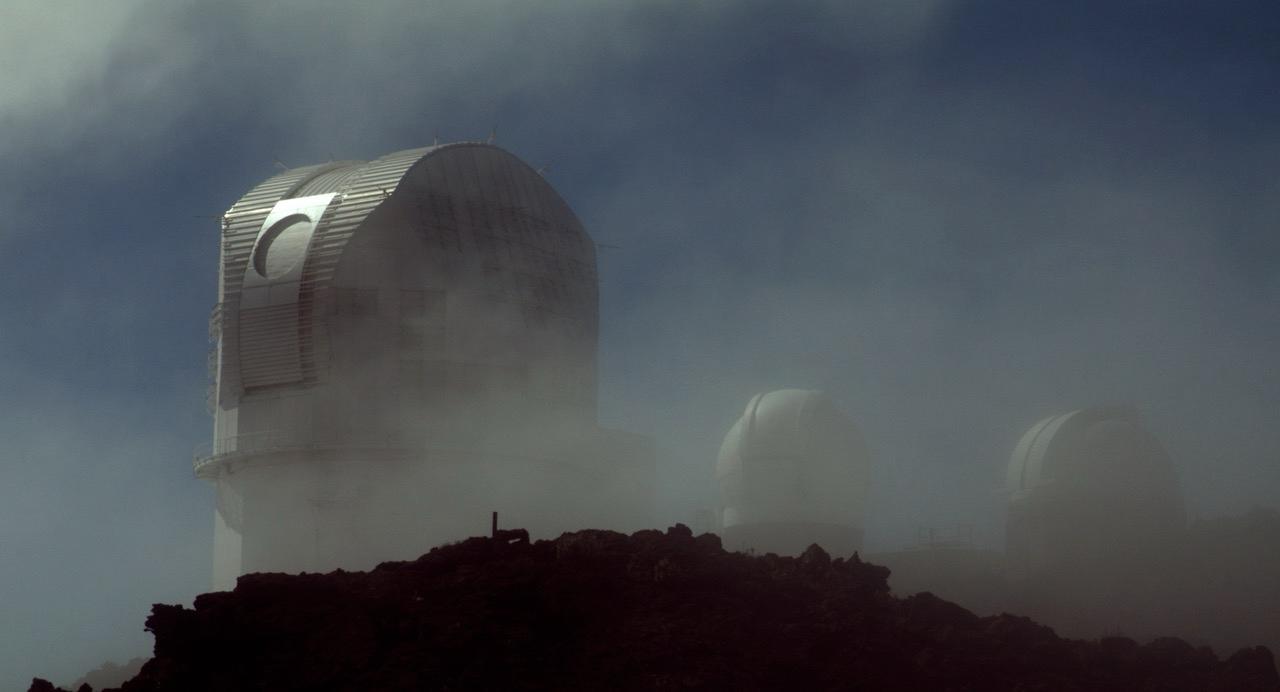
The Great Refractor, a collaboration between Andy Graydon and the Irish poet and neuroscientist Laurence O’Dwyer, charts the undulating terrain of our attempts to understand the world through both scientific and poetic inquiries. The film contrasts histories of mapping, visualizing and territorializing with contemporary practices centered on sounding, listening and collective resonation. The film proposes a challenge to what the Enlightenment truly may be said to have enlightened, and what voices went silent in the force of that glare. Through a chorus of voices, stories and practices, the project prods at the sensitive and uncertain interface between outer and inner worlds, exploring regions of doubt where an often inscrutable reality meets the echo chambers of human knowledge. Along the way, the work seeks out possible transformations and decolonizations of our processes of interpreting and sharing the world.
The film presents a series of solitary figures engaged in their work: each person, whether an astrophysicist, an artist, a translator or a weather station engineer, is engrossed in their unique process of observation and exploration. Participants were asked to mimic with their voices the sounds of their own sonified observations, from underwater hydrophone recordings to black hole gravitation waves. All the sound in the video was made from these vocal recordings. As the work progresses, the participants vocalizations reach beyond language to become a collective music of utterances, noises and breath. Participants include astronomer Kirill Maslenniko at the Pulkovo Observatory in St. Petersburg, Russia; fiber artist Chenta Laury in the palm forest of the W.S. Merwin Conservancy in Hawai’i; Eden Girma, an astrophysicist and jazz vocalist; and Nicole L’Huillier, an experimental musical instrument inventor, working in the Atacama desert in Chile.
Bio
Andy Graydon is an artist and filmmaker originally from Maui, Hawai’i. His work is concerned with natural and social ecologies, and with sound and listening as creative practices. Recent projects have focused on island ecologies and the imaginal and narrative forms employed by the natural sciences. His projects frequently engage structures of music such as the ensemble, the score, improvisation and variation, and techniques of the voice. Often ephemeral in nature, Graydon’s work combines minimal physical materials with elements that are absent, fictional, or imaginary.