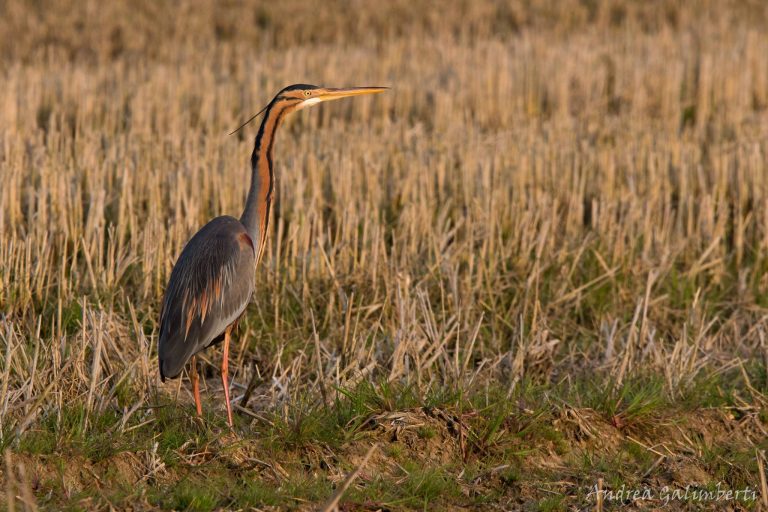
Post-fledging habitat selection of a Purple Heron Ardea purpurea revealed by GPS/GSM telemetry
DOI:
https://doi.org/10.30456/avo.2021201Keywords:
Typha sp., Phragmites australis, waterbirds, movement ecology, inland wetlands, ditches, Ardea purpureaAbstract
The Purple Heron is a species of conservation concern in Europe, mainly threatened by the progressive degradation and reduction of wetlands. For future conservation practices, it is of pivotal importance to gather detailed knowledge of its habitat preferences. In June 2018, a nestling of Purple Heron from a sub-Alpine Lake in Northern Italy was equipped with a GPS/GSM device. Habitat selection during the post-fledging period (mid-July to mid-October) was analysed by superimposing the GPS locations to a fine-grained field-based map, discerning 14 habitat classes as well as narrow (<2 m) and wide (≥2 m) ditches. The contours of the home range were defined as the 99% kernel calculated on all the gathered locations, which were successively sub selected only retaining 2,017 locations representing the position of the bird every hour and all day long. Within the home range, the habitat availability was estimated by generating 10,000 random distributions of the locations. We firstly verified whether wide ditches were more frequently used by the heron if compared to narrow ones. Eventually, we calculated the ratio between the number of true and random locations falling into the different habitat classes, obtaining a series of class-specific selection ratios. We found a significant preference towards wide ditches compared to narrow ones. Freshly renewed reedbeds and cattail beds were strongly favoured, while high-bearing sedges and Black Alder were also significantly preferred but with lower indices. All the remaining habitats, including mature reedbeds, were significantly avoided. Our results reinforce the indication that the protection of minor landscape elements as ditches and small patches of wet habitats may be of pivotal importance to foster the long-term conservation of bird communities linked to the residual wetlands of the sub-Alpine belt.Downloads
Download data is not yet available.
Downloads
Published
2021-09-09
How to Cite
Morganti, M., Viganò, E., Berlusconi, A., Cioccarelli, S., & Fasola, M. (2021). Post-fledging habitat selection of a Purple Heron Ardea purpurea revealed by GPS/GSM telemetry. Avocetta, 45(2). https://doi.org/10.30456/avo.2021201
Issue
Section
Research Articles
License

This work is licensed under a Creative Commons Attribution-ShareAlike 4.0 International License.