
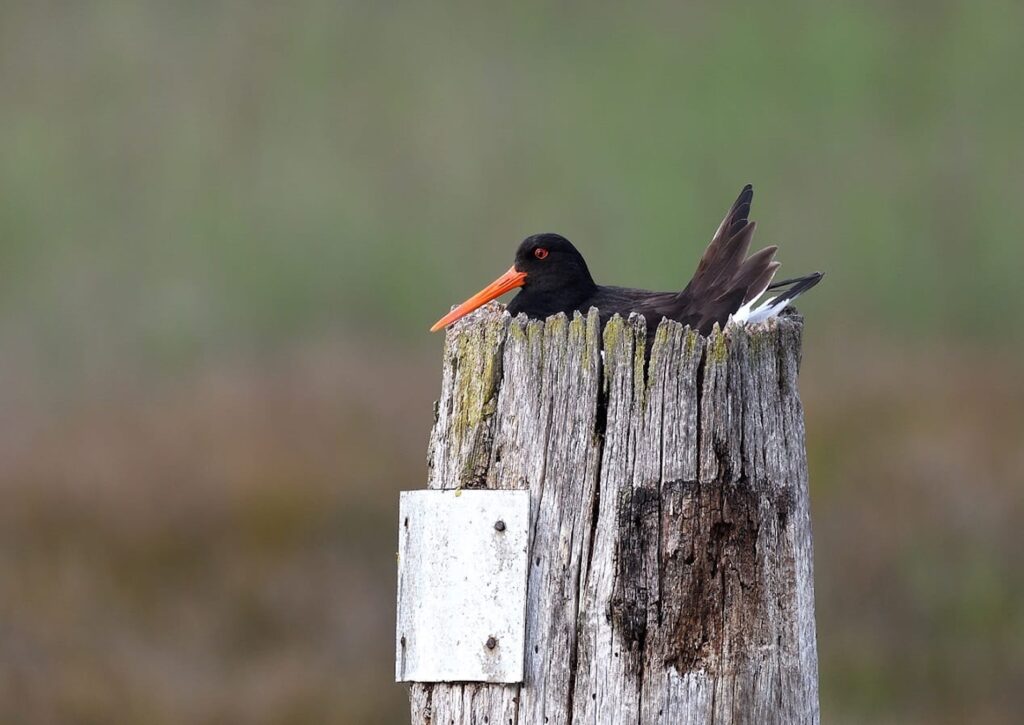
To change not to drown: Eurasian Oystercatchers Haematopus ostralegus adopt pole tops as safe nesting sites in the Lagoon of Venice
DOI:
https://doi.org/10.30456/avo.2024103Parole chiave:
sea level rise, Lagoon of Venice, Haematopus ostralegus, Eurasian Oystercatcher, breedingAbstract
Eurasian Oystercatchers have increasingly adopted pole tops in the last decade in the Lagoon of Venice (NE Italy). At the end of the study, 7% of the breeding population of the Lagoon (n = 180) nested on pole tops. Nests built in these structures are safe from flooding due to extremely high tides, thus allowing a high hatching success: 42 clutches out of 43 (97.7%) hatched. We hypothesise that this is an adaptive behaviour to the increased frequency of extreme high tides in the last decade and is a good omen for the species. The good availability of pole tops suitable for nesting in the Lagoon allows breeding in areas otherwise unsuitable for nesting due to the lack of sites safe from flooding. Placement of artificial nests on pole tops is also feasible and could be an easy and cheap strategy for the conservation of the breeding population of Oystercatchers in the Lagoon of Venice as extreme high tides and spring storms will likely increase in the future.
Downloads
Riferimenti bibliografici
Bailey L.D., Ens B.J., Both C., Heg D., Oosterbeek K. & van de Pol M., 2019. Habitat selection can reduce effects of extreme climatic events in a long‐lived shorebird. Journal of Animal Ecology 88: 1474-1485. DOI: https://doi.org/10.1111/1365-2656.13041
Baldan D., Coraci E., Crosato F., Cornello M., […] & Bonometto A., 2023. Return periods of extreme sea levels: From magnitude to frequency, duration and seasonality. Implications in a regulated coastal lagoon. Science of the Total Environment 866: 161326, https://doi.org/10.1016/j.scitotenv.2022.161326. DOI: https://doi.org/10.1016/j.scitotenv.2022.161326
Bonter D.N., MacLean S.A., Shah S.S. & Moglia M.C., 2014. Storm-induced shifts in optimal nesting sites: a potential effect of climate change. Journal of Ornithology 155: 631-638. DOI: https://doi.org/10.1007/s10336-014-1045-9
Breiner F.T., Anand M., Butchart S.H., Flörke M., […] & Nagy S., 2022. Setting priorities for climate change adaptation of Critical Sites in the Africa‐Eurasian waterbird flyways. Global Change Biology 28: 739-752. DOI: https://doi.org/10.1111/gcb.15961
Coccon F., Vanni L., Dabalà C. & Giunchi D., 2022. The abundance of Yellow-legged gulls Larus michahellis breeding in the historic centre of Venice, Italy and the initial effects of the new waste collection policy on the population. Urban Ecosystems 25: 643-656, https://doi.org/10.1007/s11252-021-01175-7. DOI: https://doi.org/10.1007/s11252-021-01175-7
Day J.W., Ibáñez C., Pont D. & Scarton F., 2019. Status and Sustainability of Mediterranean Deltas: The case of the Ebro, Rhône, and Po Deltas and Venice Lagoon. In: Wolanski E., Day J.W., Elliott M. & Ramachandran R. (eds). Coasts and Estuaries: The Future, Elsevier, Amsterdam, The Netherlands, pp 237-249. DOI: https://doi.org/10.1016/B978-0-12-814003-1.00014-9
Dias M.P., Martin R., Pearmain E.J., Burfield I.J., […] & Croxall J.P., 2019. Threats to seabirds: a global assessment. Biological Conservation 237: 525-537. DOI: https://doi.org/10.1016/j.biocon.2019.06.033
Duncan A., Duncan R., Rae R., Rebecca G.W. & Stewart B.J., 2001. Roof and ground nesting Eurasian Oystercatchers in Aberdeen. Scottish Birds 22: 1-8.
Fernández Cañero R. & González Redondo P., 2010. Green roofs as a habitat for birds: a review. Journal of Animal and Veterinary Advances 9: 2041-2052. DOI: https://doi.org/10.3923/javaa.2010.2041.2052
Ferrarin C., Lionello P., Orlić M., Raicich F. & Salvadori G., 2022. Venice as a paradigm of coastal flooding under multiple compound drivers. Scientific Reports 12: 5754. DOI: https://doi.org/10.1038/s41598-022-09652-5
Griffin C.P., Brush J.M. & Schwarzer A.C., 2023. Decline in annual survival of American oystercatchers wintering in Florida linked to extreme high tides. The Journal of Wildlife Management 87: e22399. DOI: https://doi.org/10.1002/jwmg.22399
Herbert-Read J.E., Krause S., Morrell L.J., Schaerf T.M., Krause J. & Ward A.J.W., 2013. The role of individuality in collective group movement. Proceedings of the Royal Society B: Biological Sciences 280: 20122564. DOI: https://doi.org/10.1098/rspb.2012.2564
Hockey P., Kirwan G.M. & Boesman P.F.D., 2020. Eurasian Oystercatcher (Haematopus ostralegus), version 1.0. In Billerman S.M., Keeney B.K., Rodewald P.G. & Schulenberg T.S. (Ed). Birds of the World, Cornell Lab of Ornithology, Ithaca, NY, https://doi.org/10.2173/bow.euroys1.01. DOI: https://doi.org/10.2173/bow.euroys1.01
Koffijberg K., Frikke J., Hälterlein B., Reichert G. & Andretzke H., 2016. Breeding birds in trouble: a framework for an action plan in the Wadden Sea. CWSS, Wilhelmshaven. https://www.waddensea-worldheritage.org/resources.
IPCC, 2023: Summary for Policymakers. In: Core Writing Team, Lee H. & Romero R. (eds.). Climate Change 2023: Synthesis Report. Contribution of Working Groups I, II and III to the Sixth Assessment Report of the Intergovernmental Panel on Climate Change. IPCC, Geneva, Switzerland, pp. 1-34, 10.59327/IPCC/AR6-9789291691647.001.
Lionello P., Barriopedro D., Ferrarin C., Nicholls R.J., […] & Zanchettin D., 2021. Extreme floods of Venice: characteristics, dynamics, past and future evolution. Natural Hazards and Earth System Sciences 21: 2705-2731. DOI: https://doi.org/10.5194/nhess-21-2705-2021
Nagy S., Breiner F.T., Anand M., Butchart S.H., Flörke M., Fluet-Chouinard E. & Voltzit O., 2022. Climate change exposure of waterbird species in the African-Eurasian flyways. Bird Conservation International 32: 1-26. DOI: https://doi.org/10.1017/S0959270921000150
Newton A., Icely J., Cristina S., Perillo G.M.E., […] & Kuenzer C., 2020. Anthropogenic, direct pressures on coastal wetlands. Frontiers in Ecology and Evolution 8: 144. DOI: https://doi.org/10.3389/fevo.2020.00144
Ninni E., 1938. Gli uccelli delle lagune venete. Atti XXVI Riunione Società Italiana per il Progresso delle Scienze 5: 132-163.
Parmesan C., 2006. Ecological and evolutionary responses to recent climate change. Annual Review of Ecology, Evolution and Systematics 37: 637-669, https://doi.org/10.1146/annurev.ecolsys.37.091305.110100 DOI: https://doi.org/10.1146/annurev.ecolsys.37.091305.110100
Paton W.S. & Willis D.P., 1973. Unusual nest sites of Oystercatchers. Scottish Birds 7: 406.
Ramirez F., Rodriguez C., Seoane J., Figuerola J. & Bustamante J., 2018. How will climate change affect endangered Mediterranean waterbirds? PloS ONE 13: e0192702. DOI: https://doi.org/10.1371/journal.pone.0192702
Reynolds M.H., Courtot K.N., Berkowitz P., Storlazzi C.D., Moore J. & Flint E., 2015. Will the effects of sea-level rise create ecological traps for Pacific Island seabirds? PLoS ONE 10: e0136773. DOI: https://doi.org/10.1371/journal.pone.0136773
Reynolds J., Ibáñez-Álamo J.D., Sumasgutner P. & Mainwaring M.C., 2019. Urbanisation and nest building in birds: a review of threats and opportunities. Journal of Ornithology 160: 841-860. DOI: https://doi.org/10.1007/s10336-019-01657-8
Ritenour K., King S.L., Collins S. & Kaller M.D., 2022. Factors affecting nest success of colonial nesting waterbirds in southwest Louisiana. Estuaries and Coasts 45: 897-912. DOI: https://doi.org/10.1007/s12237-021-00993-4
Rusticali R., Scarton F. & Valle R.G., 1999. Habitat selection and hatching success of Eurasian Oystercatchers in relation to nesting Yellow-Legged Gulls and human presence. Waterbirds 22: 367-375. DOI: https://doi.org/10.2307/1522112
Rusticali R., Scarton F. & Valle R.G., 2002. Taxonomic status of the Oystercatcher Haematopus ostralegus breeding in Italy: the eastern limit of H. o. longipes has moved 700 km westwards. Bird Study 49: 310-313. DOI: https://doi.org/10.1080/00063650209461282
Saintilan N., Kovalenko K.E., Rogers K., Cahoon D.R., […] & Khan N., 2022. Constraints on the adjustment of tidal marshes to accelerating sea level rise. Science 377: 523-527. DOI: https://doi.org/10.1126/science.abo7872
Saunders S.P., Piper W., Farr M.T., Bateman B.L., […] & Wilsey C.B., 2021. Interrelated impacts of climate and landuse change on a widespread waterbird. Journal of Animal Ecology 90: 1165-1176. DOI: https://doi.org/10.1111/1365-2656.13444
Scarton F., 2022. Beccaccia di mare Haematopus ostralegus. In: Lardelli R., Bogliani G., Brichetti P., Caprio E., Celada C., Conca G., Fraticelli F., Gustin M., Janni O., Pedrini P., Puglisi L., Rubolini D., Ruggieri L., Spina F., Tinarelli R., Calvi G., Brambilla M. (eds). Atlante degli uccelli nidificanti in Italia. Edizioni Belvedere, Latina, pp. 198-199.
Scarton F. & Valle R.G., 1996. La Beccaccia di mare Haematopus ostralegus torna a nidificare in laguna di Venezia. Rivista Italiana di Ornitologia 66: 202-203.
Scarton F. & Valle R.G., 2015. Long-Term Trends (1989-2013) In: The seabird community breeding in the Lagoon of Venice (Italy). Rivista italiana di Ornitologia – Research in Ornithology 85: 21-30. DOI: https://doi.org/10.4081/rio.2015.232
Scarton F. & Valle R.G., 2021. Uccelli acquatici nidificanti nella laguna aperta di Venezia: stime di popolazione per gli anni 2016-2018 e andamenti di medio periodo. Lavori - Società Veneziana di Scienze Naturali 46: 5-16.
Snow D.W. & Perrins C.M., 1998. The birds of the Western Palearctic, Volume 1: Non-Passerines. Oxford University Press, Oxford, U.K.
Taherkhani M., Vitousek S., Barnard P.L., Frazer N., Anderson T.R. & Fletcher C.H., 2020. Sea-level rise exponentially increases coastal flood frequency. Scientific reports 10: 6466. DOI: https://doi.org/10.1038/s41598-020-62188-4
Tattoni D.J., Mordecai E.A. & Stantial M.L., 2020. Spatial and temporal changes in nesting behavior by Black Skimmers (Rynchops niger) in New Jersey, USA, from 1976-2019. Waterbirds 43: 307-313. DOI: https://doi.org/10.1675/063.043.0309
Valle R.G. & Scarton F., 1998. Status and distribution of Oystercatcher Haematopus ostralegus breeding along Mediterranean coasts. Wader Study Group Bulletin 86: 26-30.
Valle R.G., Rusticali R. & Scarton F., 1998. Nidificazione di Beccaccia di mare (Haematopus ostralegus) su isole artificiali della Laguna di Caleri (NE Italy) (Vertebrata, Aves). Lavori - Società Veneziana di Scienze Naturali 23: 43-47.
Valle R.G. & Scarton F., 1999. Habitat selection and nesting association in four species of Charadriiformes in the Po Delta (Italy). Ardeola 46: 1-12.
Valle R.G. & Scarton F., 2019. Effectiveness, efficiency, and safety of censusing Eurasian Oystercatchers Haematopus ostralegus by unmanned aircraft. Marine Ornithology 47: 81–87.
Valle R.G. & Scarton F., 2023. One thousand nesting pairs packed into one hundred square meters: the sad story of the Sandwich Terns (Thalasseus sandvicensis) of the Venice Lagoon. Ardeola 70: 89-103. DOI: https://doi.org/10.13157/arla.70.1.2023.sc1
Valle R.G., Verza E. & Scarton F., 2023. Do the barrier islands of the Po Delta constitute an ecological trap for colonizing Slender-billed Gulls Larus genei? Ornis Hungarica 31: 72–87. DOI: https://doi.org/10.2478/orhu-2023-0005
van de Pol M., Bruinzeel L.W., Heg D., Van Der Jeugd H.P. & Verhulst S., 2006. A silver spoon for a golden future: Long‐term effects of natal origin on fitness prospects of oystercatchers (Haematopus ostralegus). Journal of Animal Ecology 75: 616–626. DOI: https://doi.org/10.1111/j.1365-2656.2006.01079.x
van de Pol M., Vindenes Y., Sæther B.E., Engen S., […] & Tinbergen J.M., 2010. Effects of climate change and variability on population dynamics in a long-lived shorebird. Ecology 91: 1192-1204. DOI: https://doi.org/10.1890/09-0410.1
Vitale N., Brush J. & Powell A., 2022. Factors limiting reproductive success of American oystercatchers (Haematopus palliatus) in Florida's Southern Big Bend Region. Waterbirds 44: 449-462. DOI: https://doi.org/10.1675/063.044.0406
Vousdoukas M.I., Mentaschi L., Voukouvalas E., Verlaan M., […] & Feyen L., 2018. Global probabilistic projections of extreme sea levels show intensification of coastal flood hazard. Nature Communications 9: 2360. DOI: https://doi.org/10.1038/s41467-018-04692-w
Zhao Q., Boomer G.S. & Royle J.A., 2019. Integrated modelling predicts shifts in waterbird population dynamics under climate change. Ecography 42: 1470-1481. DOI: https://doi.org/10.1111/ecog.04548
Zoccarato C. & Da Lio C., 2021. The Holocene influence on the future evolution of the Venice Lagoon tidal marshes. Communications Earth & Environment 2.1: 1-9. DOI: https://doi.org/10.1038/s43247-021-00144-4
Dowloads
Pubblicato
Come citare
Fascicolo
Sezione
Licenza

Questo lavoro è fornito con la licenza Creative Commons Attribuzione - Condividi allo stesso modo 4.0.




