
Nesting tree selection in urban Woodpigeon; applications in urban planning to reduce the conflicts with human activities
DOI:
https://doi.org/10.30456/avo.2024114Parole chiave:
trees, streets, parks, nest, conflict, DesignAbstract
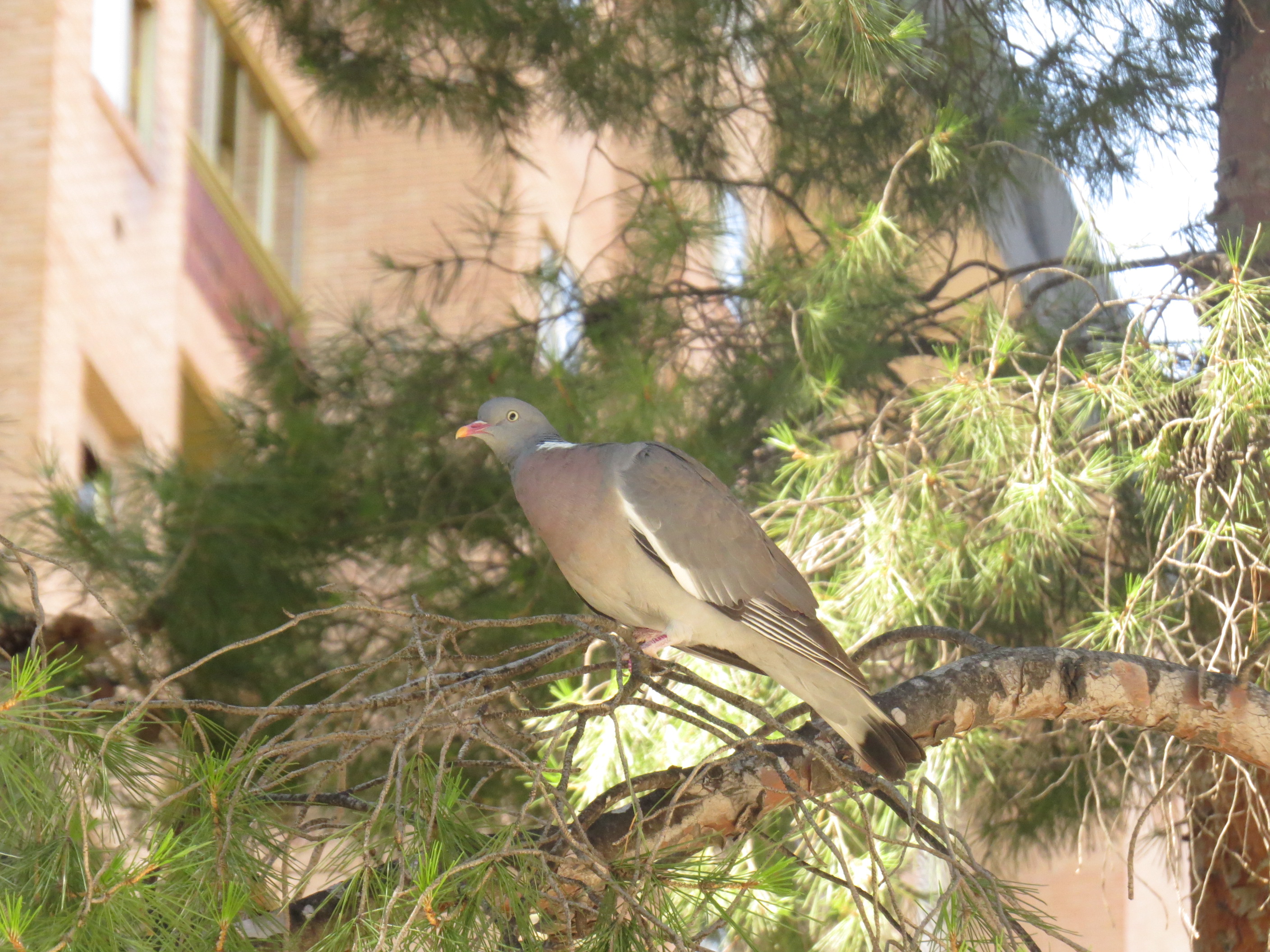
The urban populations of Woodpigeon (Columba palumbus) is increasing throughout Europe, generating conflicts with humans associated with damage resulting from their feces deposition or with their role in the maintenance of zoonotic diseases. Despite this, the species has a significant conservation value, as it is an important part of the diet of various threatened raptors like the Bonelli´s (Aquila fasciata) and Iberian Imperial Eagle (Aquila adalberti). Also, it is a game species whose hunting generates large income in certain regions. In the present work, we assessed the habitat selection during the nesting period, analyzing the tree species used for nesting and nest distribution patterns in streets and urban parks. It has been verified how the location of the nest is not random, with a percentage of them in evergreen trees significantly higher than expected and with a significant selection of certain tree species like Pinus sp., Robinia pseudoacacia or Ulmus sp …) while others like Prunus sp., Melia azedarach or Populus sp were avoided. Significant differences were also found in the density of nests, being significantly greater in the streets (12.3 ±11.6 nest/ha) than in parks (5.7 ±3.7 nest/ha). It is discussed how the plantations in areas with benches or vehicle parking of tree species negatively selected by Woodpigeons for nesting and tree species positively selected by Woodpigeons in the rest of the park areas might lead to a reduction of the species associated conflicts while guaranteeing its conservation.
Downloads
Riferimenti bibliografici
Aebischer N.J., Robertson P.A. & Kenward R.E. 1993. Compositional analysis of habitat use from animal radio-tracking data. Ecology 74(5): 1313-1325. DOI: https://doi.org/10.2307/1940062
Alonso J.C. & Purroy F. J. 1979. Avifauna de los parques de Madrid. Naturalia Hispanica: 18. ICONA. Madrid. Spain.
Andueza A., Labarri M., Urda V., Prieto I., Villaneva L.F. & Sanchez-García C. 2018. Evaluación del impacto económico y social de la caza en España. Fundanción Arteminisan, Ciudad Real, Spain.
Baptista L.F., Trail P.W., Horblit H.M., Boesman P.F.D. & Garcia E.F.J. 2018. Common Woodpigeon (Columba palumbus). In: del Hoyo J., Elliott A., Sargatal J., Christie D.A. & de Juana E. (eds.), Handbook of the Birds of the World Alive. Lynx Edicions, Barcelona, Spain.
Bea A., Beitia R. & Fernández J.M. 2003. The census and distribution of wintering Woodpigeon Columba palumbus in the Iberian peninsula. Ornis Hungarica 12-13: 157-167.
Bea A., Svazas S., Grishanov G., Kozulin A., Stanevicius V., Astafieva T. & Sruoga A. 2011. Woodland and urban populations of the Woodpigeon Columba palumbus in the Eastern Baltic region. Ardeola 58: 315–321 DOI: https://doi.org/10.13157/arla.58.2.2011.315
Bendjoudi D., Voisin J.F., Doumandji S., Merabet A., Benyounes N. & Chenchouni H. 2015. Rapid increase in numbers and change of land use in two expanding Columbidae species (Columba palumbus and Streptopelia decaocto) in Algeria. Avian Research 6: 18 DOI: https://doi.org/10.1186/s40657-015-0027-9
Bengtsson K. 2001. Which Woodpigeon Columba palumbus clutches generate young? Ornis Svecica 11(1–2): 99-217. https://doi.org/10.34080/os.v11.22866 DOI: https://doi.org/10.34080/os.v11.22866
BirdLife International 2020. The IUCN Red List of Threatened Species 2020: e.T22678711A183481909. https://dx.doi.org/10.2305/IUCN.UK.2020-3.RLTS.T22678711A183481909.en. Accessed on 15 March 2023. DOI: https://doi.org/10.2305/IUCN.UK.2020-3.RLTS.T22678711A183481909.en
Bishop C.A. & Brogan J.M. 2013. Estimates of avian mortality attributed to vehicle collisions in Canada. Avian Conservation and Ecology 8(2):2 DOI: https://doi.org/10.5751/ACE-00604-080202
Bogliani G., Tiso E. & Brbieri F. 1992. Nesting association between the woodpigeon (Columba palumbus) and the hobby (Falco subbuteo). Journal of Raptor Research 26: 263-265
Bonnington C., Gaston K.J. & Evans K.L. 2015. Ecological traps and behavioural adjustments of urban songbirds to fine-scale spatial variation in predator activity. Animal Conservation 18(6): 529-538 DOI: https://doi.org/10.1111/acv.12206
Cramp S. 1972. The breeding of urban Woodpigeon. Ibis 114: 163-171. DOI: https://doi.org/10.1111/j.1474-919X.1972.tb02601.x
Csatho A.I. & Bozo L. 2022. Urbanization of the Common Woodpigeon (Columba palumbus) in Southeast Hungary and its impact on the population of Eurasian Collared Dove (Streptopelia decaocto). Ornis Hungarica 30(2): 134-150. DOI: https://doi.org/10.2478/orhu-2022-0025
Dhondt A.A., Dhondt K.V., Hawley D.M. & Jennelle C.S. 2007. Experimental evidence for transmission of Mycoplasma gallisepticum in house finches by fomites. Avian Pathology 36(3): 205-208 DOI: https://doi.org/10.1080/03079450701286277
Erritzoe J., Mazgajski T.D. & Rejt Ł. 2003. Bird casualties on roads: a review. Acta Ornithologica 38: 77-93. DOI: https://doi.org/10.3161/068.038.0204
Fernández-García J.M. 2022. Paloma torcaz Columba palumbus. In: Molina B., Nebreda A., Muñoz A.R., Seoane J., Real R., Bustamante J. & del Moral J.C. (eds). III Atlas de las aves en época de reproducción en España. SEO/BirdLife. Madrid. Spain https://atlasaves.seo.org/ave/paloma-torcaz/
Fey K., Vuorisalo T., Lehikoinen A., & Selonen V. 2015. Urbanization of the Woodpigeon (Columba palumbus) in Finland. Landscape and Urban Planning 134: 188-194 DOI: https://doi.org/10.1016/j.landurbplan.2014.10.015
Fuller R.A., Warren P.H. & Gaston K.J. 2007. Daytime noise predicts nocturnal singing in urban robins. Biology Letters 3: 368-370. DOI: https://doi.org/10.1098/rsbl.2007.0134
Gallego J. 1981. La reproducción de la paloma torcaz (Columba palumbus) en Ávila. Ardeola 28: 105-132.
GISD 2020. The Global Invasive Species Database (GISD), 2020. Available in: http://www.iucngisd.org/gisd/speciesname/
Hadjisterkotis E. & Taran E. 2000. Breeding phenology and success of the Woodpigeon (Columba palumbus) in Cyprus. Game & wildlife science 17(2): 81-92.
Hammer O., Harper D.A.T. & Ryan P.D. 2001. PAST: Paleontological Statistics software package for education and data analysis. Palaeontologia Electronica 4(1): 9pp
Hanane S., Besnard A., & Aafi, A. 2012. Factors affecting reproduction of Woodpigeon Columba palumbus in North African forests: 1. Nest habitat selection. Bird Study 59: 463-173 DOI: https://doi.org/10.1080/00063657.2012.724050
Hanane S. & Besnard A. 2013. Nest survival of Woodpigeons (Columba palumbus) in North African forests. Bird 250 Study 60(2): 202-210 DOI: https://doi.org/10.1080/00063657.2013.766879
Inglis I.R., Isaacson A.J., Smith G.C., Haynes P.J. & Thearle R.J.P. 1997. The effect on the Woodpigeon (Columba 252 palumbus) of the introduction of oilseed rape into Britain. Agriculture, Ecosystems & Environment 61: 113-121. DOI: https://doi.org/10.1016/S0167-8809(96)01107-3
Inglis I.R., Wright E. & Lill J. 2004. The impact of hedges and farm woodlands on woodpigeon (Columba palumbus) nest densities. Agriculture, Ecosystems & Environment 48: 257-262. DOI: https://doi.org/10.1016/0167-8809(94)90107-4
IUCN 2024. The IUCN Red List of Threatened Species. Version 2024-1. <https://www.iucnredlist.org>
Ivlev I.S. 1961. Experimental ecology of the feeding of fishes. Yale University Press, New Haven, Connecticut, USA. 302 pp
Jerolmack C. 2008. How pigeons became rats: the cultural spatial logic of problem animals. Social Problems 55: 72-94 DOI: https://doi.org/10.1525/sp.2008.55.1.72
Kempenaers B., Borgström P., Loës P., Schlicht E. & Valcu M. 2010. Artificial night lighting affects dawn song, extra-pair siring success and lay date in songbirds. Current Biology 20(19): 1735-1739 DOI: https://doi.org/10.1016/j.cub.2010.08.028
Kettel E.F., Gentle L.K., Quinn J.L. & Yarnell R.W. 2018. The breeding performance of raptors in urban landscapes: a review and meta-analysis. The Journal of Ornithology 159: 1-18 DOI: https://doi.org/10.1007/s10336-017-1497-9
Krawiec M., Kuczkowski M., Kruszewicz A.G. & Wieliczko A. 2015. Prevalence and genetic characteristics of Salmonella in free-living birds in Poland. BMC Veterinary Research 11: 15. doi: 10.1186/s12917-015-0332-x. DOI: https://doi.org/10.1186/s12917-015-0332-x
Leveau L.M., Gorleri F.C., Roesleri I. & González-Taboas F. 2022. What makes an urban raptor? Ibis 164: 1213-1226 DOI: https://doi.org/10.1111/ibi.13062
Lloyd-Smith J.O., George D., Pepin K.M., Pitzer V.E., Pulliam J.R.C., Dobson A.P., Hudson P.J. & Grenfell B.T. 2009. Epidemic dynamics at the human-animal interface. Science 326: 1362-1367. https://doi.org/10.1126/science.1177345. DOI: https://doi.org/10.1126/science.1177345
Manolopoulou A. 2017. The Industrial Revolution and the Changing Face of Britain. The British Museum. London. UK
McKinney M.L. 2006. Urbanization as a major cause of biotic homogenisation. Biological Conservation 127(3): 247-260 DOI: https://doi.org/10.1016/j.biocon.2005.09.005
Moleón M., Sánchez-Zapata J.A., Real J., García-Chartón J.A., Gil-Sanchez J.M., Palma L., Bautista J. & Bayle P. 2009. Large-scale spatio-temporal shifts in the diet of a predator mediate by an emerging infectious disease of its main prey. Journal of Biogeography 36: 1502-1515. DOI: https://doi.org/10.1111/j.1365-2699.2009.02078.x
Muhly T. B., Semeniuk C., Massolo A., Hickman L. & Musiani M. 2011. Human activity helps prey win the predator-prey space race. PLoS One 6: 1-8. DOI: https://doi.org/10.1371/journal.pone.0017050
Newhouse M.J., Marra P.P. & Johnson L.S. 2008. Reproductive success of house wrens in suburban and rural landscapes. The Wilson Journal of Ornithology 120(1): 99-104 DOI: https://doi.org/10.1676/06-156.1
Ó hUallachain D. & Dunne J. 2013. Seasonal variation in the diet and food preference of the Woodpigeon Columba palumbus in Ireland. Bird Study 60: 417-422 DOI: https://doi.org/10.1080/00063657.2013.798259
Ontiveros D., Pleguezuelos J. M. & Caro J. 2005. Prey density, prey detectability and food habits: the case of Bonelli's eagle and the conservation measures. Biological Conservation, 123,19-25. DOI: https://doi.org/10.1016/j.biocon.2004.10.004
Perea R. & Gutiérrez-Galán A. 2016. Introducing cultivated trees into the wild: Wood pigeons as dispersers of domestic olive seeds. Acta Oecologica 71: 73-79. https://doi.org/10.1016/j.actao.2015.09.005. DOI: https://doi.org/10.1016/j.actao.2015.09.005
Peters M., King J., Wohlsein P., Grund C., & Harder T. 2022. Genuine lethal infection of a Woodpigeon (Columba 289 palumbus) with high pathogenicity avian influenza H5N1, clade 2.3.4.4b, in Germany. Veterinary Microbiology 270: 109461. doi: 10.1016/j.vetmic.2022.109461. DOI: https://doi.org/10.1016/j.vetmic.2022.109461
Rebolo-Ifrán N., Tella J.L. & Carrete M. 2017. Urban conservation hotspots: predation release allows the grassland-specialist burrowing owl to perform better in the city. Scientific Reports 7: 3527 DOI: https://doi.org/10.1038/s41598-017-03853-z
Sakhvon V. & Kövér L. 2020. Distribution and habitat preferences of the urban Woodpigeon (Columba palumbus) in the north-eastern breeding range in Belarus. Landscape and Urban Planning 201: 103846 DOI: https://doi.org/10.1016/j.landurbplan.2020.103846
Sánchez R., Margalida A., González L.M. & Oria J. 2009. Temporal and spatial differences in the feeding ecology of the Spanish Imperial Eagle Aquila adalberti during the non-breeding season: effects of the rabbit population crash. Acta Ornithologica 44(1): 53-58 DOI: https://doi.org/10.3161/000164509X464885
Schlesinger M.D., Manley P.N. & Holyoak M. 2008. Distinguishing stressors acting on land bird communities in an urbanizing environment. Ecology 89(8): 2302–2314 DOI: https://doi.org/10.1890/07-0256.1
Slater P. 2001. Breeding ecology of a suburban population of Woodpigeons Columba palumbus in northwest England. Bird Study 48: 361-366 DOI: https://doi.org/10.1080/00063650109461235
Sol D., González-Lagos C., Moreira D., Maspons J. & Lapiedra O. 2014. Urbanisation tolerance and the loss of avian diversity. Ecology Letters 17: 942-950 DOI: https://doi.org/10.1111/ele.12297
Tomiałojć L. 1976. The urban population of the WoodpigeonColumba palumbus Linneaus, 1758 in Europe – its origin, increase and distribution. Acta Zoologica Cracoviensia 21: 586-631.
Tomiałojć L. 1980. The impact of predation on urban and rural Woodpigeon (Columba palumbus (L.)) populations. Polish Journal of Ecology 5: 141-220.
Vrinceanu D., Berghi O.N., Cergan R., Dumitru M., Ciuluvica R.C., Giurcaneanu C., Neagos A. 2021. Urban allergy review: Allergic rhinitis and asthma with plane tree sensitization (Review). Experimental and Therapeutic Medicine 21(3):275. doi: 10.3892/etm.2021.9706. DOI: https://doi.org/10.3892/etm.2021.9706
Zbyryt A. 2014. Breeding densities of the Collared Dove Streptopelia decaocto and the Woodpigeon Columba palumbus in various types of urban habitats in Bialystok (NE Poland). Ornis Polonica 55: 135-146.
Dowloads
Pubblicato
Come citare
Fascicolo
Sezione
Licenza

Questo lavoro è fornito con la licenza Creative Commons Attribuzione - Condividi allo stesso modo 4.0.




