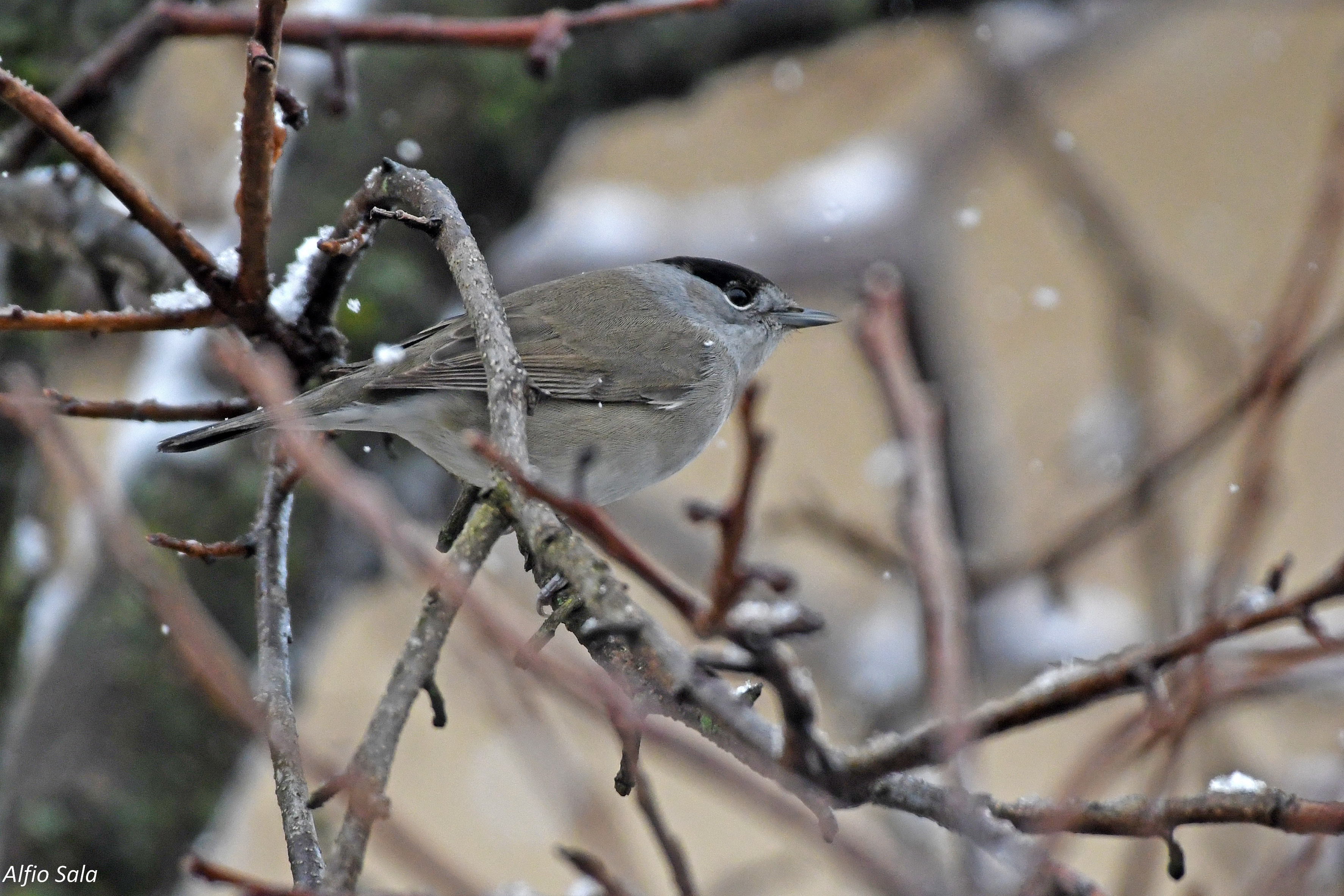
Listening to climate change in my backyard: the frequency of overwintering Eurasian Blackcaps Sylvia atricapilla increased in a small town in Northern Italy, but not that of European Robins Erithacus rubecula
DOI:
https://doi.org/10.30456/avo.28649Keywords:
migration, passerines, Robin, temperature, winterAbstract
Climate change is reshaping biotic communities all over the world, and birds are often affected by climate variations, including outside the most investigated breeding season. Here, using an opportunistic but intensive data collection, I show how the frequency of overwintering Eurasian Blackcaps Sylvia atricapilla has increased in recent winters (since 2011-2012) in an area in northern Italy where it used to be very rare during the coldest months of the year. A linear model based on time progression explained more than half of the variation of the species’ frequency. An alternative linear model based on the average daily temperature in the period December-February had a substantially similar (marginally better) performance, suggesting that such an increase could be driven by milder winter temperatures. A regular and abundant wintering species, the European Robin Erithacus rubecula, only showed fluctuations over the same period but not a temporal trend, nor a relation with average daily temperature. Given that the sampling effort was the same for the two species, finding a clear trend in Blackcaps but not in Robins pointed towards a real increase in the overwintering frequency of the former, rather than at sampling biases. This worked example also suggests that citizen science and opportunistically collected data could be potentially used to assess the effects of climate change on fine-scale, local variations in bird distribution, especially if collected in areas or contexts that are regularly visited by observers. Similar considerations may apply to passive/automated recorders.
Downloads
References
Ambrosini R., Romano A. & Saino N., 2019. Changes in migration, carry-over effects, and migratory connectivityEffects of Climate Change on Birds. Oxford University Press, pp. 93–107. DOI: https://doi.org/10.1093/oso/9780198824268.003.0008
Barton K., 2020. MuMIn: multi-model inference. R package version 1.43. 17 9–14.
Bateman B.L., Pidgeon A.M., Radeloff V.C., Vanderwal J., Thogmartin W.E., Vavrus S.J. & Heglund P.J., 2016. The pace of past climate change vs. potential bird distributions and land use in the United States. Global Change Biology 22. DOI: https://doi.org/10.1111/gcb.13154
Berthold P. & Terrill S.B., 1988. Migratory behaviour and population growth of Blackcaps wintering in Britain and Ireland: Some hypotheses. Ringing & Migration. DOI: https://doi.org/10.1080/03078698.1988.9673939
Brambilla M. 2025. Replication Data for: "Listening to climate change in my backyard: the frequency of overwintering Eurasian Blackcaps Sylvia atricapilla increased in a small town in Northern Italy, but not that of European Robins Erithacus rubecula". https://doi.org/10.13130/RD_UNIMI/EKJ3HG, UNIMI Dataverse
Brambilla M., Roseo F., Ruggieri L., Alessandrini C. & Bettega C., 2024. Shall we go to the mountains or to the sea for the winter holidays? Occurrence drivers and cultural relevance of the climate-vulnerable Snow Bunting Plectrophenax nivalis in Italy. Global Ecology and Conservation 51: e02875. DOI: https://doi.org/10.1016/j.gecco.2024.e02875
Brambilla M., Rubolini D., Appukuttan O., Calvi G., Karger D.N., Kmecl P., Mihelič T., Sattler T., Seaman B., Teufelbauer N., Wahl J. & Celada C., 2022. Identifying climate refugia for high-elevation Alpine birds under current climate warming predictions. Global Change Biology 28: 4276–4291. DOI: https://doi.org/10.1111/gcb.16187
Brambilla M., Scridel D., Bazzi G., Ilahiane L., Iemma A., Pedrini P., Bassi E., Bionda R., Marchesi L., Genero F., Teufelbauer N., Probst R., Vrezec A., Kmecl P., Mihelič T., Bogliani G., Schmid H., Assandri G., Pontarini R., Braunisch V., Arlettaz R. & Chamberlain D., 2020. Species interactions and climate change: How the disruption of species co-occurrence will impact on an avian forest guild. Global Change Biology 26: 1212–1224. DOI: https://doi.org/10.1111/gcb.14953
Breheny P. & Burchett W., 2018. visreg: Visualization of Regression Models. DOI: https://doi.org/10.32614/RJ-2017-046
Chamberlain D.E., Negro M., Caprio E. & Rolando A., 2013. Assessing the sensitivity of alpine birds to potential future changes in habitat and climate to inform management strategies. Biological Conservation 167: 127–135. DOI: https://doi.org/10.1016/j.biocon.2013.07.036
Delmore K., Illera J.C., Pérez-Tris J., Segelbacher G., Lugo Ramos J.S., Durieux G., Ishigohoka J. & Liedvogel M., 2020. The evolutionary history and genomics of European blackcap migration. eLife 9: e54462. DOI: https://doi.org/10.7554/eLife.54462
Hartig F., 2020. DHARMa: residual diagnostics for hierarchical (multi-level/mixed) regression models. R package.
Koleček J., Adamík P. & Reif J., 2020. Shifts in migration phenology under climate change: temperature vs. abundance effects in birds. Climatic Change 159: 177–194. DOI: https://doi.org/10.1007/s10584-020-02668-8
La Sorte F. a. & Thompson III F.R., 2007. Poleward Shifts in Winter Ranges of North American Birds. Ecology 88: 1803–1812. DOI: https://doi.org/10.1890/06-1072.1
Lehikoinen A., Jaatinen K., Vähätalo A.V., Clausen P., Crowe O., Deceuninck B., Hearn R., Holt C.A., Hornman M., Keller V., Nilsson L., Langendoen T., Tománková I., Wahl J. & Fox A.D., 2013. Rapid climate driven shifts in wintering distributions of three common waterbird species. Global Change Biology 19: 2071–2081. DOI: https://doi.org/10.1111/gcb.12200
Lüdecke D., Makowski D., Waggoner P. & Patil I., 2020. performance: Assessment of Regression Models Performance version 0.4.5. DOI: https://doi.org/10.32614/CRAN.package.performance
Matthews S.N., Iverson L.R., Prasad A.M. & Peters M.P., 2011. Changes in potential habitat of 147 North American breeding bird species in response to redistribution of trees and climate following predicted climate change. Ecography 34. DOI: https://doi.org/10.1111/j.1600-0587.2011.06803.x
Morganti M., Preatoni D. & Sarà M., 2017. Climate determinants of breeding and wintering ranges of lesser kestrels in Italy and predicted impacts of climate change. Journal of Avian Biology 48: 1595–1607. DOI: https://doi.org/10.1111/jav.01179
Morganti M. & Pulido F., 2012. Invernada de aves migradoras transaharianas en España. pp. 59–64.
Newton I., 2008. The Migration Ecology of Birds, The Migration Ecology of Birds. Academic Press.
Pavón-Jordán D., Fox A.D., Clausen P., Dagys M., Deceuninck B., Devos K., Hearn R.D., Holt C.A., Hornman M., Keller V., Langendoen T., Ławicki Ł., Lorentsen S.H., Luigujõe L., Meissner W., Musil P., Nilsson L., Paquet J.-Y., Stipniece A., Stroud D.A., Wahl J., Zenatello M. & Lehikoinen A., 2015. Climate-driven changes in winter abundance of a migratory waterbird in relation to EU protected areas. Diversity and Distributions 21: 571–582. DOI: https://doi.org/10.1111/ddi.12300
Pearce-Higgins J.W., Eglington S.M., Martay B. & Chamberlain D.E., 2015. Drivers of climate change impacts on bird communities. Journal of Animal Ecology 84: 943–954. DOI: https://doi.org/10.1111/1365-2656.12364
Pedrini P., Caldonazzi M. & Zanghellini S., 2005. Atlante degli Uccelli nidificanti e svernanti in provincia di Trento. Studi Trentini di Scienze Naturali, Acta Biologica 80: suppl. 2.
Phillips S.J., Dudík M., Elith J., Graham C.H., Lehmann A., Leathwick J. & Ferrier S., 2009. Sample selection bias and presence-only distribution models: implications for background and pseudo-absence data. Ecological Applications 19: 181–197. DOI: https://doi.org/10.1890/07-2153.1
Plummer K.E., Siriwardena G.M., Conway G.J., Risely K. & Toms M.P., 2015. Is supplementary feeding in gardens a driver of evolutionary change in a migratory bird species? Global Change Biology 21: 4353–4363. DOI: https://doi.org/10.1111/gcb.13070
Pulido F. & Berthold P., 2010. Current selection for lower migratory activity will drive the evolution of residency in a migratory bird population. Proceedings of the National Academy of Sciences 107: 7341–7346. DOI: https://doi.org/10.1073/pnas.0910361107
Ripley B., 2011. MASS: support functions and datasets for Venables and Ripley’s MASS. R package version 3–7.
Scridel D., Bogliani G., Pedrini P., Iemma A., Hardenberg A.V. & Brambilla M., 2017. Thermal niche predicts recent changes in range size for bird species. Climate Research 73: 207–216. DOI: https://doi.org/10.3354/cr01477
Van Doren B.M., Conway G.J., Phillips R.J., Evans G.C., Roberts G.C.M., Liedvogel M. & Sheldon B.C., 2021. Human activity shapes the wintering ecology of a migratory bird. Global Change Biology 27: 2715–2727. DOI: https://doi.org/10.1111/gcb.15597
Downloads
Published
How to Cite
Issue
Section
License
Copyright (c) 2025 Mattia Brambilla

This work is licensed under a Creative Commons Attribution-ShareAlike 4.0 International License.