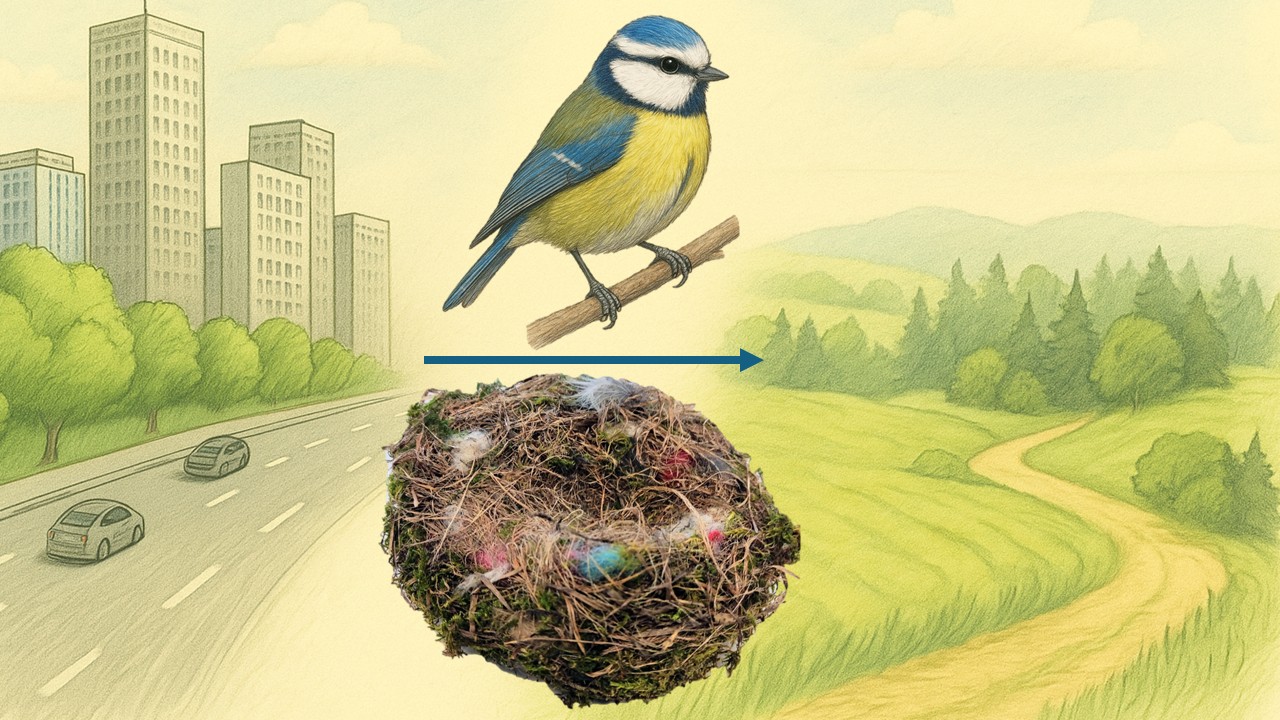
Nest composition of blue tits (Cyanistes caeruleus) along an urban gradient
DOI:
https://doi.org/10.30456/avo.28965Parole chiave:
Blue Tit, anthropogenic nest materials, nesting behaviour, avian breedingAbstract
Nests are structures that protect eggs and nestlings from the external environment while also serving various other functions in avian life histories. Nest-building behaviour varies between species and habitats, and recent work has highlighted that in areas with high human activity and low availability of natural nest material, birds may use anthropogenic material to construct nests. However, we know relatively little about how nest composition is affected by human presence along urban gradients. Here we examined how nest composition differed between urban and forest populations of blue tits Cyanistes caeruleus, and the impact that variation in nest composition had on reproductive success (clutch size, hatching and fledging success). We found a statistically significant decrease in the weight of moss and grass and an increase in anthropogenic materials in urban compared to forest nests. Nests initiated earlier in the urban environment showed a higher weight of anthropogenic materials. The weight of moss and grass was positively related to fledging success. Our results suggest that the use of anthropogenic material by urban birds might be a maladaptation, and/or that urban birds are constrained in the amount of moss and grass they can find during nest building. Future studies should aim to quantify the availability of material within the environment to test these non-mutually exclusive hypotheses.
Downloads
Dowloads
Pubblicato
Come citare
Fascicolo
Sezione
Licenza
Copyright (c) 2025 Joseph Roy, Claire J. Branston, Pablo Capilla-Lasheras, Paul J. Baker, Davide M. Dominoni

Questo lavoro è fornito con la licenza Creative Commons Attribuzione - Condividi allo stesso modo 4.0.
Accettato 2025-08-13
Pubblicato 2025-11-26