Elementi di un'iconografia del piacere e dell'utopia nell'opera di Georges Seurat, Paul Signac, René Clair e Marija Lebedeva
DOI:
https://doi.org/10.54103/2974-6620/uon.n19-20_2022_pp84-92Parole chiave:
Arti del XIX secolo, Arti del XX secolo, piacere, utopia, ozio, Georges Seurat, Paul Signac, René Clair, Marija LebedevaAbstract
Un uomo sdraiato in un prato, poggiato su un gomito, si gode la sua libertà; è felice anche se all'orizzonte incombe una gran fabbrica che vomita fumo. Ma quell'ozio felice dura poco. Due gendarmi interrompono le fantasticherie del vagabondo sollevandolo di peso e obbligandolo al lavoro; anche prima di Auschwitz si sapeva che "il lavoro rende liberi". L'obbligo alla libertà - a una libertà diversa da quella immaginata sognando a occhi aperti in un povero prato di periferia - comporta in questo caso come primo corollario l'obbligo al lavoro.
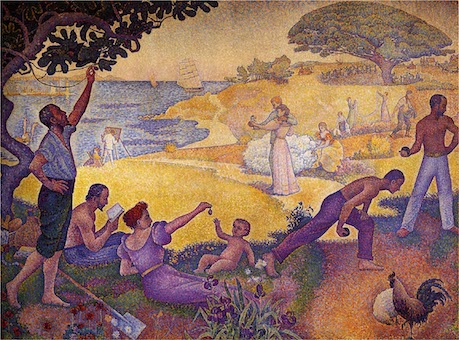
Il saggio affronta il tema del diritto all’ozio nelle opere di pittoriche e cinematografiche di Georges Seurat, Paul Signac, René Clair e Marija Lebedeva.
Downloads
Dowloads
Pubblicato
Come citare
Fascicolo
Sezione
Licenza
Copyright (c) 2022 Antonello Negri

Questo lavoro è fornito con la licenza Creative Commons Attribuzione - Condividi allo stesso modo 4.0.