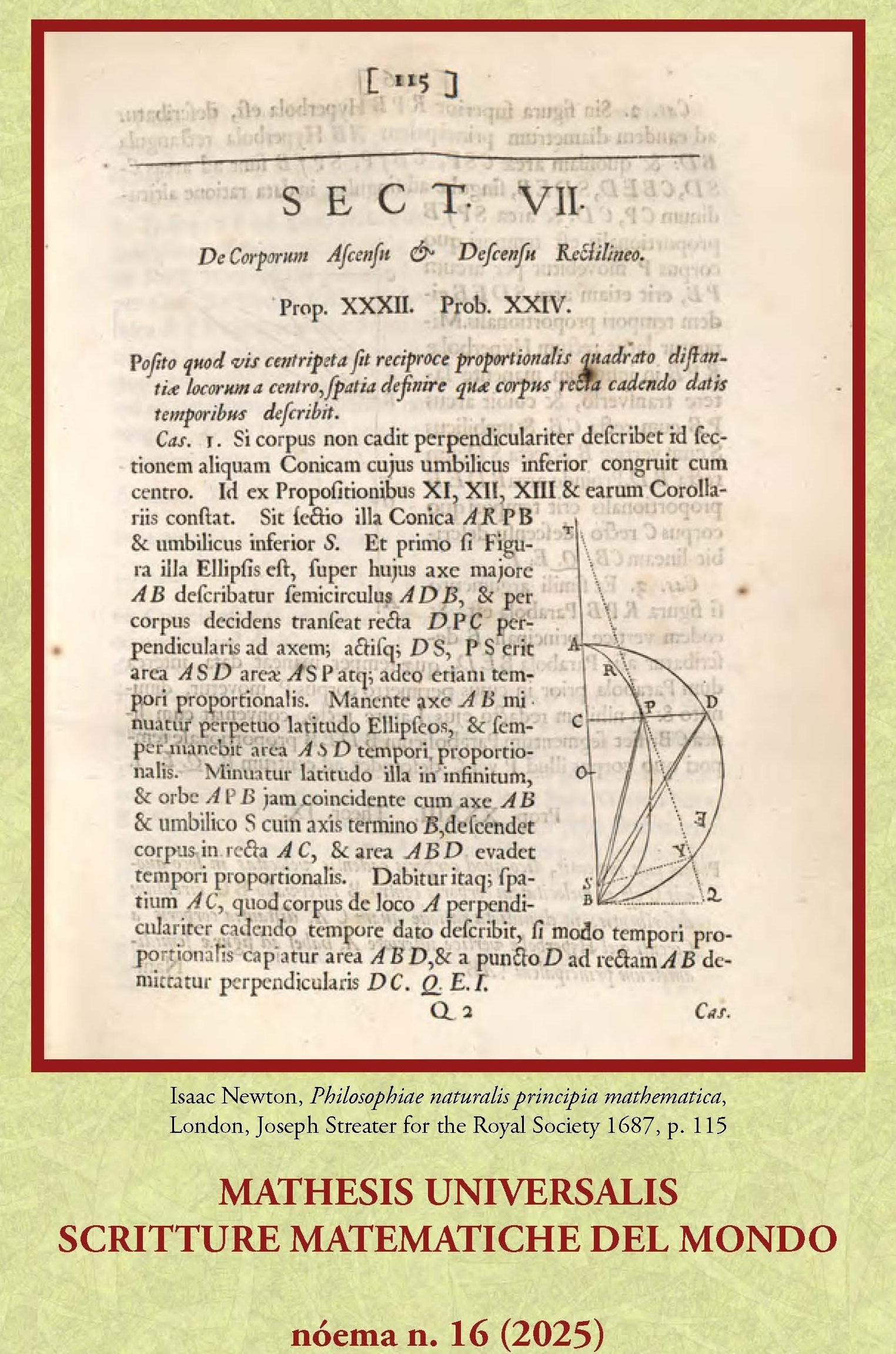
Matematica e scrittura digitale del mondo
DOI:
https://doi.org/10.54103/2239-5474/29916Parole chiave:
Filosofia della matematica, Linguaggio, Filosofia del digitale, Intelligenza Artificiale, Genealogia dei concetti matematici, Numero, Pensiero formale, Algebra, Leibniz, Infinito, Limite, Rivoluzione scientificaAbstract
Nel contesto dell’odierna trascrizione del mondo per mezzo delle tecnologie digitali, il presente testo si propone di indagarne le condizioni e le possibilità a partire da una genealogia del pensiero formale che ha portato a una scrittura matematica del concetto di «limite». Nella prima parte si mostra, secondo una prospettiva storica, viene mostrato il contributo decisivo alla rivoluzione scientifica dei saperi e della tecnica apportato dalla scrittura formale del limite come mediazione operativa tra finito e infinito. Nella seconda parte lo sguardo viene ampliato a un orizzonte che lega antico e moderno, a partire dalla questione degli incommensurabili, mostrando come il concetto di limite sia paradigmatico della modalità con cui la scrittura matematica si pone sulla frontiera del visibile e del conosciuto, frequentando i confini delle mappe del sapere finora tracciate. Nella terza parte si indaga la peculiarità della scrittura digitale del mondo come prodotto emblematico di tale tradizione.
Downloads
Dowloads
Pubblicato
Come citare
Fascicolo
Sezione
Licenza
Copyright (c) 2025 Raffaele Carbone

Questo lavoro è fornito con la licenza Creative Commons Attribuzione - Condividi allo stesso modo 4.0.
Gli autori che pubblicano su questa rivista accettano le seguenti condizioni:
Gli autori mantengono i diritti sulla loro opera e cedono alla rivista il diritto di prima pubblicazione dell'opera, contemporaneamente licenziata sotto una Licenza Creative Commons - Attribuzione che permette ad altri di condividere l'opera indicando la paternità intellettuale e la prima pubblicazione su questa rivista.