
The University of Milan acknowledges the importance of Open Science: the accessibility of research, transparency in validation and evaluation processes, and the need to ensure full visibility of all research outcomes conducted within the institution.
As a result of applying these principles, in 2008 the University established the platform riviste.unimi.it. Initially dedicated to scientific journals whose members were affiliated with the University, it gradually expanded its scope to include, by 2020, editorial teams from other universities and research institutions. The year 2020 also marked the addition of the Books section to the Journals section, thereby inaugurating the University's publishing house, Milano University Press.
From the outset, the platform adopted a Diamond Open Access publishing model: funded by the University, the Journals platform charges neither authors for publishing nor readers for access.
The project is inspired by international standards for the production of open access scientific journals. Thanks to adherence to these principles, individual journals are indexed in leading international databases, with the aim of being included in the Directory of Open Access Journals (DOAJ). Editorial teams and scientific committees operate in compliance with quality criteria that have become indispensable for any publishing initiative seeking accreditation.
The initiative aims for the widest possible dissemination of the University's scientific journals, aligning with international Open Science policies, starting from the Messina and Berlin Declarations and the principles expressed by LERU in its document "Open Science and its role in universities: a roadmap for cultural change", up to the most recent requirements of the Diamas Project.
Riviste Unimi platform is coordinated by the Performance, Quality Assurance, Evaluation and Open Science Policies Support Office of the University of Milan.
Journals
ACME
Annali della Facoltà di Studi Umanistici dell'Università degli Studi di Milano.
Acme aims to contribute to the study of the humanities and the deepening of research, with the help of recognized masters and enhancing the contribution of young and promising scholars who study in deep specific philological and philosophical, historical and artistic aspects.

Altre Modernità
Altre Modernità (ISSN 2035-7680) is an electronic journal OJS of Literary and Cultural Studies promoted by the Department of Foreign Languages and Literatures and the Department of Language Mediation and Intercultural Communication of the University of Milan. It constitutes a national and international reference in the debate about contemporary cultural, artistic and literary productions, through a trans-disciplinary and multilingual perspective.
The journal mainly focuses on the study of the borderland areas and peripheries of the globalized world, with particular attention devoted to alternative and divergent modes and forms of cultural representation. Literary discourse is the starting point and the inevitable intersection in the exploration of multiple cultural and artistic fields, which are always approached through a gaze capable of interweaving various disciplines and insights.
The journal presents the following sections: Essays, which includes the contributions devoted to literary, cultural and linguistic topics, Off the Record, which includes reflections about contemporariness and its main phenomena. The Creative, a section dedicated to unpublished work of young writers and artists; Interviews, which gives voice to the most important protagonists of the cultural world; Highly Recommended, gathering notes, reviews and bibliographical indications about novels, works and texts focusing on cultural analysis published in the last 5 years. Thematic issues may also contain further sections, namely Dossier, a section focused on specific topics, edited by the most important Italian and foreign professionals, and The Guest, which includes original or translated works of pivotal figures in the contemporary literary and cultural debate.

AN-ICON. Studies in Environmental Images [ISSN 2785-7433]
The journal AN-ICON. Studies in Environmental Images [ISSN 2785-7433] is a peer-reviewed open access academic journal, stemming from the ERC Advanced project “AN-ICON. An-Iconology: History, Theory, and Practices of Environmental Images”. The journal is officially recognized as a scientific for Area 10 (Antiquities, philology, literary studies, art history) and Area 11 (History, Philosophy, Pedagogy, and Psychology).
The journal aims to set out a groundbreaking interdisciplinary research field addressing the key challenges raised by the rapidly evolving contemporary mediascape, focussing in particular on the emergence of what can be defined as environmental images, namely an-icons.
The journal is indexed by ERIH PLUS and listed in the Directory of Open Access Journals (DOAJ).

Annals of Microbiology
Raccolta dei primi numeri digitalizzati della rivista Annals of Microbiology, dal 1940

AOQU (Achilles Orlando Quixote Ulysses). Journal on Epic
«AOQU. Achilles Orlando Quixote Ulysses» is the offspring of four scholars of University of Milan interested in Italian epic poem in ottavas.
The Journal aims to be a place for scholars from multiple disciplines to discuss on Epics beyond languages, cultures, ages. Epic poetry will be seen as a cultural, moral and ideological model, defining self-perception in history and society, in relationship with other cultures, ideologies as well as collective imagination.
The Journal welcomes essays in Italian, English, French or Spanish, exploring the role of Epic model (as a genre proper, or as a register) in different cultures up to date, even besides literature. The Journal, furthermore, will host monographic issues on specific topics.
Archivio Storico Lombardo
Established in 1874 by the Società Storica Lombarda, the journal Archivio Storico Lombardo promotes scholarship on the history of Milan and Lombardy from antiquity to the contemporary era. From its inception, Cesare Cantù envisaged “a military history, an administrative history, a financial or economic history, a political history: and to each we shall lend our support, seeking amid the dust of archives that fragrance of truth which emanates from contemporary documents.”
In keeping with the evolution of research topics, methodologies, and scholarly specializations, Archivio Storico Lombardo publishes each year original articles on Milanese and Lombard history across a wide range of disciplinary perspectives, with particular attention to the use and enhancement of primary sources.
The journal is published in digital Open Access format by Milano University Press, and in print by Scalpendi Editore.

Aristonothos. Rivista di Studi sul Mediterraneo Antico
The present Journal aims to celebrate the Mediterranean sea and contribute to developing themes, studies and imagery that the krater signed by the Greek Aristonothos still evokes today. Deposed in the tomb of an Etruscan, it tells of stories and relationships between different cultures that take place in this sea and on the lands which connects.
Created in 2007 in paper version as a series publishing conference proceedings and miscellaneous volumes, since 2010 it has also been online on the OJS platform of the University of Milan. Since 2020 Aristonothos has finally turned into a journal, accepting articles from scholars of antiquities studies with particular reference to the cultures of the Mediterranean basin and becoming a forum where innovative and original research and contributions can converge. In 2025, Aristonothos obtained Class A recognition for the sectors 10/A1 (Archaeology) and 10/D1 (Ancient History), valid for all issues of the journal published from 2020 onwards.

Artology: Studies in the Arts
Artology: Studies in the Arts is an interdisciplinary and experimental platform that explores innovative work across various artistic disciplines, including painting, sculpture, installation, performance, photography, visual culture, digital media, music, theater, dance, and art education.

Atti del Sodalizio Glottologico Milanese
The Atti del sodalizio glottologico milanese publish essays on glottology and languistics, reflecting the activities of the scientific production of the members of the Society. Normally the contributions published in the Proceedings reproduce the content of the conferences held during the conference of the Sodalizio glottologico milanese year prior to publication.

Avocetta
Avocetta publishes in a variety of ornithological fields including ecology, behavioural ecology, ethology, phylogeography, taxonomy, biogeography, and conservation.


Biblioteca Artificiale
Biblioteca Artificiale is a biannual Diamond Open Access journal that studies Intelligence as a multifaceted, complex and layered entity.

Bollettino di zoologia agraria e bachicoltura
Raccolta dei primi numeri digitalizzati della rivista "Bollettino di zoologia agraria e bachicoltura" dal 1929.
Carte Romanze
Carte Romanze è una pubblicazione scientifica dedicata allo studio delle lingue e delle letterature romanze del Medioevo e del Rinascimento, che ambisce ad andare oltre l’ambito accademico, proponendosi come un agile strumento di approfondimento e di confronto tra generazioni di studiosi di differente formazione e provenienza, e offre una visione moderna e attuale, seppur saldamente ancorata alla tradizione, della Romanistica, dando spazio a interventi ispirati anche ad approcci ermeneutici originali, rigorosi e non conformistici, utili per costruire un serio progetto culturale. Nelle varie sezioni della rivista (Testi, Saggi, Varietà, Note e Discussioni, Recensioni e schede) resteranno comunque centrali l’attenzione al testo e il punto di vista comparato, aperto anche allo studio dei rapporti con le letterature classiche, mediolatine, germaniche e semitiche.
Carte Romanze (CR) è un periodico semestrale on line e open access, che utilizza la piattaforma operativa OJS (Open Journal System); ha ottenuto nel 2018 la classificazione A dall'ANVUR; è presente nell'indice europeo ERIH-PLUS, nella Core collection di Web of Science (Emerging Sources Citation Index, ESCI, dal 2015) e nei repertori CIRC, ACNP, BASE, EZB, DOAJ, PLEIADI, ROAD, WorldCat, ZDB.
Chi fosse interessato all'acquisto dei numeri cartacei può trovarli a questo indirizzo.

Cinéma & Cie. Film and Media Studies Journal
Cinéma & Cie is an international, peer-reviewed academic journal. The research areas of the journal include media history and theory and their relationship; the various intersections between technological, industrial and representational aspects; audiovisual heritage; reception and consumption; the links between different forms of audiovisual narrative, art and communication.
Published twice a year (in Spring and Fall), the journal is structured in four different sections:
– Thematic issue: usually the largest section, devoted to a specific topic. This section only accepts submissions in response to specific calls for essays that are advertised via the journal website;
– Beyond Cinema: a section focused on innovative perspectives on the transformations in the field of film studies. Submissions are accepted only in response to the permanent call for essays advertised on the website;
– Projects & Abstracts: the section details international research and noteworthy Ph.D. thesis projects or abstracts, recommended by supervisors;
– Reviews: the section consists of significant essays, festivals, exhibitions, conferences and related content.
Concorso. Arti e lettere
[Pubblicazione cessata]
Concorso. Arti e lettere, nata all'interno del Dipartimento di Storia dell'Arte dell'Università degli Studi di Milano, si propone di pubblicare materiali e interventi, soprattutto di giovani studiosi, nell'ambito della ricerca storico-artistica.


Connessioni remote. Artivismo_Teatro_Tecnologia
Connessioni remote is a six-monthly journal free of charge, on the relationship between technology, visual art, and performing arts; it is directed by Anna Monteverdi and inspired by Giacomo Verde's artworks. It is divided into the following sections: Techno-theatre (Performing arts and technology); Artivism (Media Activism, Networking as art); Giacomo Verde’s Archive (essays on the artist and unpublished materials); Artist tribute (videos, animations, net art works).

Consonanze
I nuovi numeri di Consonanze sono disponibili nella sezione libri della Milano University Press
****
L’armonica fusione, nel “Dipartimento di Studi Letterari Filologici e Linguistici” dell’Università degli Studi di Milano (struttura di fatto corrispondente al corso di laurea in Lettere) degli studiosi che operavano nei due diversi dipartimenti di “Scienze dell’antichità” e di “Filologia moderna”, ha portato con sé, come semplice e logica conseguenza, la nascita di una nuova collana di studi e testi, destinata a ospitare le pubblicazioni delle nostre varietà disciplinari.
Il suo titolo, «Consonanze», intende suggerire la pluralità di interessi scientifici e di approcci metodologici, ma al tempo stesso l’intima coerenza, sul piano del rigore, dei contributi destinati ad arricchirla, siano essi di taglio filologico, letterario, linguistico o storico.
«Consonanze» ospiterà tanto lavori di docenti esperti come di giovani studiosi, tanto monografie come miscellanee o atti di convegno, libri che passeranno il vaglio rigoroso della revisione fra pari e che saranno leggibili sia su supporto cartaceo sia sulle pagine elettroniche della rete.
La collana, che si avvale di un prestigioso comitato scientifico, non è destinata solamente a dar esito alle migliori ricerche dei membri del Dipartimento, ma si onorerà di accogliere anche contributi di studiosi esterni, italiani e stranieri.
Giuseppe Lozza
Criando: la rivista di CRIAR
[Pubblicazione cessata] Criando è la rivista del Centro di Ricerca Interuniversitario sulle Americhe Romanze (CRIAR); si propone come spazio per la riflessione transculturale e interdisciplinare sulla “questione della lingua” tra le comunità americane di lingua romanza in una prospettiva postcoloniale e decoloniale.
De Musica
Founded in 1997 at the University of Milan, De Musica is an intedisciplinary journal that considers music from a broad perspective which includes philosophy, musicology, cogntiive sciences, psychology and psychoacoustics.

DigitCult - Scientific Journal on Digital Cultures
DigitCult@Scientific Journal on Digital Cultures è una rivista accademica a carattere internazionale, che pubblica articoli in Open Access Diamond, sottoposti a peer review in modalità double-blind.
La rivista mira a valorizzare la ricerca internazionale e a presentare il dibattito attuale sulla cultura digitale, l’innovazione tecnologica e il cambiamento sociale. Tenendo conto della diffusione sempre più pervasiva delle culture digitali e del loro impatto sociale, DigitCult intende studiare i processi di trasformazione e innovazione all’interno di diverse tradizioni disciplinari, anche in relazione alla progettazione di nuovi modelli digitali, sia nell’ambito delle Scienze Sociali e dei Media Studies, sia in quello della Library and Information Science e delle Digital Humanities. DigitCult si propone di discutere temi chiave sia nella ricerca teorica sia in quella empirica.
di/segni
With our digital series, we aim to contribute to the dissemination of knowledge ensuring the wide circulation of our professors and young researchers’ studies through their distribution in e-book format, without, however, giving up their publication in print. Our volumes are the result of a strict process of selection and control; we thus aim to increase the international visibility of our department through to our contacts with leading scholars in our fields if research and the already existing bilateral agreements between our university and other institutions – universities, research centres, cultural institutions – in order to foster collaborations in the field of digital publishing. We promote research in English, French, German, Spanish, Scandinavian and Slavic studies, both in their European and extra-European dimension. We publish monographs, brief essays and collective volumes occasioned by conferences or research workshop held in Italy or abroad.

Dissertation Nursing
Dissertation Nursing is an open access, double blind, peer reviewed journal publishing original research and review performed by nursing's students at every level of graduation. Research papers concerning nursing science carried out by nursing professionals are also accepted.

Doctor Virtualis
Doctor Virtualis. Journal of History of Medieval Philosophy. Founded in 2002 by the Chairs of the History of Medieval Philosophy at the University of Milan
ISSN 2035-7362

Enki & Ptah. Journal of Technology and Trade in Ancient Egypt and Western Asia
Enki & Ptah is a scientific journal focused on technology, science, crafts, exchange and commercial interactions in ancient Egypt, Nubia, the Eastern Mediterranean and Western Asia, from Prehistory to the beginning of the Hellenistic period. The journal accepts contributions in English dealing with archaeology, history, and philology, and is directed by Alessandro Cavagna and Luca Peyronel.
The journal is currently accepting manuscripts for the second issue (2026).
SUBMISSION DEADLINE: 30th MAY 2026

ENTHYMEMA
International journal of literary criticism, literary theory, and philosophy of literature

Epidemiology, Biostatistics, and Public Health
EBPH aims to be a cross-discipline, international forum for scientific integration and evidence-based policymaking

Eventum: A Journal of Medieval Arts & Rituals
Eventum is a non-profit, interdisciplinary, peer-reviewed, and diamond open access scholarly journal dedicated to the ritual dimensions of medieval arts and to the interrelations between visual, literary, and performing works. Eventum is especially interested in overlaps that take place within the framework of various medieval rituals: religious, semireligious, profane. The journal is edited by medievalists of the University of Cyprus and lists in its Editorial Board international experts. Eventum welcomes submissions from scholars at different career stages. It is published annually in English and publishes both thematic and non-thematic issues.

Ex Chordis
Ex Chordis is an open-access, peer-reviewed scientific Journal accredited by ANVUR. It is edited by the Strings Department of the "N. Piccinni" Conservatory of Music in Bari and published by Milano University Press. Ex Chordis promotes papers on key issues for bowed string performers, offering new insights from a variety of research fields.

Fenestella. Inside Medieval Art
Fenestella. Inside Medieval Art aims to consider medieval artefacts from within, as if seen through a fenestella confessionis.

Food In
[Pubblicazione cessata]
Collezione di studi sull'ispezione degli alimenti di origine animale
Codice ISSN: 2039-1544
Food in è una rivista che pubblica monografie su alimenti di origine animale, che ricoprano i vari aspetti della sicurezza alimentare.
Food In si rivolge agli studenti universitari e alle figure professionali che si occupano di alimenti di origine animale.


Giornale Italiano di Tossicologia
The Italian Journal of Toxicology (Giornale Italiano di Tossicologia) is the scientific journal and official publication of the Italian Society of Toxicology (Società Italiana di Tossicologia). It serves as a tool and channel for communication and information between SITOX and all those—members and non-members alike—who are interested in the field of Toxicology.
Glocalism: Journal of Culture, Politics and Innovation
Glocalism is a peer-reviewed, open-access and cross-disciplinary journal dealing with the process of globalization and glocalization.


Il Risorgimento. Rivista di storia moderna e contemporanea
Founded in Milan in 1949, it has become a point of reference for studies of Italian and European history from the mid-eighteenth century to the early decades of the twentieth century
InKoj. Philosophy & Artificial Languages, New series
ISSN: 2037-4550. DOI: 10.6092/2037-4550. Six-monthly issue
| InKoj. Philosophy & Artificial Languages – New series is an academic journal sponsored by the University of Milan. The previous series was devoted to interlinguistics and philosophy of planned and artificial languages. The new series introduces a more philosophical and technical character and a brand new editorial team. Areas of central concern of the new series are: analytical metaphysics, ontology and epistemology, whose problems are approached by a restatement of the ordinary language, through a manipulation of its logical form and/or its semantics. Papers discussing the advantages and drawbacks, or risks, of such manipulation of a more intuitive formulation of philosophical problems are also welcome. | New Call for Papers Deadline: May, 15. |

inOpera Esercizi di lettura su testi contemporanei
«inOpera» is a six-monthly journal that offers reading exercises on individual texts, both poetic and narrative, from the last two centuries of Italian history, not without excursions that take the investigation to non-fiction and private writings and beyond.
The project is ideally inspired by this sentence by Theodor Adorno: «Das Allgemeine der Schönheit vermag nicht anders dem Subjekt sich mitzuteilen als in der Obsession durchs Besondere» (Minima moralia).

Interfaces: A Journal of Medieval European Literatures
Interfaces promotes connective and interdisciplinary views of the literatures of medieval Europe and explores their place and significance in a world of global literature.
Interfaces is an open-access peer-reviewed journal and invites scholarly papers in English, French, German, Italian, or Spanish.
Read more about our Scope.

International Journal of Health, Animal Science and Food Safety
HAF is an international peer-reviewed journal in the field of veterinary science, animal science, and food safety. The journal is led by Editor-in-Chief Prof. Luciana Rossi (Dep. of Veterinary Medicine and Animal Sciences, University of Milan, Lodi, Italy), supported by an international Editorial Board with expertise across veterinary sciences, animal nutrition, and livestock systems.
The journal publishes original research articles, reviews, and short communications covering topics such as genetics, nutrition, physiology, animal health and welfare, production systems, and product quality, with particular attention to sustainability and environmental impact.
HAF operates a rigorous peer-review process involving independent expert reviewers and ensures rapid editorial handling. The journal is published annually, with articles made available online upon acceptance.
HAF is fully open access, with no submission or publication fees, and all content is distributed under the Creative Commons Attribution-ShareAlike 4.0 International License. Authors are encouraged to share research data through institutional repositories, in line with open science principles.
The journal adheres to international standards for publication ethics and uses plagiarism detection tools to ensure originality and scientific integrity.
Italian Journal of Public Health
The archived issues of the Italian Journal of Public Health (IJPH) (2003-2012), now Epidemiology Biostatistics and Public Health (EBPH)
ItalianoLinguadue

Italian Review of Legal History
The online Italian Review of Legal History aims to facilitate the scientific debate among Italian and international scholars on Italian, European and world-wide themes concerning the juridical field from the early medieval centuries to the contemporary period.
Itinera
Rivista di filosofia e di teoria delle arti. Nuova serie (ISSN 2039-9251)
Itinera aims at being a forum for international debate on Aesthetics and philosophical investigations on arts and theatre. A space is dedicated also to questions in which aesthetic and moral aspects are intertwined.
LANX. Journal of the Scuola di Specializzazione in Beni Archeologici - Università degli Studi di Milano
Annual Journal of Archaeology with Articles, Proceedings of Conferences, Excavations Reports and Reviews of Professors and Scholars of the School of Archaeology of the University of Milan
ISSN: 2035-4797

Lebenswelt. Aesthetics and philosophy of experience.
The jounal publishes articles on aesthetics, moral philosophy, history of philosophy, the theory of the arts and theater.

Lingue e culture dei media
 Un campo in evoluzione continua e velocissima, quello dei media, al quale i linguisti hanno dedicato studi importanti, avvalendosi spesso anche del fondamentale contributo dei sociologi e dei massmediologi: lo studio della lingua dei media ha investito prima i giornali e la radio, poi il cinema, la televisione, il web da ultimo. L’espansione straordinaria che questo medium sta attraversando e il suo collegamento sempre più stretto con gli altri determinano una situazione di crossmedialità e di intreccio tra i media che sta sconvolgendo i metodi di ricerca e di analisi seguiti in passato dai linguisti.
All’obiettivo della rivista di contribuire allo studio dei media sotto il profilo linguistico, nella complessità del presente e nel passato, si affianca una finalità di carattere trasversale e interdisciplinare, che si riflette nella necessaria attenzione per una prospettiva più strettamente massmediologica e nell’apertura all’apporto di discipline storiche, letterarie, filosofiche attente agli ambiti della comunicazione, e inoltre ben rappresentate dai membri del Comitato scientifico.
A partire dal n.2 del 2024 (v.8 n.2) è stata istituita la nuova sezione Osservatorio sulla serialità televisiva, con un proprio comitato scientifico (vd. Info), che offrirà una rassegna della precedente annata italiana e straniera e alcuni saggi linguistici sulla serialità televisiva. Il Comitato scientifico dell’Osservatorio si raccorda con i Direttori.

L'uomo nero. Materiali per una storia delle arti della modernità
L'uomo nero. Materiali per una storia delle arti della modernità.
Journal of studies for the history of contemporary art.
Materiali di Estetica. Terza serie
Founded in 1999, Materiali di estetica is one of the best-known and appreciated journals of aesthetics in Italy and has hosted essays by some of the leading exponents of the discipline from the very beginning, establishing itself as an authoritative scientific journal in the variegated panorama of national and international aesthetic studies. The original phenomenological inspiration, which can be traced back to the scholars of the "School of Milan", has offered considerable impetus to the contemporary philosophical debate, giving rise to a fruitful dialogue between different positions.
Materiali di estetica. Terza serie represents a qualified venue to welcome essays from both eminent scholars who have already achieved a high and recognizable scholarly profile, and young researchers who aspire to give greater dissemination to the results of their work.

Milan Law Review
Multidisciplinary and multilingual law journal, published on a six-monthly basis in open access mode.

Muse
Muse. Journal of Music, Art, Dramaturgy, Dance, and Design is the digital academic journal of ANDA, the National Association of AFAM Teachers. Published annually, it is an open-access journal subject to double-blind peer review. Its title evokes a comprehensive conception of the arts as embodied by the Muses of ancient Greece, thereby delineating its broad disciplinary scope: the full range of subjects within the arts. The journal welcomes original contributions on scientific and artistic research across all historical periods, spanning multiple fields of study and methodological approaches. It also aims to offer theoretical and practical tools for arts education, fostering new research paths. Particular attention is devoted to transdisciplinary approaches.


Nuovi Autoritarismi e Democrazie: Diritto, Istituzioni, Società (NAD-DIS)
NAD-DIS focuses on historical, institutional and legal phenomena in Central and Eastern Europe, the Middle East, Latin America, Asia and Africa.
Ponti/Ponts. Langues, littératures, civilisations des pays francophone
Ponti/Ponts
Ponti/Ponts is an open-access, annual peer-reviewed journal that aims to be a meeting place for French-speaking cultures: from Quebec and Canada to sub-Saharan Africa, from Belgium to the Caribbean, from the Maghreb to Switzerland and the Val d'Aosta, and to other French-speaking islands scattered around the world, the entire French-speaking world is invited to this meeting, which is one of knowledge, recognition and confrontation.
Each issue of the magazine, which appears once a year, presents critical studies, sometimes unpublished texts, and a vast repertoire of reading notes on linguistic, literary and cultural works from different French-speaking areas. Critical essays and creative texts are brought together in a thematic dossier, which may also include linguistic studies.
From no. 1 of 2001 to no. 21 of 2021, the various issues have featured a thematic dossier and free studies; from no. 22 of 2022 onwards, Ponti/Ponts is characterised by studies of a literary, cultural or linguistic nature that are free from thematic constraints. Interviews and unpublished literary works (poems, prose poems, short stories) are also welcome and encouraged.


Quaderni di Gargnano
I Quaderni di Gargnano accolgono gli Atti dei Convegni internazionali di Letteratura italiana che si svolgono con cadenza biennale a Gargnano del Garda, presso la sede di Palazzo Feltrinelli dell'Università degli Studi di Milano.
Sono pubblicati in open access e sono intitolati alla memoria del loro ideatore e principale animatore, Gennaro Barbarisi.
Informazioni più dettagliate sulla storia dei Convegni e su questa serie si leggono qui.

Rassegna di Diritto, Legislazione e Medicina Legale Veterinaria
[Discontinued Journal] Italian and international academic journal, peer-reviewed and open access, aimed at professionals and legal experts on the subject of veterinary interest, as a means of dissemination, exchange and synergies; bridge between normative theory and real applications.
Rivista di Studi e Ricerche sulla criminalità organizzata
Monitoring Research Centre on Organized Crime – Department of International, Legal and Political-Historical Studies

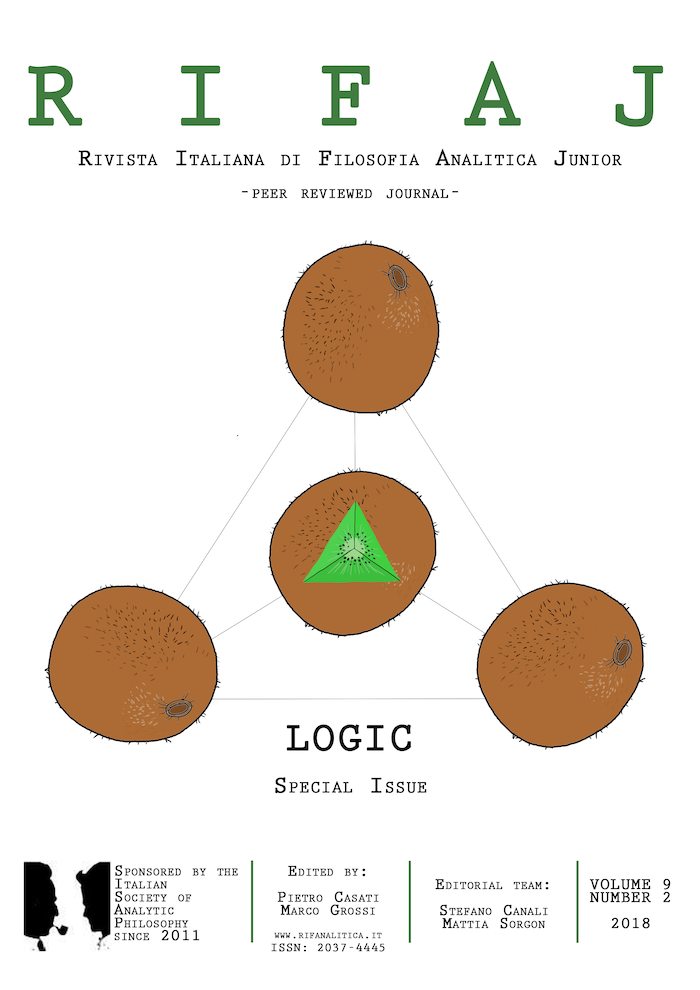
Rivista Italiana di Filosofia Analitica Junior
Welcome to Rivista Italiana di Filosofia Analitica Junior (Italian Journal of Analytic Philosophy Junior), the very first Italian project providing space to early-stage philosophical research. In our journal, you can read articles proposed by undergraduate, BA/MA and Ph.D. students, concerning the main themes of analytic philosophy and peer-reviewed by our Scientific Board, as well as material produced by the editorial staff (book reviews, conference reports, interviews). |
Current issue: |
 Facebook Facebook |  Twitter Twitter |  Academia Academia |

RIVISTA ITALIANA DI PALEONTOLOGIA E STRATIGRAFIA
The Rivista Italiana di Paleontologia e Stratigrafia is a free of charge OPEN ACCESS peer reviewed journal.
RIPS publishes original contributions on all aspects of palaeontology and stratigraphy; all papers are written in English and are reviewed by international experts.
The Journal is currently indexed and abstracted by AGI, ISI, Current Contents, Georef, Geological Abstract and SciSearch.
RIPS is included in the Unimi Journals project (riviste.unimi.it) and it is hosted on OJS platform.
OPEN ACCESS POLICY: RIPS is published under a Creative Commons Attribution - Share alike 4.0 International License.
Preprint and postprint version of the articles can be archived anywhere with the same license.
Web of Science Journal Citation Reports 2025: Journal Impact Factor 2025= 1.8, 5-Year Impact Factor= 1.8
Scopus CiteScore 2025= 3.1
Editors-in-chief
Lucia Angiolini, Università degli Studi di Milano, Italy
Fabrizio Berra, Università degli Studi di Milano, Italy
Editorial Office
Cristina Lombardo, Università degli Studi di Milano, Italy
Section Editors
David M. Alba, Universitat Autònoma de Barcelona, Spain
Francesca Bosellini, Università degli Studi di Modena e Reggio Emilia, Italy
Giorgio Carnevale, Università degli Studi di Torino, Italy
Silvia Gardin, CNRS, France
Annette Götz, Georg-August-Universität Göttingen, Germany
Luca Martire, Università degli Studi di Torino, Italy
Matteo Montagna, Università degli Studi di Napoli "Federico II", Italy
Giovanni Muttoni, Università degli Studi di Milano, Italy
Maria Rose Petrizzo, Università degli Studi di Milano, Italy
Silvio Renesto, Università dell'Insubria, Italy
Lorenzo Rook, Università degli Studi di Firenze, Italy
Daniele Scarponi, Università di Bologna, Italy
Flavia Strani, Universidad de Zaragoza, Spain
Yichun Zhang, Nanjing Institute of Geology and Palaeontology, China
Print subscriptions to Rivista Italiana di Paleontologia e Stratigrafia are handled by the publisher Ledizioni The Innovative LediPublishing company and subscriptions are managed by Libreria Ledi International Bookseller
Email: riviste@internationalbookseller.com
RIPS on Facebook: https://www.facebook.com/RIPS15/

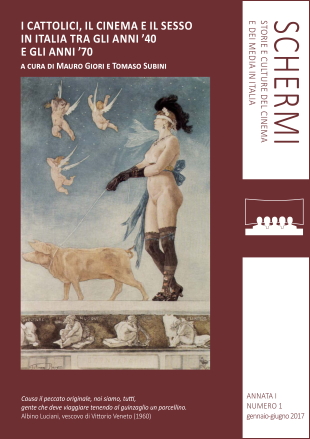

Società e diritti
Focus and Scope
The Journal Società e Diritti (Societad y Derechos, Societé et droits, Society and rights) aims to publish contributions of general theory of law , jurisprudence and sociology of law , fostering dialogue among jurists and scholars of criminology, sociology and philosophy of law that affect empirical applied research In particular we want to develop the comparative sociology of law by promoting the dialogue between European and Latin American authors.

Sound Stage Screen
Sound Stage Screen (SSS) is a biannual, peer-reviewed journal devoted to historical and theoretical research into the relations between sound, performance, and media. SSS addresses a wide range of phenomena, practices, and objects pertaining to sound and music in light of the interconnections between performing traditions and media archaeologies. SSS is available open access and is now open for submissions.

Stato, Chiese e pluralismo confessionale
The journal, published online since 2006 and issued on a monthly basis, seeks to reflect the plurality and pluralism of the scholarly traditions and approaches that—at the national, European, and international levels—inform legal disciplines concerned with freedom of religion and belief, relations between states and religious denominations, and religious rights, both in their traditional dimensions and in their emerging developments (such as bioethics, multiculturalism, end-of-life issues, etc.).
Studi di storia medioevale e di diplomatica - Nuova Serie
The Journal welcomes essays on Medieval History, Palaeography and Diplomatics, with a preference for original research that make use of unpublished sources.
Studia austriaca
An international journal devoted to the study of Austrian culture and literature.
On line for the first time with Vol. XX (2012): e-ISSN 2385-2925.
Vols. I-XIX (1992-2011) were published in print (p-ISSN 1593-2508), but are now available here, in the Archives, as PDF searchable files.
Studia theodisca
An international journal devoted to the study of German culture and literature.
On line for the first time with Vol. XVIII (2011): e-ISSN 2385-2917.
Vols. I-XVII (1994-2010) were published in print (p-ISSN 1593-2478), but are now available here, in the Archives, as PDF searchable files.

The Reasoner
The Reasoner is a quarterly focussing on reasoning, inference and method broadly construed.
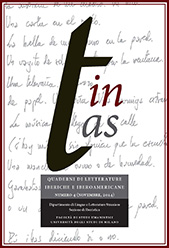
Tintas: Quaderni di Letterature iberiche e iberoamericane
"Tintas" vuol essere innanzitutto l'espressione della vitalità e varietà di interessi e ricerche dell'iberistica milanese e lombarda, con i suoi molteplici collegamenti internazionali.

translation. a transdisciplinary journal
[Publication ceased] This international peer-reviewed journal dedicated to transdisciplinary thinking and research on translation was founded in 2012. Its first issues (all consultable on this platform) were published on paper.
Milano University Press
Via Festa del Perdono 7 - 20122 Milano - Tel. +39 02503 12945
Libri e collane: redazione.milanoup@unimi.it
Riviste: riviste@unimi.it
© Copyright 2022


Privacy e cookie
Realizzato con software OJS curato e mantenuto da Archimede Informatica Società cooperativa.
Homepage di Isoladipasqua.